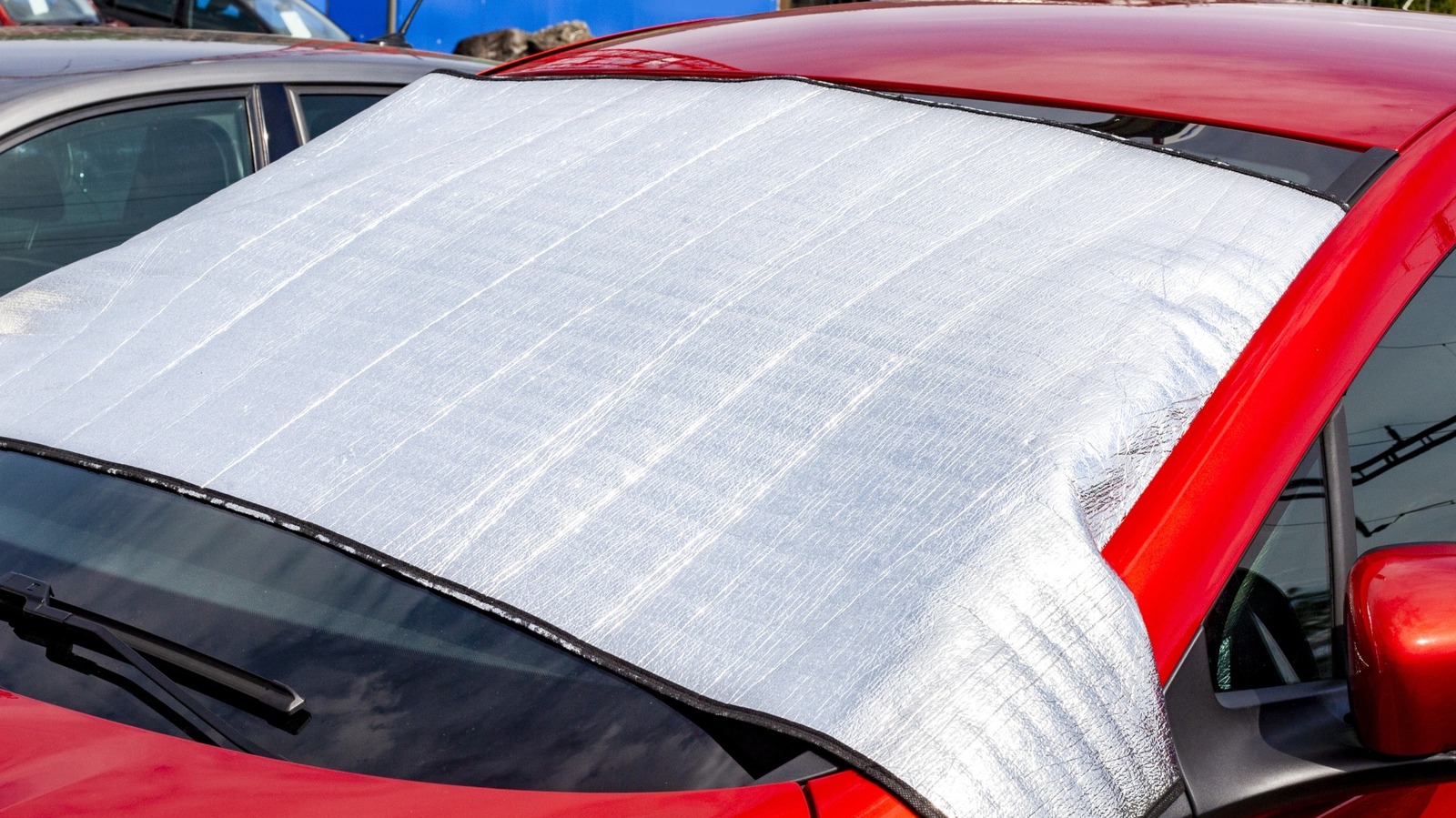
Windshield sunshades deliver measurable but modest cooling benefits for parked vehicles. Standard reflective shades reduce interior temperatures by 10 to 20 degrees Fahrenheit compared to leaving a car fully exposed to direct sunlight, according to automotive testing data. The exact reduction depends on shade material, color, and how tightly it fits against the windshield.
Silver and white reflective shades outperform darker options because they bounce more solar radiation away from the glass. A quality shade blocks roughly 40 to 60 percent of incoming solar heat. This matters most in hot climates where cabin temperatures can exceed 160 degrees Fahrenheit in under an hour without protection.
However, sunshades have clear limitations. They protect only the windshield and dashboard area, leaving side windows, roof panels, and rear glass exposed. Cars with large glass surfaces still accumulate substantial heat. Tinted windows provide permanent passive cooling but require professional installation and affect visibility.
More effective alternatives exist. Parking in shade reduces interior temps by 20 to 30 degrees compared to full sun exposure, eliminating the need for a sunshade entirely. Cracking windows slightly allows convective air circulation and prevents cabin pressurization, which moderates temperature rise. Reflective window tint films applied to all glass surfaces outperform removable shades by blocking 50 to 70 percent of solar energy across the entire vehicle.
For drivers without shade access, sunshades remain the cheapest cooling tool. A 10 to 20 degree reduction prevents steering wheels from becoming dangerously hot and slows interior heat accumulation enough to make early morning cabin entries more tolerable. High-end shades with better insulation properties can approach 25 degree reductions.
The practical takeaway: sunshades work as advertised but serve as a stop-gap solution