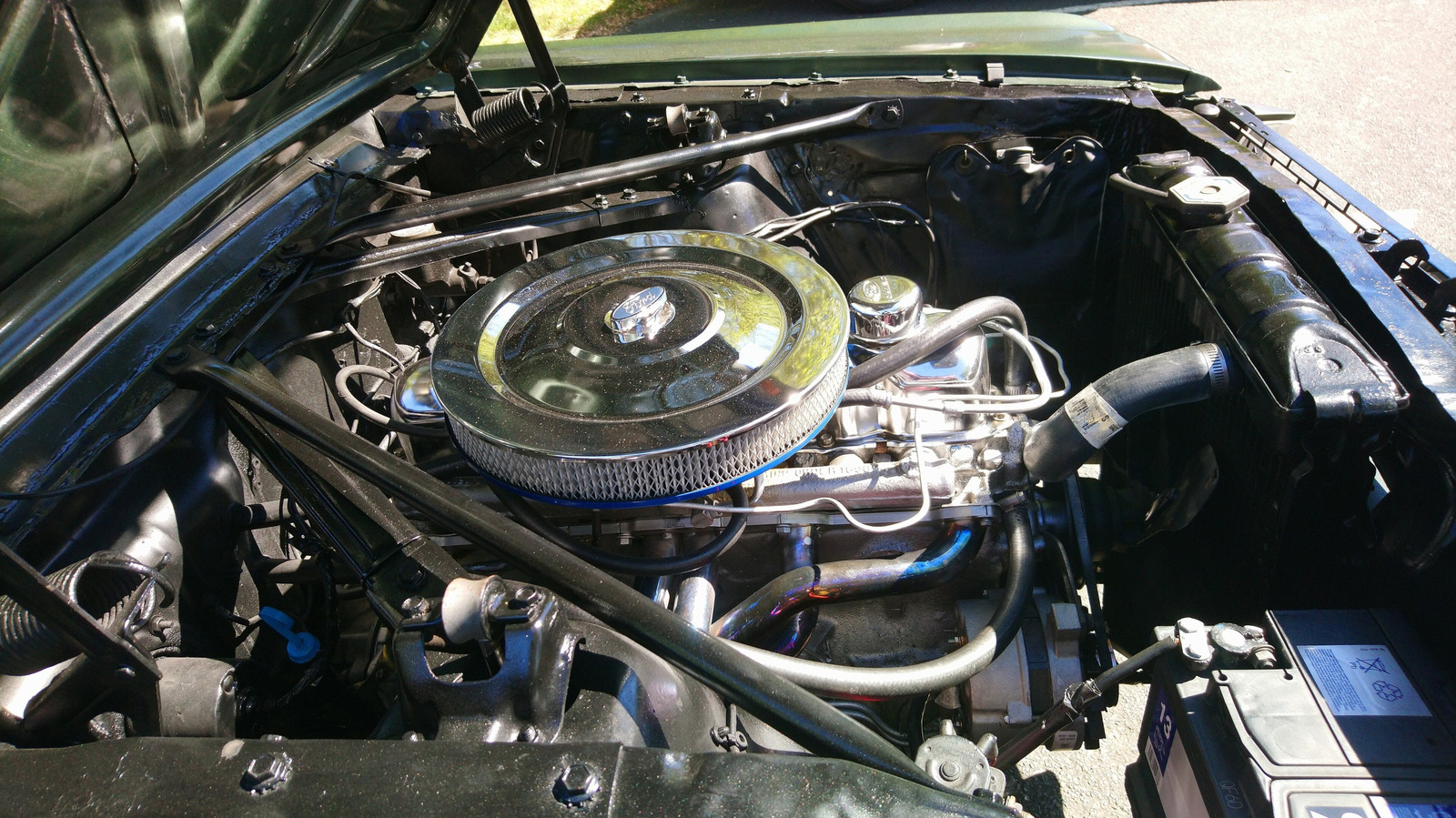
Ford's 200-cubic-inch Thriftpower inline-six became one of the American automotive industry's most enduring powerplants, serving as the backbone of multiple vehicle lines from the early 1960s through the mid-1980s. The engine powered the original Mustang, the Ford Falcon, early Bronco models, and Mercury family sedans across a 24-year production run.
The Thriftpower's longevity reflected Ford's engineering pragmatism. The inline-six delivered modest but adequate horsepower, typically ranging from 120 to 150 hp depending on the year and configuration, while prioritizing fuel economy and reliability over performance. For customers buying economy cars and entry-level trucks, those qualities mattered far more than acceleration.
The engine's simplicity was its greatest asset. Fewer moving parts than V-8 designs meant lower manufacturing costs, easier maintenance, and fewer failure points. Ford could build vehicles affordably without sacrificing durability. The Thriftpower proved robust enough for work trucks and docile enough for commuter cars, making it an economical solution across Ford's product portfolio.
By the 1970s and early 1980s, the Thriftpower faced mounting pressure from emerging fuel-economy standards and changing consumer preferences. Overhead-cam four-cylinder engines from competitors offered better efficiency ratings, while buyers increasingly craved more power. Ford's own turbocharged options and modern V-6 engines eventually rendered the elderly inline-six obsolete.
The Thriftpower's quarter-century tenure demonstrates how engineering excellence rooted in utility and cost-effectiveness can outlast flashier alternatives. Unlike performance engines that generate excitement for a few years before retirement, the Thriftpower simply worked. It sold millions of vehicles because it asked nothing of owners except regular maintenance. That unglamorous reliability earned its place in automotive history