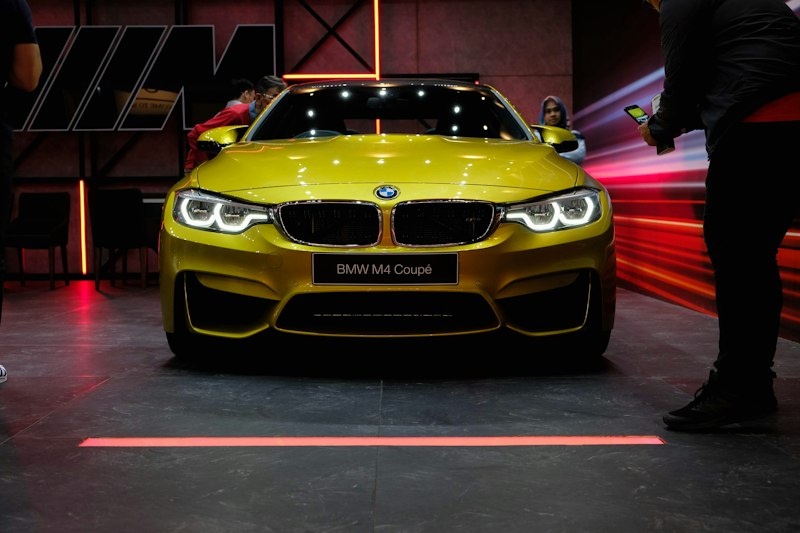
Most coverage treats the current wave of "final editions" and "last hurrah" models as nostalgia plays. A last Mustang with the old V8. A closing act for Bugatti's W16. Automakers wringing sentiment from the petrolhead community before the inevitable EV transition. It's romantic. It's also missing the actual story.
These aren't farewell tours. They're territory markers.
What we're watching isn't manufacturers saying goodbye to internal combustion. It's them signaling who gets to decide when the goodbye happens. That matters enormously, and it's a fight we should be paying attention to.
Consider the stakes. A generation of engineers built their entire careers around optimizing what a piston engine could do. Decades of institutional knowledge, design philosophy, manufacturing expertise. That expertise doesn't disappear when regulatory timelines say it has to. It gets redistributed, redeployed, or quietly shelved. The manufacturers who control the narrative around "the last real engine" are positioning themselves as the custodians of that knowledge.
They're also doing something more calculated: establishing that they, not regulators or market forces, decide when certain technologies die. This is subtle but important.
Look at the pattern. Ford celebrates the Thriftpower inline-six's 24-year dominance, establishing it as legendary before phasing it out. Bugatti builds a final W16 with whimsical details, transforming a complex engineering achievement into a monument they control the narrative around. Toyota is bringing back the MR2 as a hybrid, not a pure EV, asserting that the transition timeline belongs partially to them.
These aren't accidents of scheduling. They're carefully orchestrated messaging that says: "We decide the pace. We decide the story. We decide which technologies get treated as classics and which get treated as failures."
The EV transition was going to happen regardless. Regulations in California, Europe, and increasingly globally are not negotiable. But the way it happens, the pace at which it happens, and who gets credited with managing it? That remains contested.
Ignition interlock devices, fatigue monitoring systems, autonomous braking. The auto industry didn't embrace these technologies out of pure altruism. They embraced them when they could frame them as choices rather than mandates. The final-edition campaigns serve a similar function: they claim agency in a process that is fundamentally being imposed by regulation and market pressure.
Here's why this matters beyond sentiment. The manufacturers that successfully control the narrative around the transition get to shape what comes next. They get to determine which suppliers survive, which design philosophies are preserved, which parts of the supply chain continue to matter. They get to position themselves as stewards of tradition rather than subjects of disruption.
A company that says "we're giving the V8 a glorious sendoff" maintains cultural authority in a way that a company saying "we're discontinuing the V8 because we have to" does not.
This is partly about ego. Automotive executives want to be remembered as visionaries who steered a transition, not as managers who acquiesced to one. But it's also about concrete business positioning. The manufacturers that control the transition narrative influence which legacy suppliers get contracts in the new era, which engineering teams get promoted, which design principles get transferred to EV platforms.
The real story isn't that iconic engines are going away. It's that the auto industry is desperately trying to maintain narrative control over a process they cannot stop, only shape.
Watch which manufacturers treat this as a farewell and which treat it as a pivot. That distinction reveals everything about how each company actually sees the future, and which ones still believe they're in charge of it.