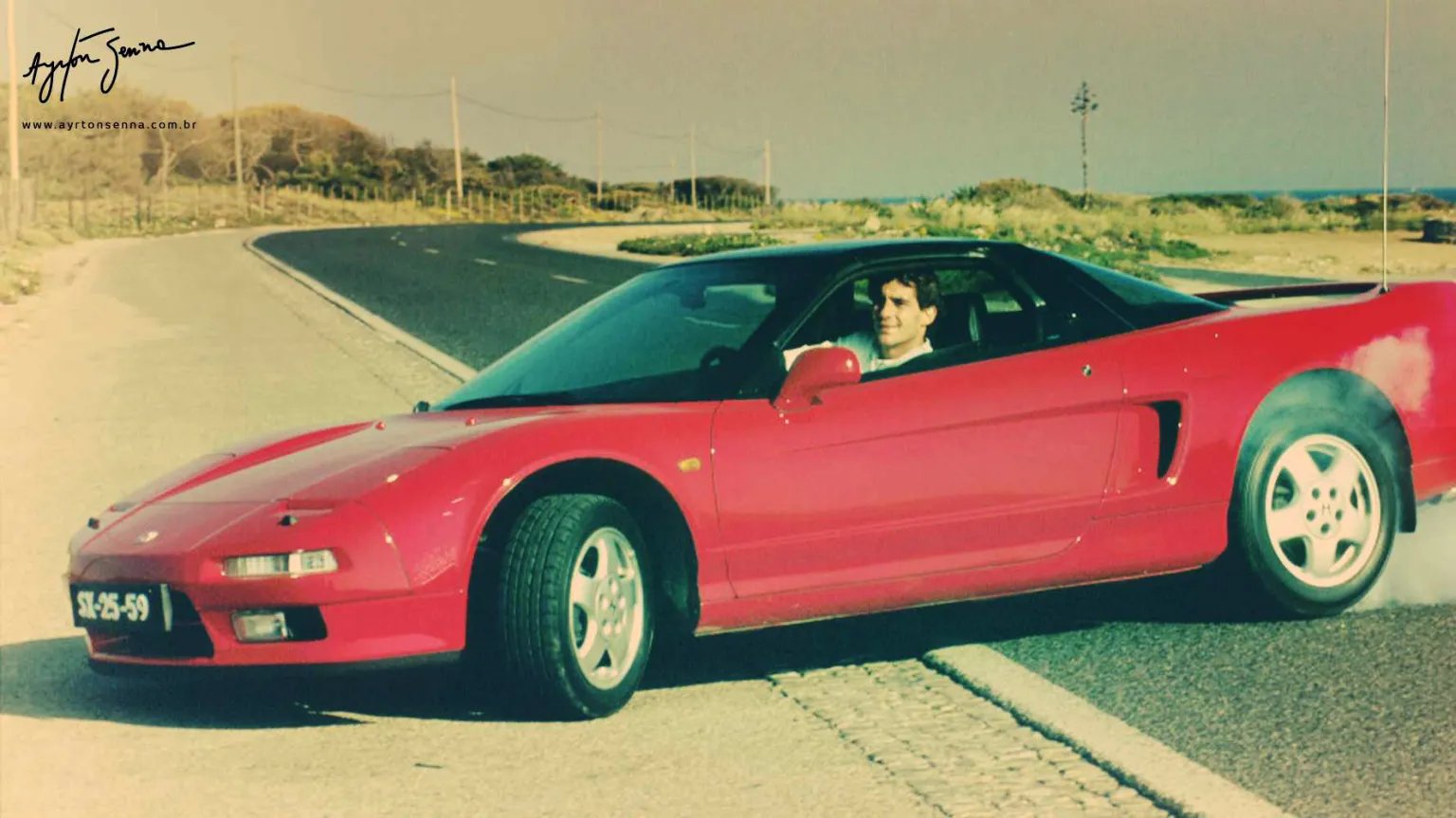
Ayrton Senna's personal Honda NSX deserves permanent stewardship, not speculation. The Formula 1 legend's iconic supercar keeps changing hands as a financial asset rather than finding a custodian who will preserve its legacy.
The first-generation NSX holds deep significance in automotive history. Senna drove the car personally during the early 1990s, a period that defined both his racing dominance and Honda's engineering ambitions. The NSX represented a breakthrough moment, the first Japanese supercar that could genuinely compete with Ferrari and Porsche on performance and handling. Senna's ownership elevated it beyond a production car into an artifact of motorsport royalty.
Instead of residing in a museum, private collection, or institutional hands committed to preservation, the NSX has become a speculative commodity. Collectors buy it expecting resale appreciation rather than genuine stewardship. Each transaction pulls the car further from Senna's legacy and closer to becoming another wealth-storage vehicle gathering appraisals but little respect.
The current market for celebrity-owned automobiles treats them as hedge funds on wheels. Provenance and historical significance matter less than acquisition cost and projected ROI. A car this important, connected to one of motorsport's greatest drivers, deserves better.
The NSX should enter a permanent home where enthusiasts and students of automotive engineering can access it. A world-class museum, a major manufacturer's heritage collection, or a dedicated racing institution could preserve the car while honoring Senna's influence on both Formula 1 and road-car development. Senna's NSX contributed to Honda's global reputation for precision engineering. That connection shouldn't be surrendered to the highest bidder every five years.
This isn't about devaluing the car or dismissing collectors. It's about recognizing that certain automobiles transcend commerce. They represent cultural moments that