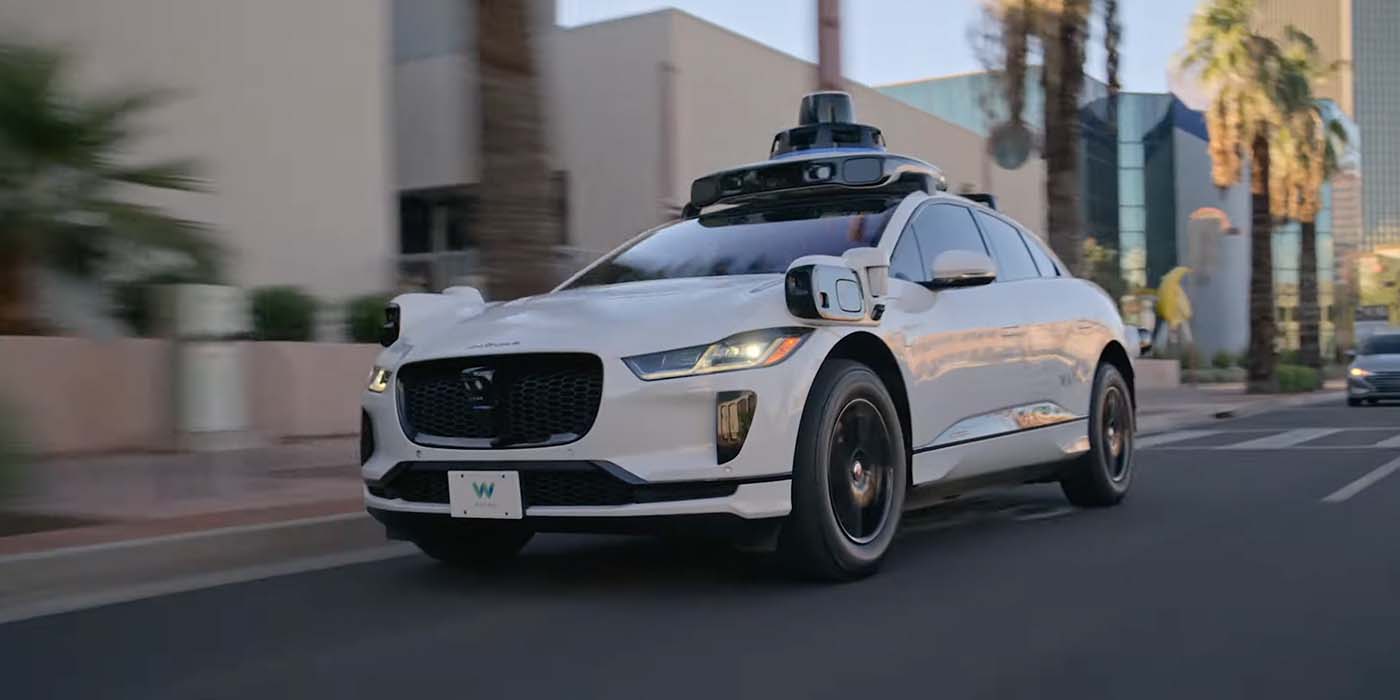
The Insurance Institute for Highway Safety released data showing Waymo's autonomous taxis crash 68% less frequently than human drivers, with crashes that tend to be less severe when they do occur. This represents a significant performance gap in favor of driverless technology.
However, the study carries substantial limitations. Waymo operates in controlled environments, primarily in Phoenix, San Francisco, and Los Angeles, where weather conditions are mild and road infrastructure is well-mapped. The company also operates mostly on pre-planned routes with geofencing boundaries. Human drivers face vastly more diverse conditions, from extreme weather to unmapped rural roads to unpredictable situations. The comparison isn't apples-to-apples.
Waymo's fleet also consists of purpose-built Jaguar I-PACE vehicles and Chrysler Pacificas designed specifically for autonomous operation, with redundant safety systems and advanced sensor suites. The average human driver operates in conventional vehicles across all road types and conditions.
The IIHS data nonetheless matters for the autonomous vehicle industry. Insurance companies will scrutinize these numbers as they consider coverage and liability frameworks for driverless fleets. A 68% reduction in crash frequency could translate to lower insurance costs, which could make autonomous taxis more economically viable than ride-share services relying on human drivers.
Waymo faces mounting competition from Tesla's robotaxi ambitions, though Tesla's approach differs fundamentally. Tesla relies on camera-only vision, while Waymo uses a sensor fusion strategy combining lidar, radar, and cameras. This architectural difference shapes reliability and safety profiles in ways the IIHS study doesn't directly address.
The real test arrives when autonomous vehicles operate in diverse climates, on unmapped roads, and during severe weather. Until then, Waymo's impressive crash statistics reflect success in controlled conditions rather than proof of superiority across all driving scenarios.