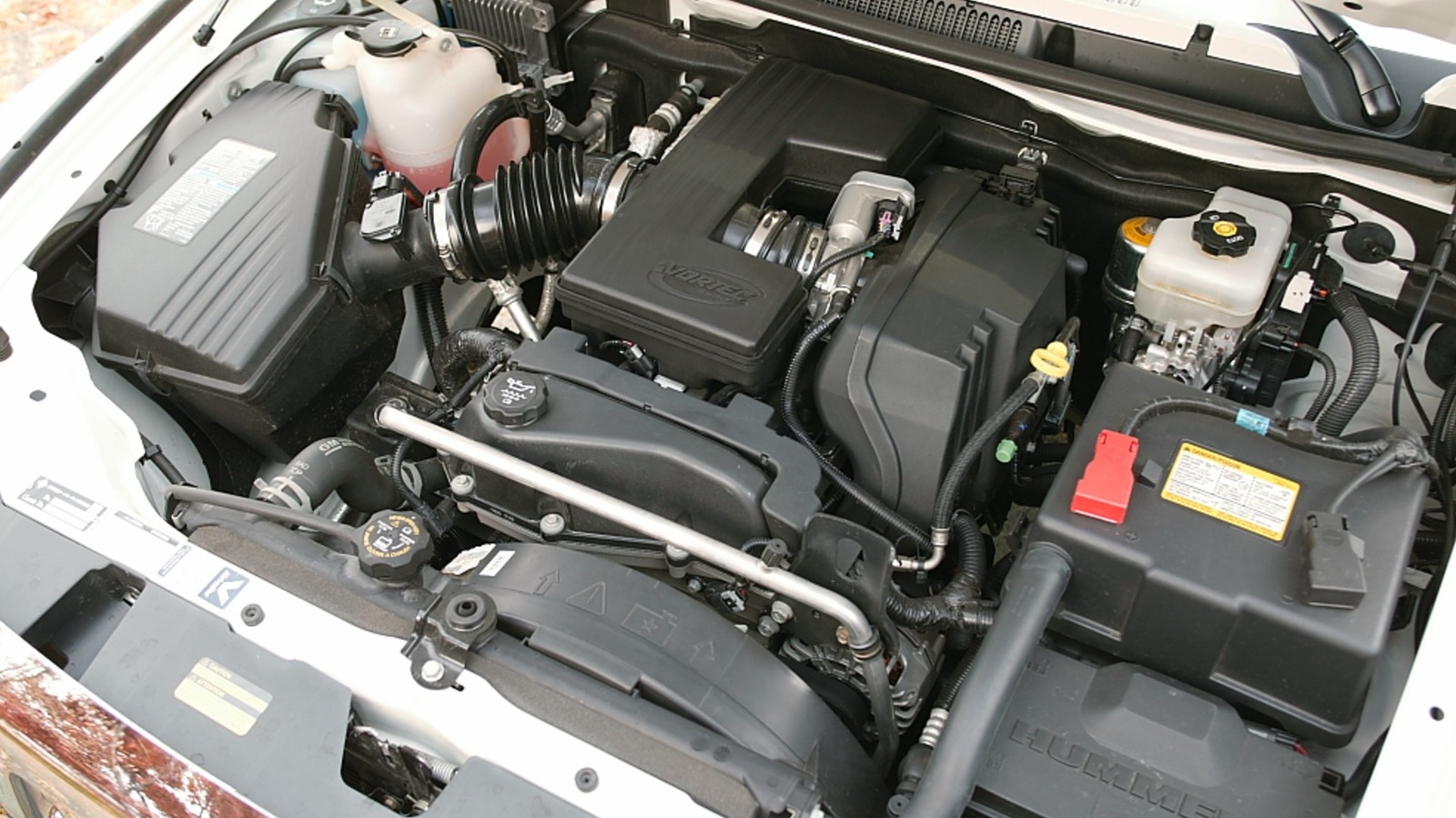
General Motors developed the Atlas inline-5 engine as an unconventional bet on the midsize truck market. The engine powered the Colorado and Hummer H3, representing GM's attempt to deliver efficiency without sacrificing capability in the compact truck segment.
The Atlas family featured an unusual architecture that made it distinctly different from the conventional small-block V8s dominating GM's truck lineup. The inline-5 configuration offered a unique compromise between the simplicity of a four-cylinder and the power delivery of larger engines. GM engineered multiple variants across the Atlas family, each tuned for different applications and market demands.
The engine faced substantial headwinds despite its technical ambition. Reliability issues plagued early production runs, with owners reporting premature wear patterns and thermal management problems. The complex design made repairs expensive and time-consuming, frustrating customers who expected straightforward truck ownership. Parts availability remained spotty, leaving owners with limited options when components failed.
Consumer perception proved equally damaging. Truck buyers in America traditionally gravitated toward V8 power and familiar configurations. The inline-5 felt unconventional and risky to the market GM needed to convince. Marketing struggled to articulate the engine's advantages when competitors offered bulletproof V6 options with established track records.
The Colorado eventually moved to a turbocharged four-cylinder, abandoning the Atlas concept entirely. The Hummer H3 followed suit, adopting more conventional powerplants. GM's inline-5 experiment quietly faded as the company redirected resources toward platforms that resonated with buyers.
The Atlas engine stands as a cautionary tale in automotive engineering. Technical sophistication alone does not guarantee market success. Sometimes the unconventional approach, no matter how well-intentioned, cannot overcome entrenched buyer preferences and execution challenges.