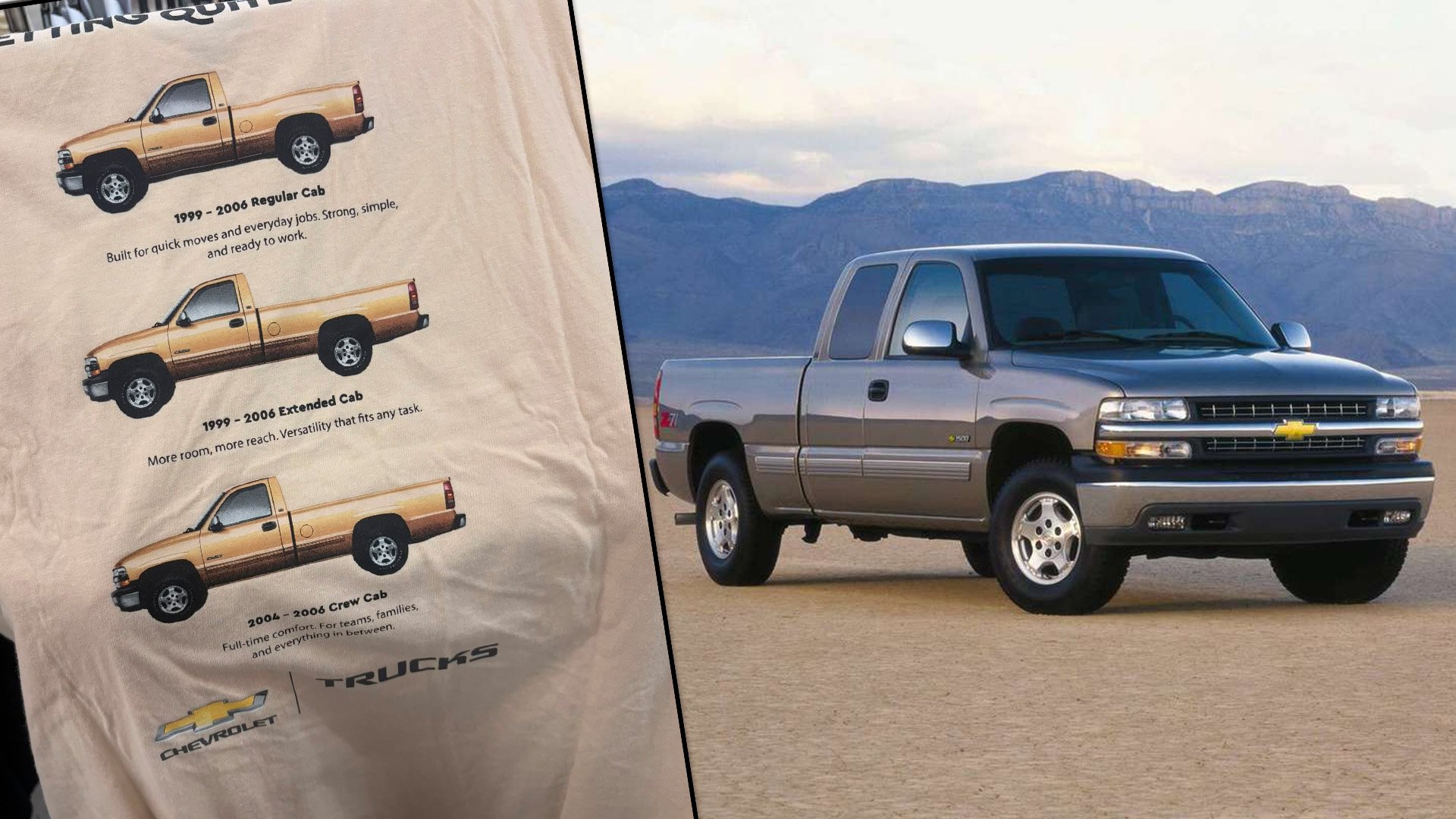
An officially licensed Chevrolet trucks T-shirt sold at TJ Maxx reveals the hazards of AI-generated imagery in retail merchandise. The shirt depicts a pickup that blends anatomically impossible features. It combines a regular cab's two-door configuration with a crew cab's four-door layout, creating a truck that doesn't exist in Chevrolet's lineup.
The error highlights a growing problem in merchandise design. AI image generators struggle with consistency when combining multiple vehicle attributes. They can recognize "pickup truck" as a concept but fail to understand structural logic. A regular cab requires a shorter wheelbase and two doors. A crew cab demands four doors and an extended frame. Mixing them violates basic truck architecture.
Chevrolet licensing merchandise to manufacturers using AI generators without proper quality control allowed this mistake to reach store shelves. The automaker's brand integrity depends on accurate representation of its vehicles. Chevrolet has invested decades building recognition of distinct truck configurations. Ram, Ford, and GMC each market their own cab styles as distinct product choices. Customers understand the difference. An AI apparently doesn't.
This reflects broader industry struggles with generative AI in marketing and design workflows. Companies rush to adopt the technology for cost savings and speed. Quality control often lags behind implementation. A human designer would catch this immediately. An AI trained on millions of pickup images still lacks the spatial reasoning to understand why a truck's body can't physically accommodate contradictory door counts.
The shirt serves as a cautionary tale for automotive brands relying on AI for official merchandise. Vehicle enthusiasts immediately spotted the impossibility. Social media backlash followed. Chevrolet faces questions about oversight. TJ Maxx likely pulled inventory once the error surfaced.
This isn't the first time AI-generated products reached retail with embarrassing flaws. It won't be the last. Automakers using AI in marketing