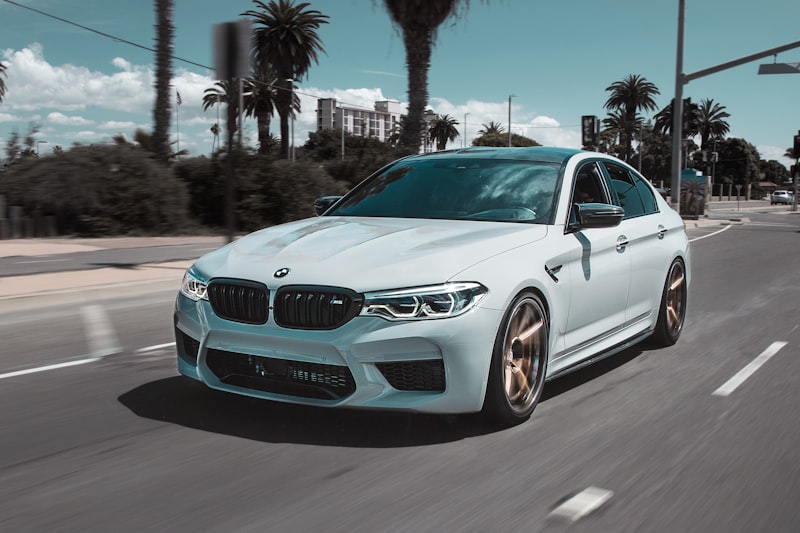
Here's what's happening in luxury right now, and why the incentives are all wrong: automakers are racing to build bigger, more expensive sport-utility vehicles while treating actual innovation like an afterthought. The industry is rewarding size and price tags. Consumers and the broader market should notice who's winning and what that says about where automotive luxury is headed.
Look at the trajectory. We're seeing new flagship luxury SUVs announced seemingly every quarter. Audi has the SQ9 platform incoming. Lamborghini is making special editions of high-performance SUVs. Porsche's 911 lineup remains relevant, yet even there, we're watching used prices shift. The through-line isn't hard to spot: luxury automakers have realized that bigger vehicles command bigger margins, and the market has rewarded this bet handsomely.
The problem isn't that luxury SUVs exist. The problem is the incentive structure itself.
When a manufacturer can charge $150,000 for a vehicle that costs $110,000 to produce, the profit motive becomes divorced from meaningful differentiation. Why invest billions in breakthrough battery technology, autonomous systems, or materials science when you can add ten inches of wheelbase, throw in a larger infotainment screen, and call it a new generation? The math is simpler. The payoff is faster.
This creates a perverse outcome. Luxury brands that should be pushing automotive boundaries are instead optimizing for what Wall Street calls "portfolio premiumization." That's a polite way of saying they're charging more for incremental changes. The customer pays the premium. The shareholder gets richer. The industry moves sideways.
Consider what the industry could be incentivizing instead. Real advances in handling and dynamics. Novel approaches to sustainability that aren't just regulatory compliance theater. Interiors that represent genuine material breakthroughs rather than leather and larger screens. Software that actually works without requiring a PhD and a smartphone app ecosystem. These innovations require sustained investment, risk, and sometimes failure.
They don't guarantee profits on the same timeline as a larger, more expensive vehicle with a familiar platform underneath.
The second-order effect matters too. When luxury automakers show that the path to profitability runs through bigger, pricier SUVs, it signals to mid-market and mass-market brands where to aim. The entire industry gravitates upward in size and price. This isn't random. It's a cascade effect driven by the financial incentives at the top.
For consumers, this means the actual choice in luxury vehicles narrows even as the model count grows. You get size variations and powertrain variations of fundamentally similar vehicles. You get special editions that celebrate partnerships with video game franchises rather than technological breakthroughs. You get price increases that outpace inflation and actual improvements.
The industry will tell you that consumers want bigger, that the market demands SUVs, that this is simply responding to demand. That's partially true. But it's also incomplete. Demand exists in a context shaped by what manufacturers choose to build and promote. Heavy marketing behind large SUVs creates demand for large SUVs. Investment in other directions would create different demand.
What would change the incentives? Regulatory pressure on size and weight. Consumer awareness about what they're actually paying for. Competitors willing to bet on differentiation through innovation rather than portfolio expansion. Shareholders willing to accept longer payback timelines for breakthrough development.
Don't expect it to happen on its own. Right now, the game rewards the strategy that's winning. Until that changes, expect more of the same: bigger vehicles, bigger prices, and luxury that's defined less by ingenuity and more by sheer mass and cost.