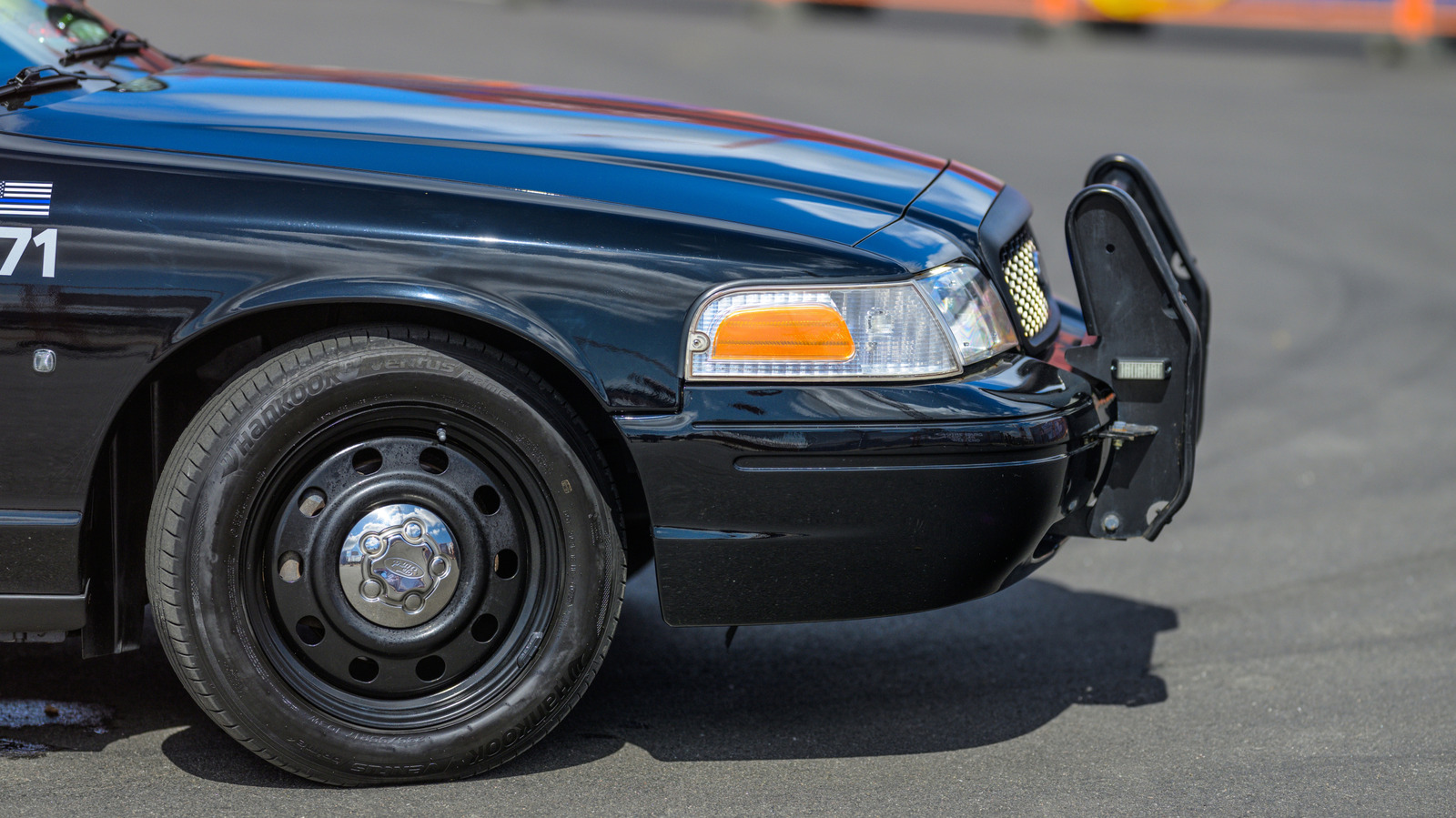
Police vehicles operate under conditions most civilian drivers never encounter. High-speed pursuits, aggressive cornering, and constant stop-and-go driving demand specialized tire technology that differs fundamentally from what consumers buy at tire shops.
Police-spec tires handle extreme sidewall pressures during hard cornering that would damage or destroy standard passenger tires. Manufacturers engineer these tires with reinforced construction, stiffer sidewalls, and compounds designed to maintain grip during the kind of sustained lateral forces generated by pursuit driving. The tread patterns also optimize water evacuation and traction on varied road surfaces, since police vehicles operate in all conditions without the option to sit out bad weather.
Load ratings differ too. Police cruisers carry heavy payloads. A typical Crown Victoria or Dodge Charger police package weighs more than a standard version due to equipment, armor plating, prisoner cages, and onboard technology. Tires must support these loads while delivering the performance demanded during emergency operations.
Heat management matters more for police tires. Extended acceleration, rapid braking, and high-speed cornering generate intense tire temperatures. Police-spec compounds resist degradation and maintain structural integrity even when driven hard lap after lap. Standard tires overheat under these conditions, losing grip and risking failure.
Cost reflects this engineering. Police tires run considerably higher than consumer equivalents, but departments accept the premium because failures during pursuits create liability and safety risks. Downtime for tire replacement also disrupts patrol schedules.
Some manufacturers, including Goodyear and Michelin, produce specific police-grade tire lines. These aren't just rebranded consumer products. They represent genuine engineering investment into compounds, construction methods, and testing protocols optimized for law enforcement duty cycles.
The gap between police tires and civilian tires illustrates how specialized applications drive tire development. Your weekend commute and a high-speed