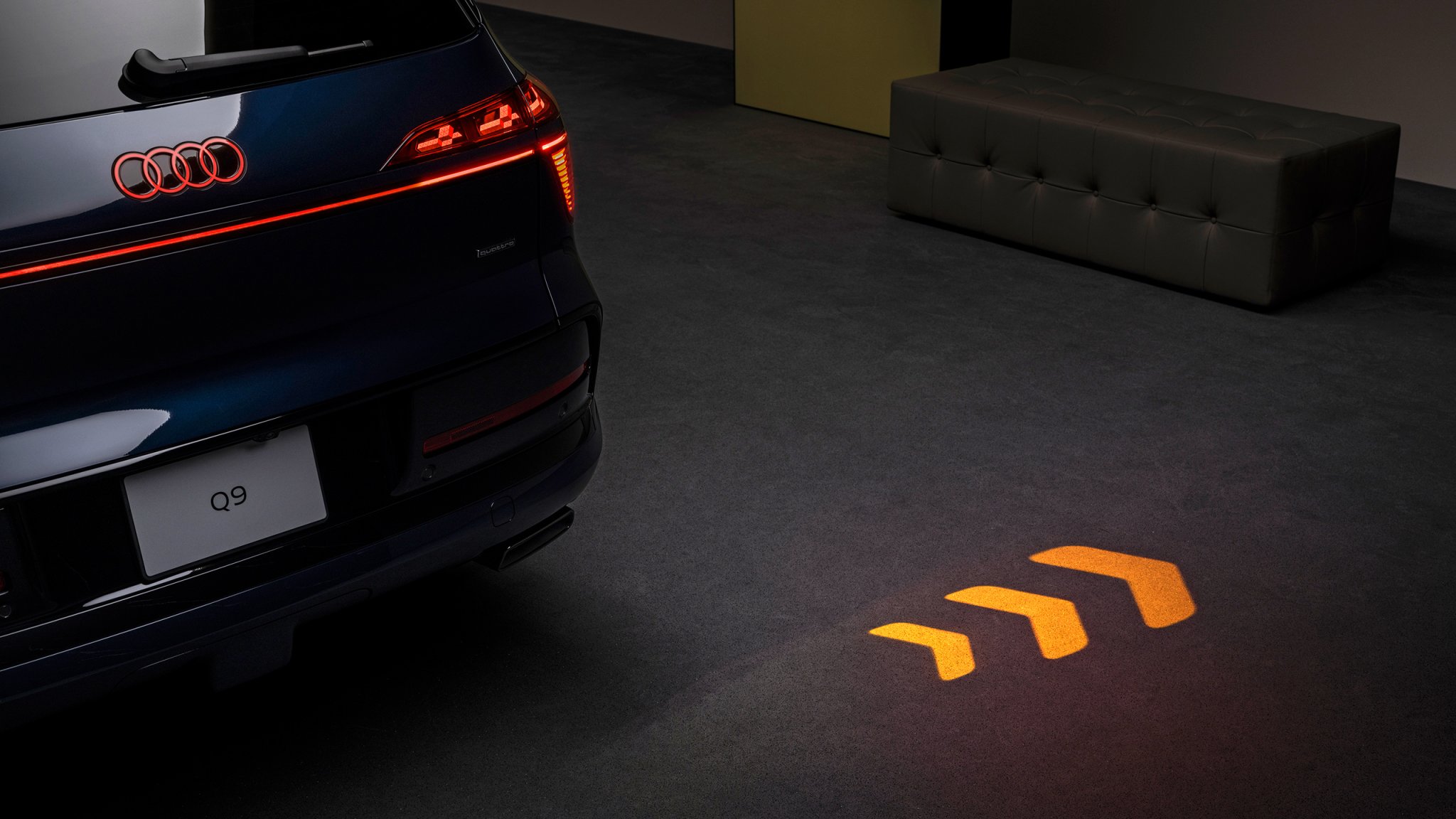
Audi is equipping its flagship Q9 SUV with Digital Matrix LED headlights that project animated turn signal arrows directly onto the road surface. The system casts directional indicators from each corner of the vehicle, making Audi's intentions clearer to other drivers and pedestrians. The same technology will trickle down to the smaller Q7 model.
This represents Audi's latest push into headlight innovation. The Digital Matrix system uses thousands of individual LED elements to create precise light patterns and animations. Projecting turn signals onto asphalt is the logical extension of this capability. Rather than relying solely on the vehicle's light fixtures, drivers now communicate directional changes through ground-level visual cues that catch attention in ways traditional signals sometimes miss.
The move addresses a real safety concern. In congested urban environments and at night, conventional turn signals can get lost or overlooked. Projected arrows eliminate ambiguity. Pedestrians, cyclists, and following vehicles see exactly where the car intends to move.
Audi faces stiff competition in premium lighting technology. BMW's laser headlights and Mercedes' DIGITAL LIGHT system both push boundaries with projection capabilities and adaptive functionality. Luxury buyers increasingly expect their headlights to do more than illuminate the road. They want integrated safety systems, ambient light shows, and intelligent adaptive behavior. Audi's approach of using that same matrix technology for ground projection puts the brand alongside rivals in the premium lighting arms race.
The Q9 positions itself as Audi's answer to the BMW X7 and Mercedes GLS. Adding distinctive lighting features helps justify the flagship pricing. The Q7, which competes more directly with the BMW X5 and GLE, gets the tech next, bringing the innovation to a broader customer base.
Whether projected turn signals become industry standard or remain a premium gimmick depends on regulatory approval and real-