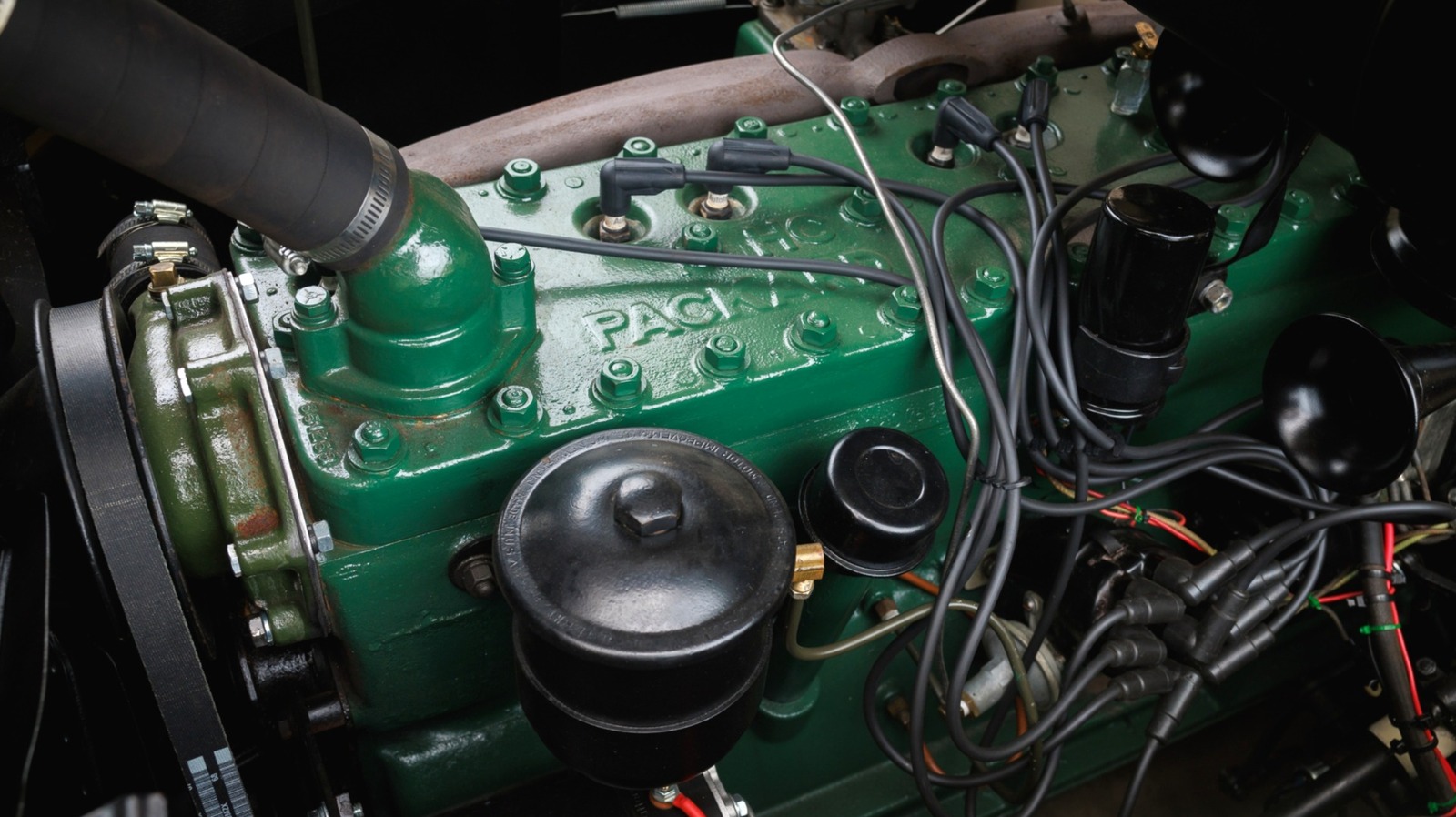
Packard and Lincoln stubbornly clung to inline-8 powerplants longer than any other American automakers, finally abandoning them in 1954 as the industry pivoted decisively toward V-8 architecture. Both manufacturers recognized that straight-eights, despite their smoothness and refinement, simply couldn't compete with the compact, powerful V-8 designs that rivals had perfected years earlier.
Packard's final inline-8 produced 288 horsepower and represented the absolute end of an era. Lincoln stuck with its own version until the same year, both companies holding the line on engineering that belonged to the 1930s. The problem wasn't performance or quality. Inline-8s delivered remarkable balance and silky operation that V-8s still couldn't quite match. They occupied too much engine bay real estate, however, cramped passenger cabins, and offered no packaging advantages. Chrysler, Cadillac, and other competitors had already transitioned their luxury and mid-range offerings to compact V-8s that delivered superior horsepower while freeing up interior space.
Packard and Lincoln's fidelity to inline-8 engineering became a liability rather than an asset. While other manufacturers marketed modern, efficient powertrains, these two continued selling engines that consumed excessive engine compartment space and required longer hoods. The market wasn't interested in pure mechanical refinement anymore. Buyers wanted power, style, and room to move inside the cabin.
By 1954, the inline-8 death march concluded. Both companies shelved their designs and shifted to V-8s, though neither manufacturer recovered from their late transition. Packard ceased luxury car production in 1956. Lincoln survived but never reclaimed the prestige it once enjoyed.
The inline-8's extinction represents automotive evolution in action. Manufacturers who successfully predicted market