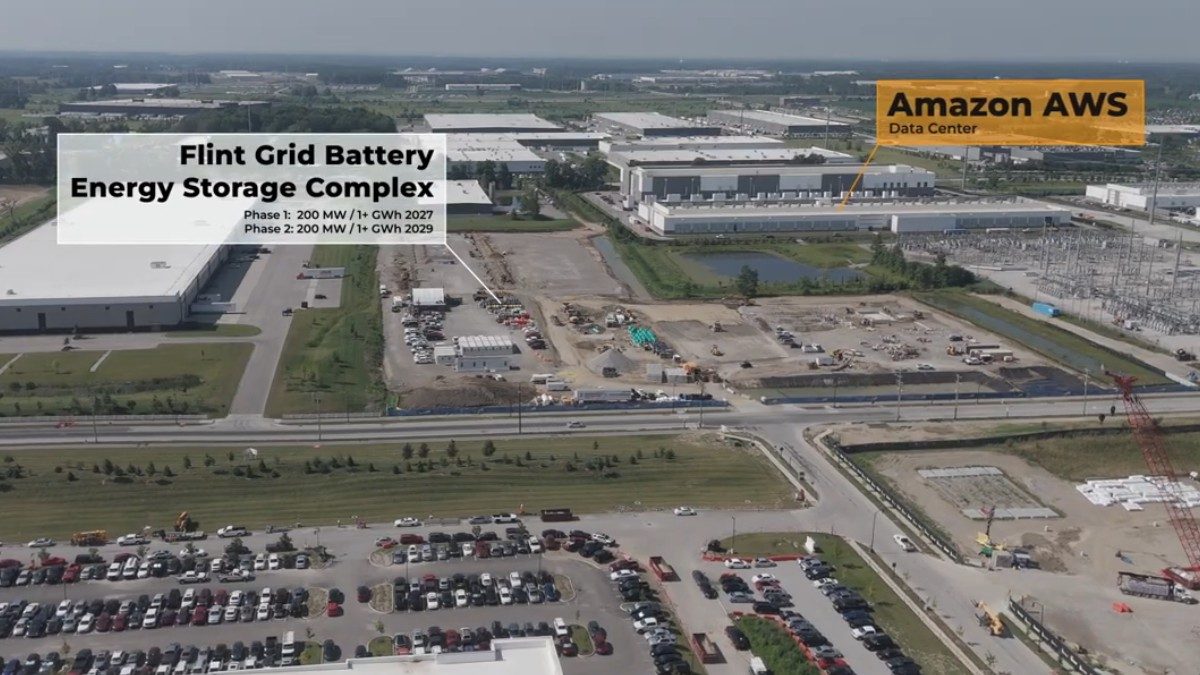
Construction has begun on a 1-gigawatt-hour battery storage facility near Columbus, Ohio, marking the largest battery installation on the PJM Interconnection grid. The project addresses surging electricity demand driven by data center expansion and industrial development in the region.
The facility will store enough energy to power roughly 200,000 homes for four hours, providing grid stability as demand spikes faster than traditional generation can respond. Ohio's emergence as a data center hub, fueled by tech companies seeking affordable power and land, has created acute pressure on the PJM grid, which serves 13 states from New Jersey to Kentucky.
Battery storage has become essential infrastructure in regions where renewable energy penetration and volatile load patterns create grid reliability challenges. The PJM system already struggles during peak demand periods, and adding major data centers without corresponding storage capacity risks cascading blackouts. This 1 GWh project helps bridge that gap by absorbing excess power during low-demand periods and discharging during peaks.
The timing reflects a broader industry shift. Utilities and independent power producers recognize that batteries offer faster response times than gas plants. Where a conventional generator takes minutes to ramp up, battery systems respond instantaneously. This becomes critical when a single data center can consume as much electricity as a city of 100,000 people.
Ohio specifically benefits from lower land costs than coastal tech hubs and proximity to major fiber networks. However, this development advantage creates infrastructure bottlenecks. The state's grid wasn't built for simultaneous massive loads. Battery storage projects like this one effectively become peaking plants, replacing or supplementing expensive natural gas turbines that sit idle most of the year.
The construction timeline and final cost remain undisclosed, but 1 GWh battery systems typically require 18-24 months to complete and cost $200-300 million depending on technology and site conditions. P