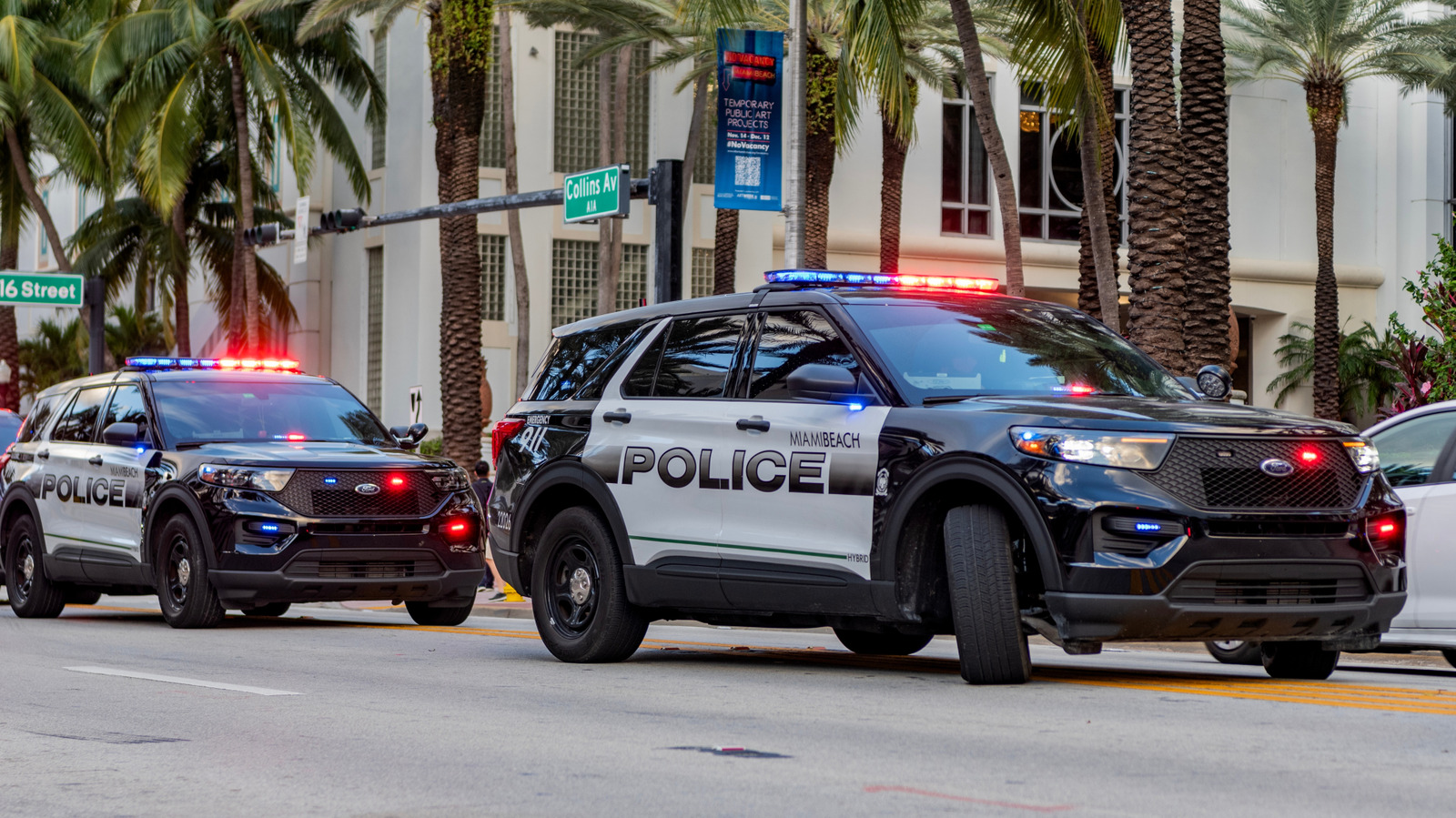
Police vehicles undergo extensive modifications that transform standard civilian cars into pursuit-capable law enforcement tools. Manufacturers and fleet operators install heavy-duty upgrades across multiple systems to handle the extreme demands of patrol work.
Engine performance receives a first upgrade. Police versions of the Chevrolet Caprice, Ford Police Interceptor Utility, and Dodge Charger receive calibrated engines optimized for sustained high-speed operation and rapid acceleration. These powerplants produce more horsepower than civilian counterparts and run cooler under continuous stress.
Suspension and braking systems get reinforced. Police vehicles use heavy-duty springs, shocks, and anti-roll bars to maintain stability during aggressive cornering and emergency maneuvers. Brake systems receive upgraded pads and rotors designed to handle repeated hard stops without fade, critical during pursuits and traffic stops.
Electrical systems expand significantly. Police cars add alternators with higher output to power emergency lights, sirens, communications radio, computer terminals, and thermal imaging equipment without draining the battery during extended operations. The wiring harnesses and circuit protection far exceed civilian specifications.
Interior and exterior protection hardens the vehicle. Rear doors lose interior handles, window switches, and locks to prevent suspect escape. Steel mesh or polycarbonate partitions separate the rear compartment. Bumpers, grille guards, and door edge guards protect against intentional impact and damage.
Transmission durability improves through software tuning and cooler upgrades. Police vehicles idle longer in traffic and spend more time in heavy load conditions than civilian cars. Enhanced transmission cooling prevents overheating during stop-and-go patrol work or extended pursuits.
The 2024 Ford Police Interceptor Utility exemplifies these upgrades, featuring a 3.0-liter EcoBoost with 400 horsepower, all-wheel-drive capability, and integrated