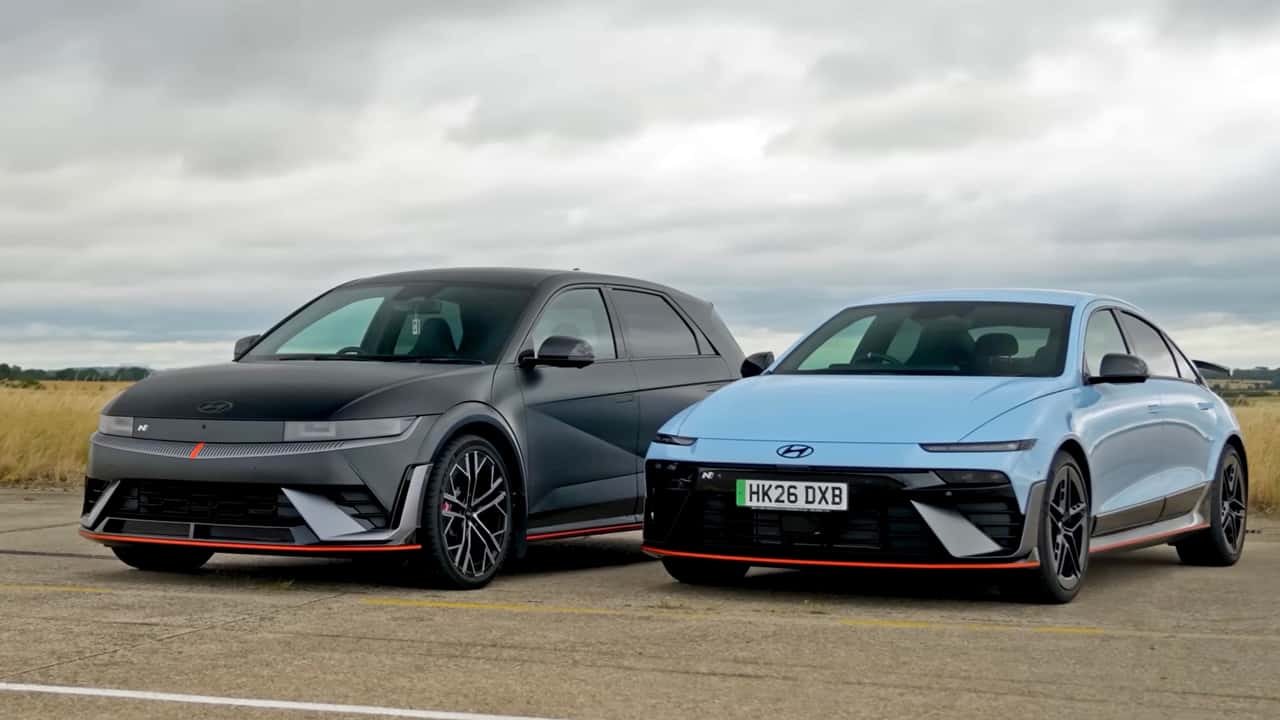
Hyundai's N division built both the Ioniq 5 N and Ioniq 6 N around the same 84-kWh battery and dual-motor powertrain, delivering 641 horsepower and 516 pound-feet of torque to each vehicle. But these two high-performance EVs feel fundamentally different behind the wheel, and software calibration does most of the heavy lifting.
The Ioniq 5 N, a compact crossover, leans aggressive. Its software prioritizes immediate throttle response and sharper steering feedback. Engineers tuned the traction control and torque vectoring algorithms to reward aggressive driving inputs, making the taller vehicle feel planted and eager in corners.
The Ioniq 6 N, a sedan, takes the opposite approach. Its lower center of gravity and longer wheelbase demanded different software logic. The same powertrain feels more composed and predictable. Hyundai's engineers softened the throttle mapping slightly and adjusted brake regeneration strategies to emphasize smooth power delivery over raw aggression.
This strategy reflects broader industry trends. Manufacturers increasingly rely on software to differentiate vehicles that share mechanical components. A few lines of code reshape how drivers experience acceleration, steering weight, and stability control intervention. It costs far less than engineering separate platforms.
Both N models offer selectable drive modes. Track mode sharpens everything. Eco mode mellows the response. But the baseline personality persists regardless of mode selection.
Hyundai's approach works. The Ioniq 5 N attracts drivers seeking a compact performance machine. The Ioniq 6 N targets luxury sedan buyers who want efficiency wrapped in sporty capability. Same hardware, different souls.
This philosophy matters for cost-conscious manufacturers pursuing EV portfolios. Hyundai cut development expenses by sharing powertrains while maintaining distinct brand