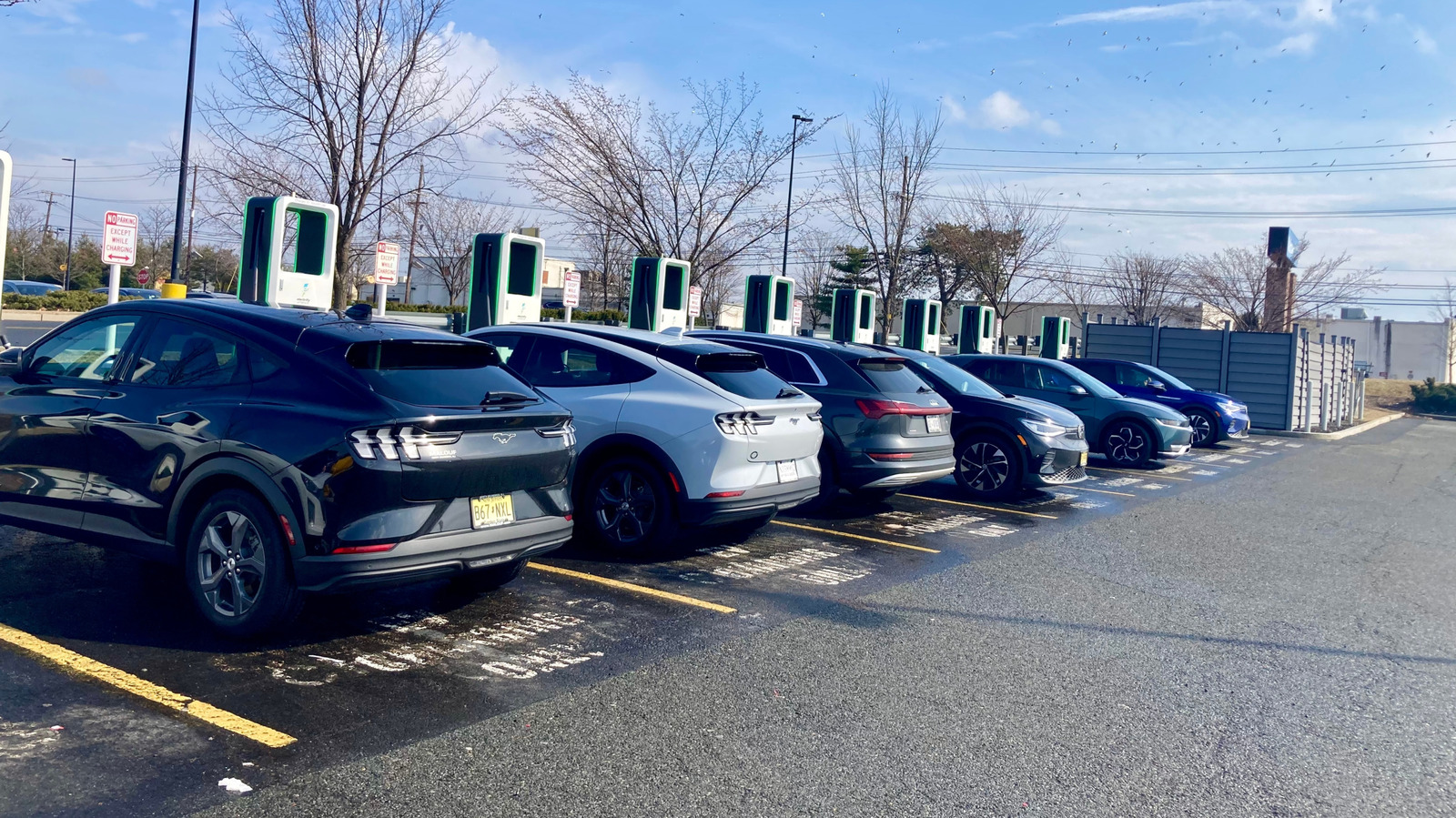
Walmart is aggressively expanding its EV charging network across its stores, outpacing the rollout speed of every non-Tesla public charger operator in North America. The retail giant recognizes a straightforward business opportunity: customers who charge vehicles at Walmart stores spend time and money shopping while their cars power up.
The strategy targets a structural weakness in the charging market. Most retailers lack fast-charging infrastructure entirely, forcing EV owners to seek out dedicated charging networks or Tesla's Supercharger stations. Walmart's ubiquitous footprint, with thousands of locations nationwide, gives it geographic advantages competitors cannot match.
Fast-charging installation at retail locations remains rare. Traditional gas stations have never needed to provide in-store shopping experiences tied to fueling time, which takes five minutes. EV charging, particularly Level 2 options that take 30 minutes to hours, creates a captive customer window. Walmart monetizes this time differential through grocery sales, merchandise purchases, and service revenue.
The company's expansion rate exceeds efforts from established charging networks like Electrify America and EVgo, which have faced funding constraints and slower deployment timelines. Tesla's Supercharger network remains the performance standard, but those chargers focus exclusively on Tesla vehicles in most cases, though recent openings to other brands suggest shifting industry dynamics.
Walmart's retail-focused charging strategy represents a departure from traditional charging network models that treat charging as the primary business. Instead, Walmart treats charging as traffic generation for its core retail operations. The company can absorb infrastructure costs through retail revenue offsetting, something pure-play charging networks cannot match.
For EV owners, Walmart's expansion offers practical benefits. Drivers gain access to fast-charging at convenient locations with amenities. For Walmart, the network becomes a customer acquisition and retention tool that strengthens store loyalty during the EV transition period.
This model could