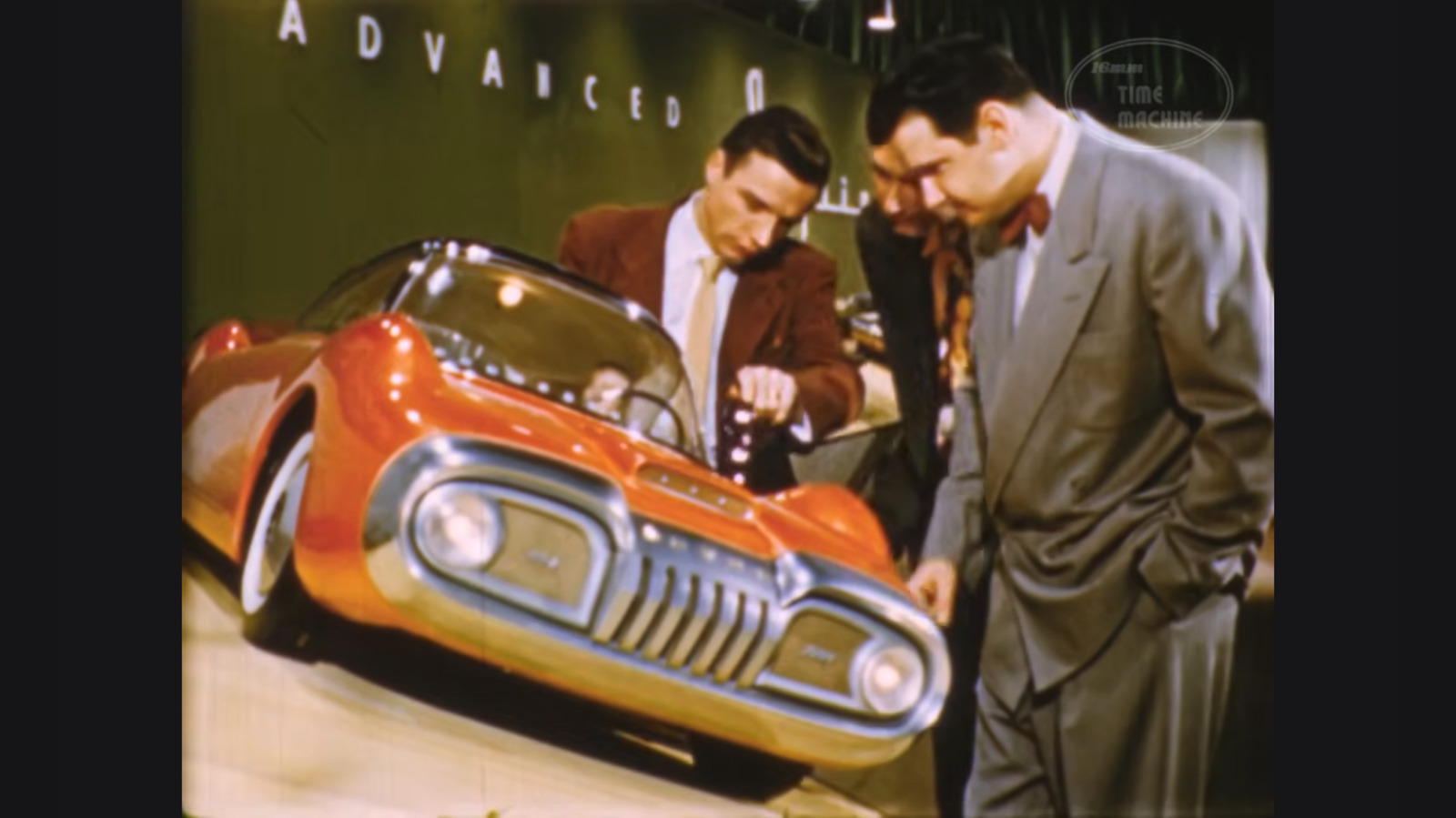
Ford's 1952 design philosophy centered on the principle that imagination precedes engineering. A short film from that era documents the automaker's creative process, revealing how designers dreamed up new vehicles before the hard work of bringing them to life began.
The film captures Ford's mid-century approach to automotive design during a pivotal moment in the industry. Post-war America demanded fresh styling and innovation. Ford understood that competitive advantage required both artistic vision and technical execution. Designers sketched concepts first, establishing the aesthetic direction before engineers tackled manufacturing realities.
This two-step process reflected broader industry trends of the 1950s. American manufacturers competed fiercely on design language and chrome trim as much as mechanical specification. Ford, competing directly with Chevrolet and Chrysler, invested heavily in design studios where stylists could explore possibilities without immediate constraints.
The documentary approach of the 1952 film shows workers, designers, and executives collaborating on vehicles destined for showrooms. The message was clear: dreams without execution mean nothing, but execution without vision wastes resources. Ford balanced both sides of this equation to produce icons like the 1953 Crestline and later the Thunderbird.
Modern automotive design still follows this template. Designers at Ford, General Motors, and other manufacturers sketch digital and physical concepts before committing to platform engineering and manufacturing investment. The 1952 film documents a timeless truth about how cars get made. Vision comes first. Implementation follows. Both matter equally.
The archival footage offers nostalgia value for car enthusiasts and design historians. It also provides perspective on how little the fundamental creative process has changed, despite computer-aided design replacing hand sketches. Ford's commitment to marrying artistic ambition with engineering discipline produced vehicles that defined an era. That philosophy remains relevant today.