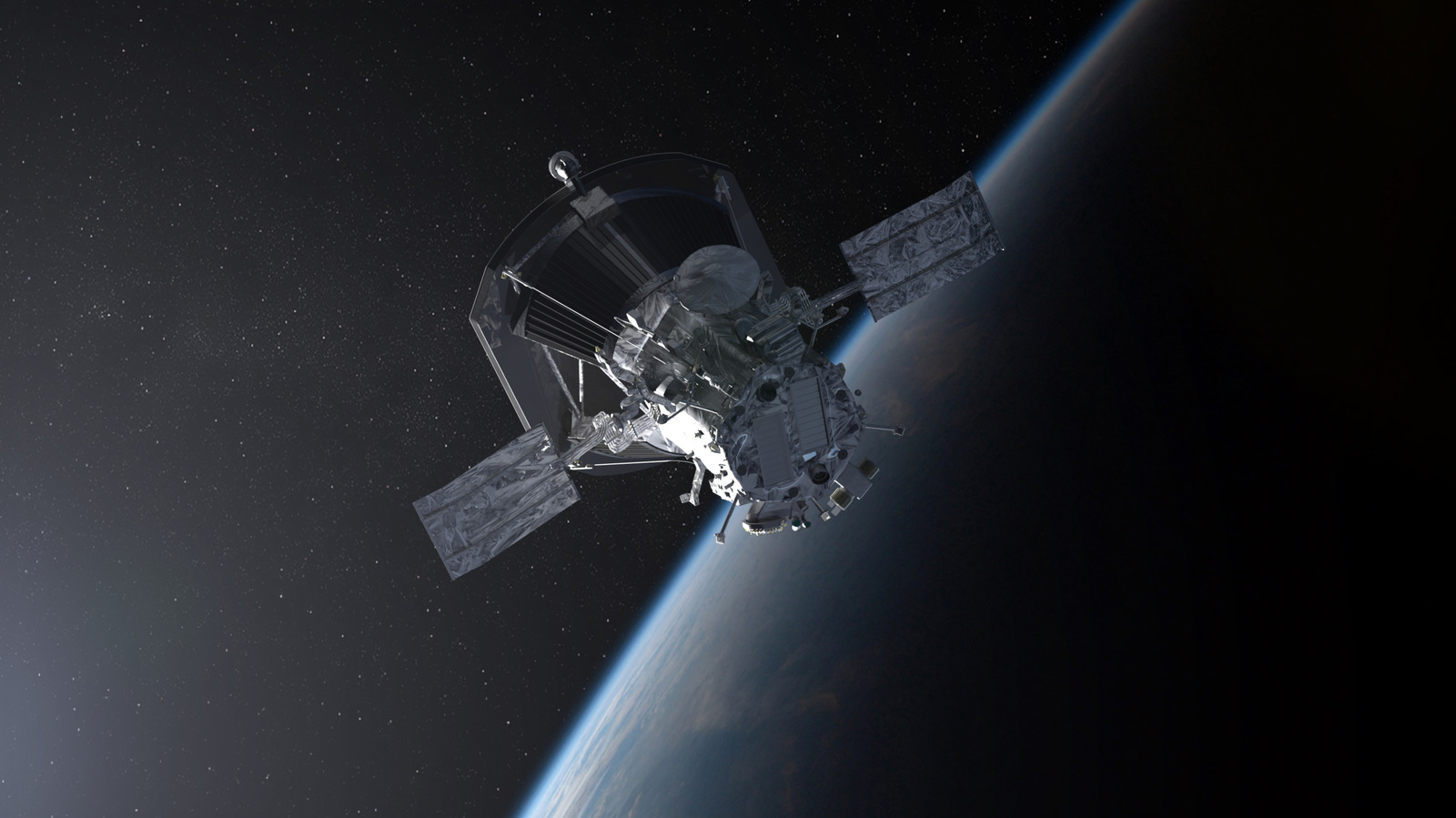
The Parker Solar Probe holds the record as humanity's fastest-ever creation, reaching speeds exceeding 430,000 miles per hour during its close approaches to the sun. This NASA spacecraft dwarfs any automotive achievement in the speed department, though the comparison highlights just how extreme space exploration has become.
For automotive context, the fastest production car on record remains the Bugatti Bolide, which theoretical calculations suggest could exceed 330 mph. Meanwhile, the land speed record holder, the Thrust SSC jet car, peaked at 763 mph in 1997. Neither comes remotely close to the Parker Solar Probe's velocity.
The probe's extreme speed results from solar gravity pulling it into tighter orbits with each pass. NASA designed it to withstand temperatures reaching 1,300 degrees Fahrenheit while studying the sun's corona. The spacecraft accelerates to these velocities without engines firing in reverse or active braking. Instead, gravity does the work.
The Parker Solar Probe represents a fundamental difference between automotive and aerospace engineering. Cars rely on fuel consumption and aerodynamic efficiency. Space probes exploit gravitational fields and trajectory physics. The probe's heat shield, made from carbon foam and silica, performs differently than any automotive material needs to.
This achievement underscores how automakers focus on practical speed within Earth's atmosphere and legal frameworks. The Parker Solar Probe explores conditions where traditional propulsion becomes irrelevant. NASA's engineering team prioritized data collection over sustained velocity, yet the probe still broke every speed record humanity has set.
For car enthusiasts, the Parker Solar Probe serves as a reminder that while 330 mph represents extraordinary automotive engineering, space exploration operates in an entirely different realm. The gap between the fastest cars and fastest objects humans have built continues to widen as space technology advances.