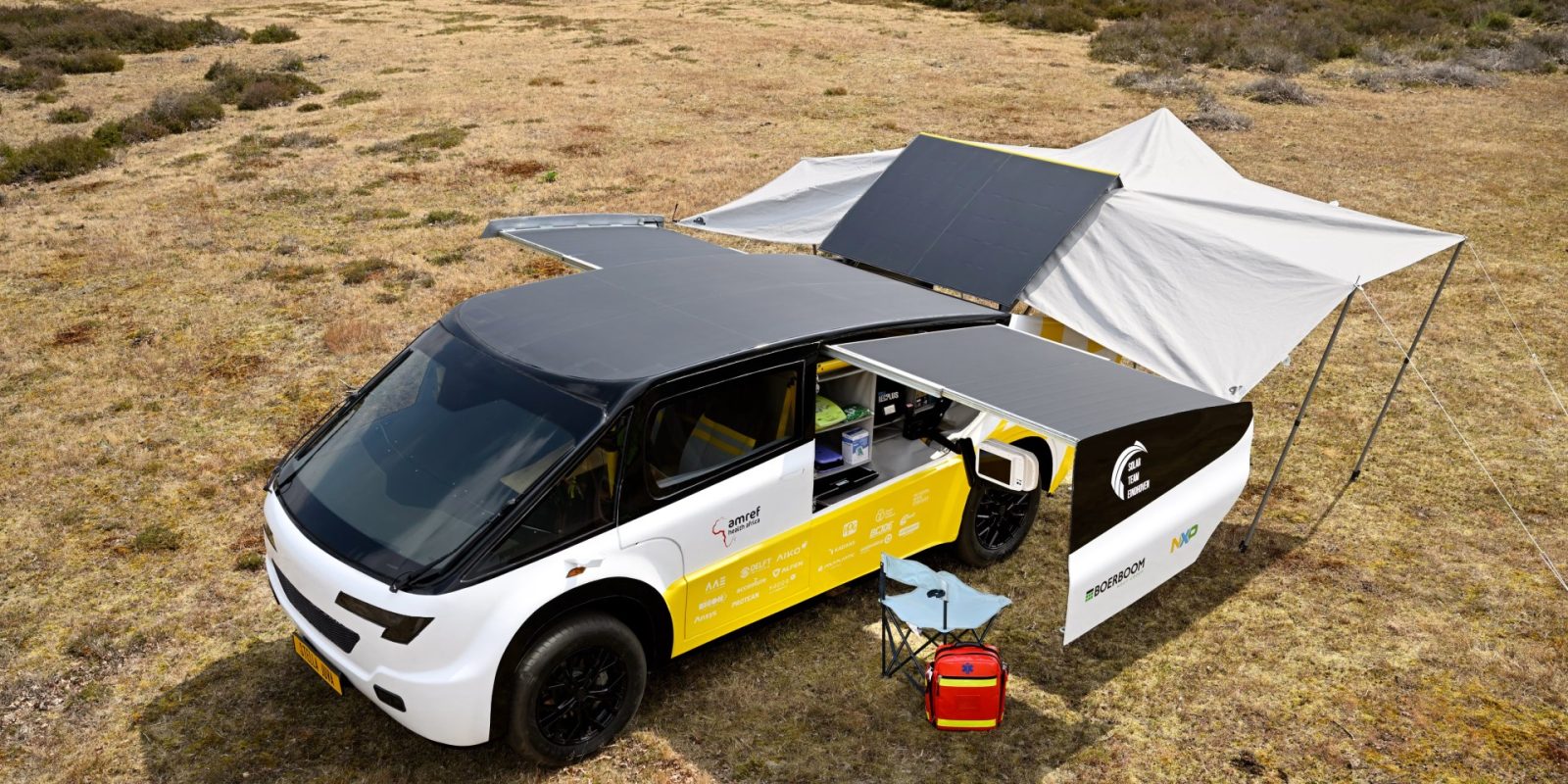
A team of 23 Dutch university students has engineered a solar-powered vehicle designed to deliver healthcare to remote regions lacking fuel infrastructure, reliable electricity, and developed roads. The ambulance achieves a stated range of 444 miles per charge, a remarkable figure for a solar-powered platform operating in challenging environments.
The project targets an acute global problem. Rural and underserved areas in developing nations often lack emergency medical transport. Traditional ambulances depend on fuel supply chains that break down in isolated regions. This solar vehicle eliminates that dependency entirely, running on integrated photovoltaic panels that generate power during daylight hours and store energy for nighttime or cloudy conditions.
The 444-mile range represents a significant engineering achievement for a solar-electric platform. That distance covers vast stretches of African savanna, Asian rural territories, and South American backcountry where emergency response times currently stretch into hours or days. The vehicle's design emphasizes durability and simplicity, critical factors for field deployment where maintenance resources vanish quickly.
This initiative reflects broader EV industry trends toward off-grid mobility and remote-area solutions. Major automakers have largely ignored underserved markets, focusing instead on wealthy urban centers. University research teams increasingly fill that gap, developing specialized vehicles for niche applications. Solar integration in vehicles remains marginal in consumer models, but experimental platforms like this ambulance demonstrate practical feasibility for low-speed, purpose-built applications.
The Dutch team's work highlights an important distinction. This isn't a commercial product competing with conventional ambulances in developed nations. Instead, it targets humanitarian use cases where any motorized transport beats manual carrying or no transport at all. The vehicle can operate independently of fuel deliveries, a game-changing advantage in regions where medical emergencies routinely prove fatal due to logistics alone.
The project validates solar EV concepts for specific, high-impact applications. Where range anxiety matters less than