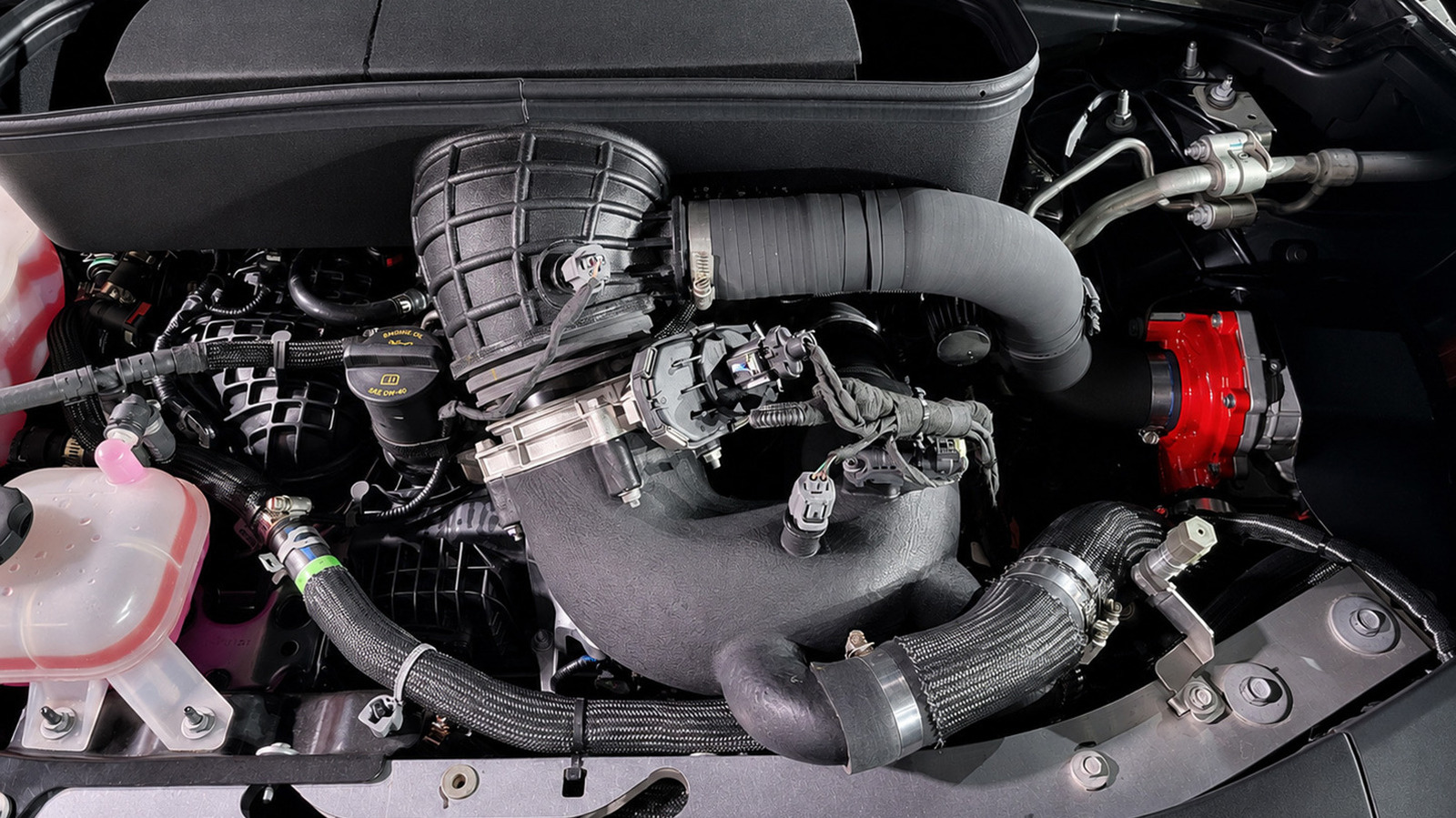
Stellantis unveiled the eBoost Air concept powertrain, which pairs an electric compressor with the existing twin-turbo Hurricane inline-6 engine. The addition targets turbo lag, the frustrating delay drivers experience between throttle input and boost arrival.
The Hurricane 6-cylinder already produces 420 horsepower and 415 lb-ft of torque in production form, appearing in the Jeep Grand Cherokee Trailhawk and Ram 1500 Revolution. Adding an e-compressor bridges the gap where mechanical turbos spool up, delivering immediate boost response at lower RPMs. This approach mirrors technology deployed in high-performance applications, where electric superchargers supplement turbochargers for seamless power delivery.
Electric boost systems face real-world hurdles. They demand significant electrical capacity, require robust battery management, and add weight and complexity to an already intricate engine bay. Stellantis must balance performance gains against reliability, cost, and thermal management in production vehicles. The concept stage suggests the company remains years away from showroom reality.
The timing reflects industry pressure. Turbocharged engines dominate truck and performance segments, yet traditional turbos carry inherent lag that customers notice. Dodge eliminated the Hellcat's supercharged V8 for the Hurricane platform, shifting the brand toward electrified performance. The eBoost Air concept signals Stellantis isn't abandoning traditional internal combustion without extracting maximum efficiency and responsiveness first.
Competitors like Ford, General Motors, and BMW already experiment with electric assistance in forced-induction systems. Porsche integrates e-turbos into the 911 Turbo. Success here could position Stellantis as a performance-focused transitional player during the broader shift to electrification. Whether eBoost Air reaches production depends on battery technology maturation, cost reduction, and