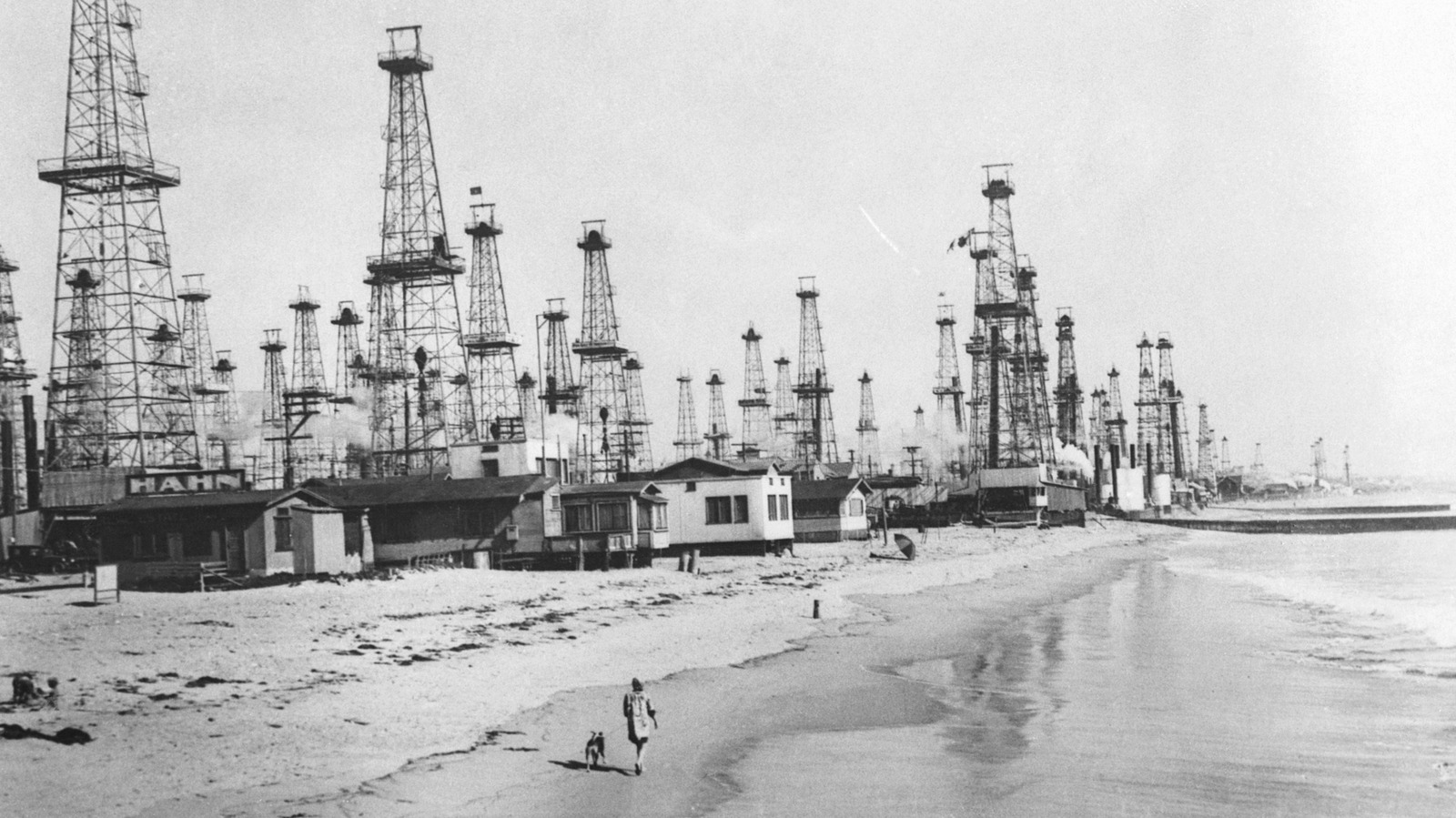
Los Angeles conceals thousands of active oil wells beneath residential neighborhoods, schools, and playgrounds, hidden inside fake buildings designed to blend into urban landscapes. The wells represent a legacy of Southern California's oil boom from the late 1800s and early 1900s, when petroleum extraction defined the region's development. Today, these operations continue generating revenue while residents live unknowingly above active drilling sites.
The disguised infrastructure reflects a deliberate effort by oil companies to operate discretely within densely populated areas. Some wells sit directly beneath schools and recreation facilities where children spend their days. Fake office buildings, landscaped structures, and other architectural camouflage mask the industrial equipment pumping crude from deep underground.
Oil extraction remains economically significant for Los Angeles and California broadly. The state produces roughly 3 percent of America's crude oil, with Los Angeles County hosting a substantial portion of that output. Operators pump millions of barrels annually while property values and quality of life concerns intersect with energy production needs.
The situation raises environmental and public health questions. Oil operations release methane and other volatile organic compounds into the air. Proximity to drilling sites correlates with elevated respiratory issues and other health concerns in surrounding communities. Residents often lack awareness of wells operating beneath their homes until local investigations or environmental groups expose the locations.
State regulations governing urban oil drilling have loosened over decades rather than tightened. California's Department of Conservation oversees well permitting, but enforcement remains inconsistent. Local governments retain limited authority to restrict operations or require greater disclosure to homeowners and school districts.
This landscape reflects broader American tensions between energy independence, industrial legacy, and environmental justice. Los Angeles demonstrates how oil infrastructure persists within urban centers through deliberate concealment. The hidden wells represent unresolved questions about who bears the costs of energy production and whether proximity disclosures should become mandatory for property transactions and school operations.