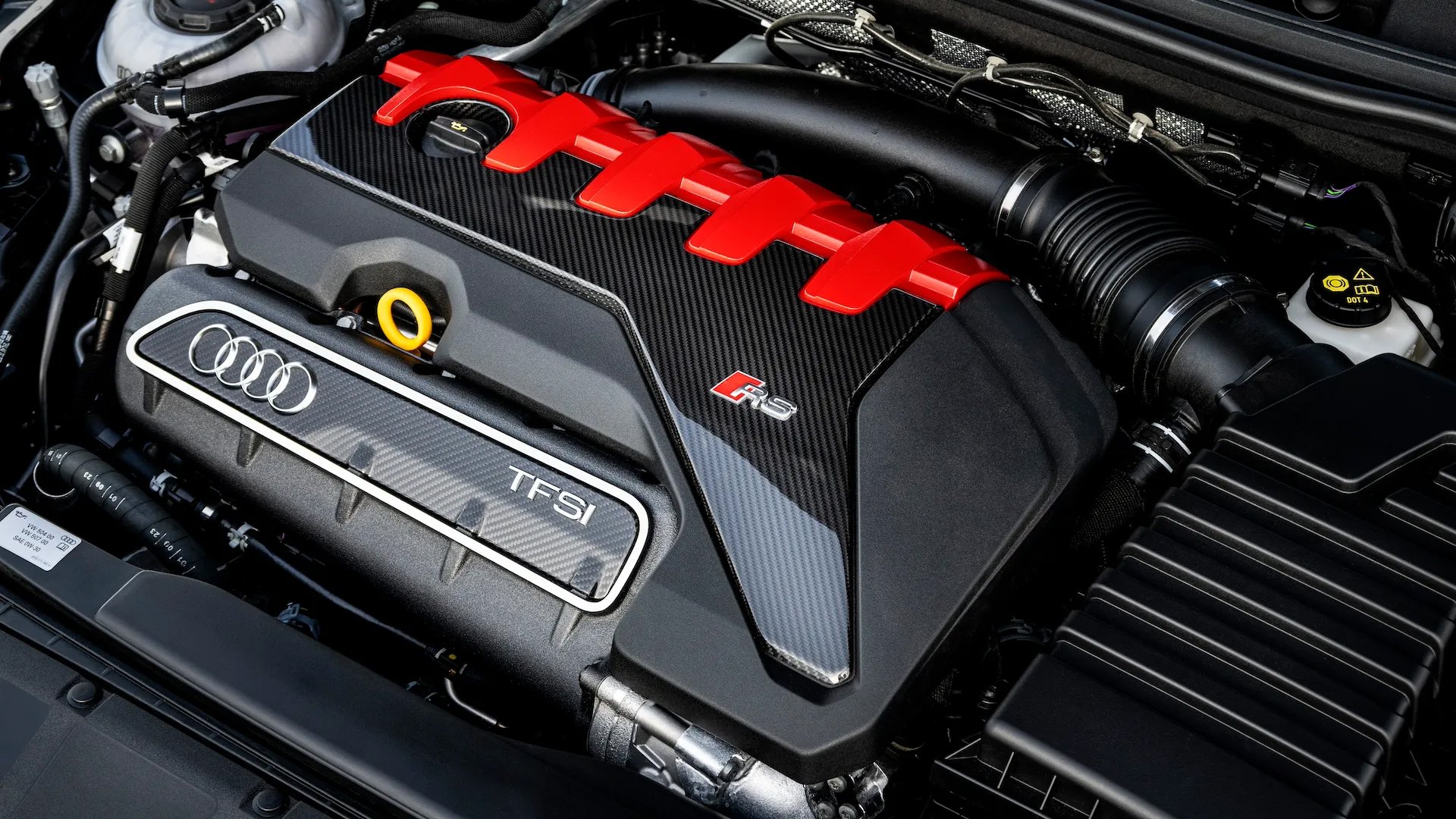
Audi refuses to abandon its five-cylinder engine despite mounting pressure from emissions regulations and the industry's shift toward electrification. An Audi executive confirmed the automaker actively develops technology to keep the inline-five alive beyond incoming environmental standards, recognizing the engine's cultural and commercial weight within the brand.
The five-cylinder has defined Audi's identity for decades. The engine powers the RS 3 and RS Q3, delivering aggressive performance credentials that resonate with driving enthusiasts. It produces a distinctive mechanical soundtrack that turbocharged four-cylinder and hybrid powertrains cannot replicate. Audi knows customers buying its performance variants value this authenticity.
Regulators tighten tailpipe emissions across Europe, China, and North America, forcing manufacturers to electrify or abandon traditionally powered platforms. Most competitors pivot aggressively. Mercedes-AMG phases out gas engines. BMW commits to full electrification. Porsche kills the 911's naturally aspirated six-cylinder. Yet Audi charts a different course.
The company likely explores hybrid integration, synthetic fuels, or advanced emissions control to extend the five-cylinder's viability. These approaches preserve the engine's character while meeting regulatory thresholds. Hybrid powertrains particularly appeal to performance divisions, allowing manufacturers to keep combustion engines while reducing fleet emissions through electric assistance.
Audi's allegiance reflects business reality. Customers purchasing 80,000-dollar RS models demand legitimacy. An RS 3 powered solely by electricity or smaller turbo four-cylinder displacement lacks the mechanical pedigree buyers expect. The five-cylinder engine represents value that extends beyond specifications and into brand mythology.
This strategy differentiates Audi from competitors surrendering heritage engines entirely. Whether the executive's commitment withstands future regulatory tightening remains uncertain. But for now, Audi signals that performance DNA matters more