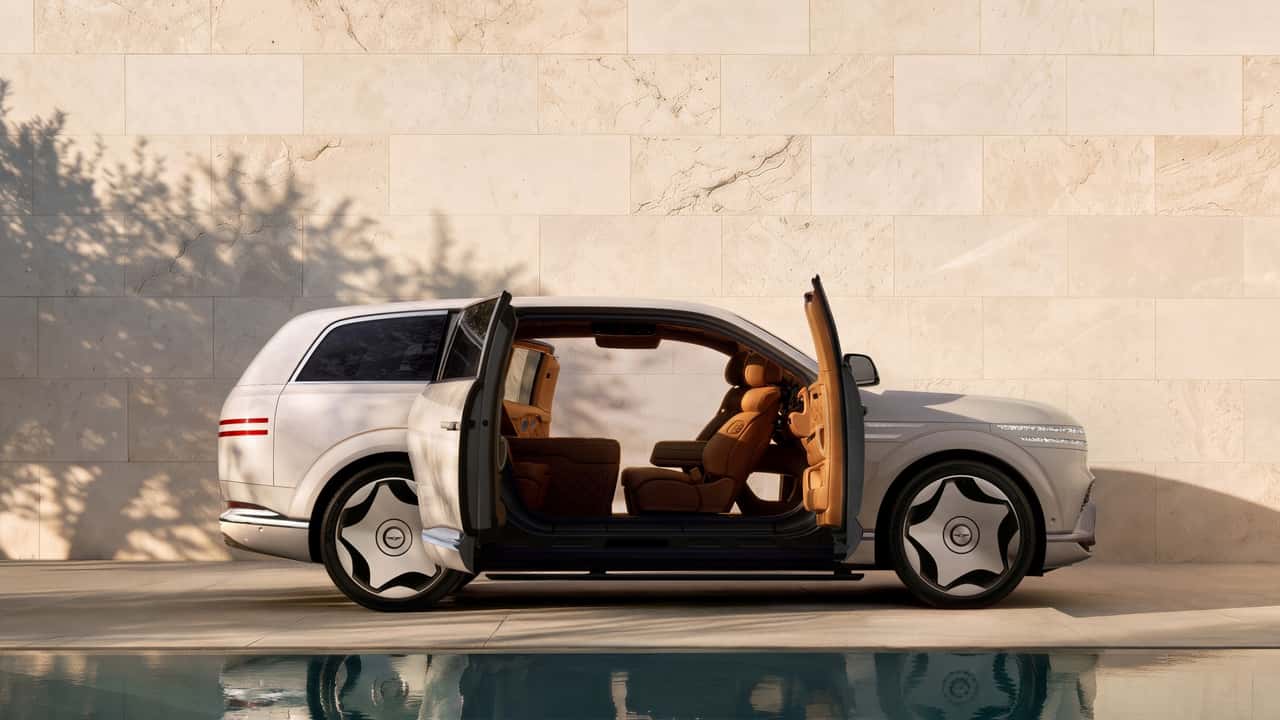
Genesis unveiled the GV90, a three-row electric SUV that prioritizes passenger comfort and lounge-style seating over traditional driving dynamics. The vehicle features rotating front seats that face rearward, transforming the cabin into a social space for four adults when parked.
The GV90 represents Genesis' strategy to compete with ultra-premium electric SUVs by emphasizing lifestyle and interior experience. The rotating front seats enable conversation-focused layouts impossible in conventional vehicles. This design choice reflects a shift in how luxury manufacturers think about vehicle interiors as the EV transition accelerates. With traditional powertrains eliminated, designers gain freedom to reimagine cabin architecture.
The spacious three-row layout targets affluent buyers who view their vehicles as mobile sanctuaries rather than pure transportation. Genesis packs the cabin with high-end materials and tech, following the playbook established by Mercedes-Benz's EQS and BMW's iX. The rotating seats feature adds novelty and practical utility for families or executives conducting business.
Competitive pressure from Tesla's Model X and Volkswagen's luxury EV lineup makes differentiation essential. Genesis leans into the "lounge" positioning to distinguish the GV90 from performance-focused rivals. The rotating seat technology exists in competitors but rarely becomes a headline feature.
The GV90 targets buyers willing to prioritize comfort and interior space over driving range or charging speed. Pricing and battery options remain TBD, but expect positioning above the standard GV70 EV. Genesis intends the GV90 to anchor its electric SUV lineup and capture market share in the increasingly crowded three-row electric segment.
The reveal signals that luxury EV buyers now demand more than just electric powertrains. They want vehicles that justify six-figure price tags through thoughtful interior design, advanced technology, and experiences impossible with traditional cars. The Genesis