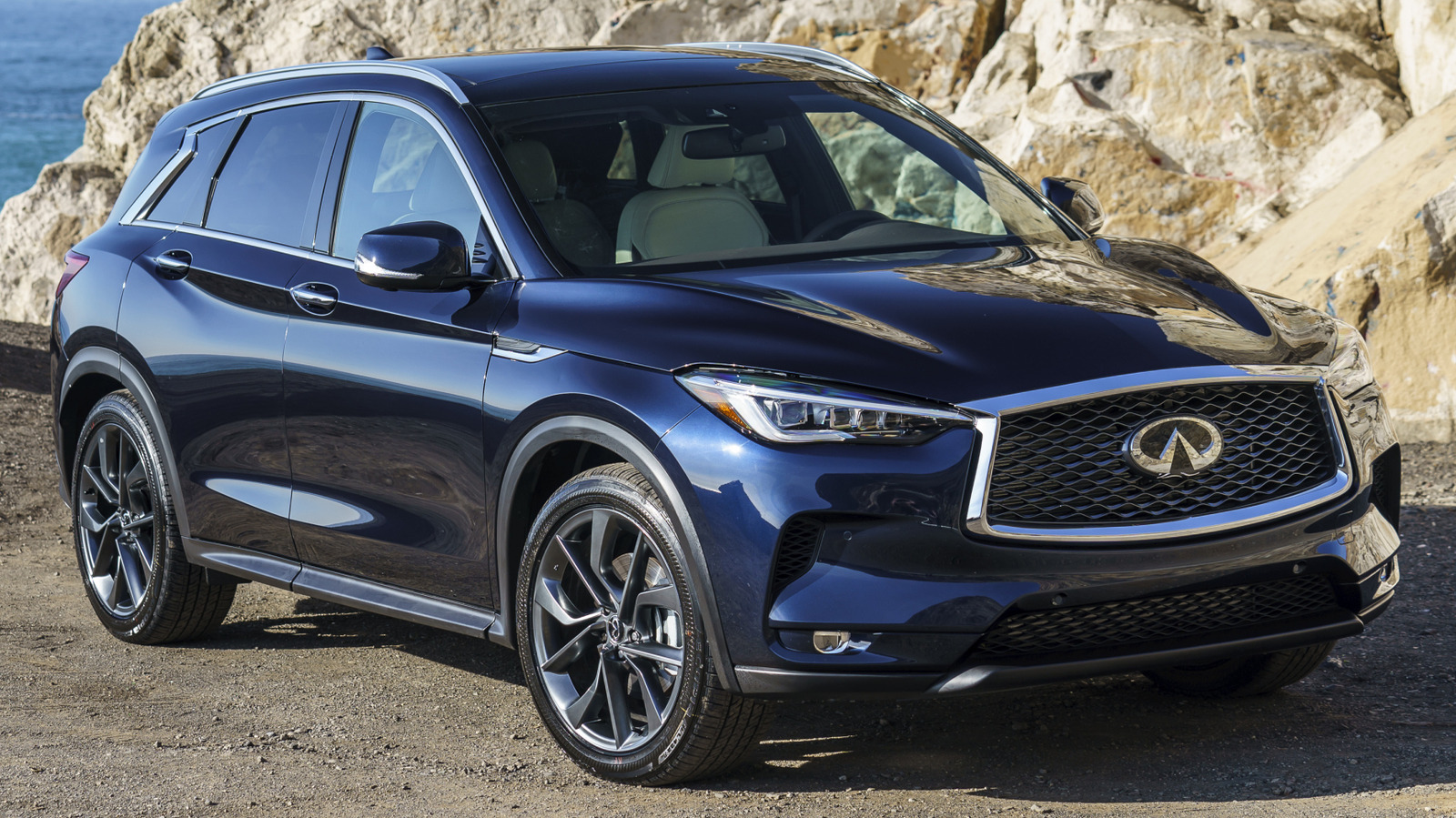
# Infiniti QX50 Faces Steep Value Collapse After Five Years
The 2021 Infiniti QX50 exemplifies a broader problem plaguing the luxury compact SUV segment: catastrophic depreciation. Five years after launch, these vehicles shed value at rates that leave owners underwater and deter new buyers from the used market.
Luxury compact SUVs occupy a precarious market position. They cost more than mainstream competitors like the Toyota RAV4 or Honda CR-V, yet they lack the brand cachet of established German luxury nameplates. Infiniti has fought an uphill battle for years to establish the QX50 as a compelling alternative to the BMW X3, Mercedes-Benz GLC, or Audi Q5. The reality on auction blocks and dealership lots tells a different story.
The QX50 launched in its current generation in 2018 with a starting price around 36,000 dollars. By 2021, Infiniti had refined the lineup, adding more features and pushing pricing closer to 40,000 dollars for base models. Today's used examples command substantially less, with five-year-old QX50s trading well below their original transaction prices. This depreciation pattern outpaces the luxury segment average by a significant margin.
Several factors drive this decline. First, Nissan's luxury division struggles with brand perception. Consumers shopping for compact luxury SUVs typically gravitate toward established marques with proven reliability records and stronger dealer networks. Second, the QX50 competes against formidable opponents with deeper financial resources and marketing reach. Third, technological obsolescence accelerates in luxury vehicles. A 2021 infotainment system feels dated now, and software updates cannot match entirely new interfaces in newer models.
Financing compounds the problem. Luxury lease programs favor newer vehicles with lower interest rates and better incentives. Buyers who purchase QX50s outright face higher ownership costs than mainstream alternatives, while lease returns flood the used market with vehicles aged three to four years. Supply pressures prices downward.
The QX50's practical strengths remain relevant. It offers a turbocharged 2.0-liter engine with 268 horsepower, variable compression technology that improves efficiency, all-wheel drive standard on most trims, and a reasonably spacious cabin. The ProPILOT semi-autonomous driving system adds convenience on highway commutes. These features matter to actual owners but register weakly in resale valuations.
Infiniti's recent product strategy shifts toward electric vehicles and crossovers. The IQ crossover, launching in the United States soon, represents the brand's EV push. This transition signals reduced investment in the QX50 platform, which further dampens used-market enthusiasm. Buyers anticipate model obsolescence and lower their bids accordingly.
For consumers holding 2021 QX50s, the depreciation curve provides an uncomfortable reminder: luxury brands without strong residual-value performance represent poor financial bets. Monthly payments on a QX50 lease typically exceeded those on a RAV4 Prime or CR-V, yet the Toyota and Honda models retain value far more effectively. That gap widens with each passing year.
Potential used QX50 buyers benefit from this dynamic. Pricing reflects the market's skepticism more than the vehicle's actual capabilities. Strong discounts on clean examples with reasonable mileage represent genuine opportunities for cost-conscious luxury buyers willing to accept Infiniti's brand risk.