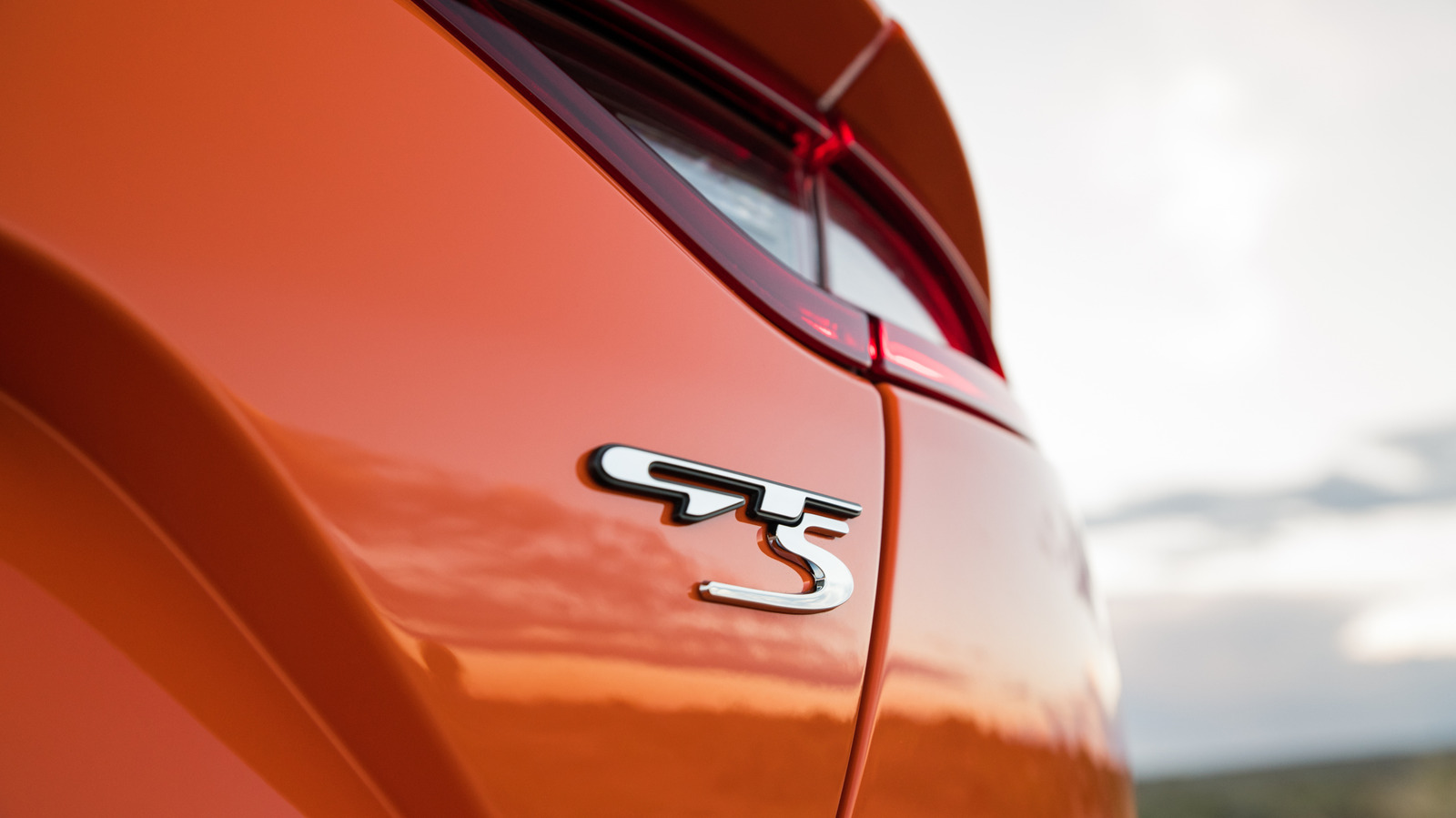
# Hunting For Kia Stinger GTS: Why That Orange Paint Job Matters in the Used Market
The Kia Stinger GTS occupies a peculiar niche in the used car market. It's fast enough to entertain, rare enough to feel special, and finished in a color so polarizing that it either becomes your reason to buy or your reason to pass.
Kia's Stinger entered production in 2018 as the brand's answer to the Dodge Charger and Infiniti Q50. The sedan challenged domestic and Japanese competitors with a turbocharged 3.3-liter V6 engine pushing 365 horsepower and 376 pound-feet of torque. That's legitimate performance: zero-to-60 mph in about 5 seconds, a top speed of 167 mph, and rear-wheel drive tuning designed for entertaining handling.
The Stinger GTS variant elevated the performance formula. Kia added a mechanical limited-slip differential, Brembo brakes, and sport suspension tuning that prioritized responsiveness over comfort. The transmission options included either an eight-speed automatic or a six-speed manual, with manual buyers getting access to a more visceral driving experience Kia rarely offered in volume production.
Then there's the orange. Kia called it "Sunset Orange," and the color became the Stinger GTS visual signature. It wasn't a subtle factory option. The bright, nearly neon-adjacent finish turned heads on highways and parking lots alike. Most Stinger buyers chose black, white, or silver. The orange models stayed relatively rare, representing a fraction of Stinger GTS production across model years.
That rarity now affects used market dynamics. A Stinger GTS in Sunset Orange commands attention because it represents a specific moment in Kia's willingness to build something genuinely different. The brand has spent decades building reliable, practical, and ultimately forgettable cars. The Stinger violated that formula. It was expensive for Kia at launch. It demanded driver engagement. It looked aggressive.
Used Stinger GTS models, particularly in orange, carry historical weight beyond their mechanical specs. They represent the era when Kia attempted to build a real driver's car before the industry pivoted toward electrification and autonomous systems. The manual transmission models, already scarcer than automatic variants, become even more desirable when paired with that orange paint.
The practical calculus matters too. Stinger GTS models now fall into the five-to-seven-year-old range. Warranty coverage has expired for most examples. Owners face real costs on turbocharged engine maintenance, differential service, and brake fluid changes. Kia's reliability reputation has improved substantially since 2018, but complex performance cars demand attention. A well-maintained orange Stinger GTS with service records becomes genuinely valuable.
For used car shoppers, the orange GTS represents a hedge against automotive boredom. The color makes resale difficult, which means prices stay reasonable. A turbocharged sedan with rear-wheel-drive dynamics and a six-speed manual doesn't fit modern market preferences. Most buyers want crossovers and electric vehicles. That means someone shopping for an orange Stinger GTS can acquire genuine performance and personality at a discount.
The catch remains straightforward: you need to actually like the orange. If you do, finding one of these rare GTS models becomes a hunt worth undertaking.