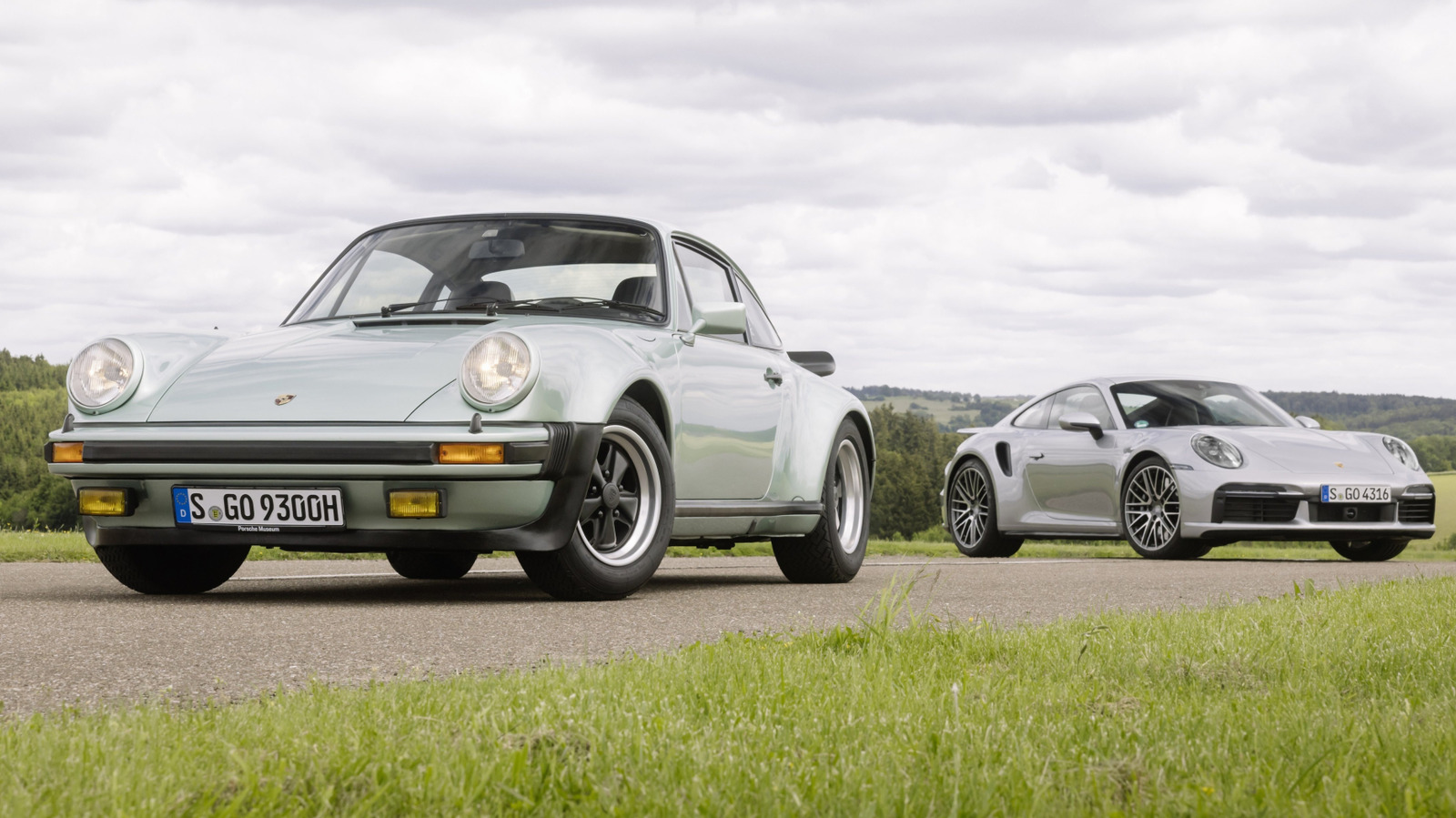
# How Porsche 911 Turbo Prices Have Outpaced Inflation Over 50 Years
The Porsche 911 Turbo has become an icon of performance engineering. Comparing its price across five decades reveals how luxury sports car valuations have moved independent of general economic inflation.
In 1976, Porsche introduced the 930 Turbo. The asking price started at approximately $43,000 in base configuration. That sum represented serious money at the time, placing the turbocharged 911 firmly in exotic territory for American buyers. Adjusted for inflation alone using the Consumer Price Index, that 1976 price would equal roughly $220,000 in today's dollars.
The 2026 Porsche 911 Turbo carries a starting MSRP of approximately $210,000 for the coupe and $218,000 for the cabriolet, according to Porsche's pricing announcements. At first glance, the adjusted 1976 price and the 2026 starting point appear nearly identical. The reality runs deeper.
The 1976 930 Turbo produced 260 horsepower from its 3.0-liter flat-six engine with a single turbocharger. The car featured analog instrumentation, minimal creature comforts, and engineering that prioritized raw driving feel over technology integration. Zero-to-sixty times ran approximately 5.2 seconds.
The 2026 911 Turbo operates in an entirely different performance envelope. Its 3.8-liter flat-six twin-turbocharged engine generates 518 horsepower and 472 pound-feet of torque. The 2026 model accelerates from zero to sixty in approximately 2.7 seconds. Modern 911 Turbos include all-wheel drive, carbon-ceramic brakes, adaptive suspension systems, integrated infotainment with smartphone connectivity, driver assistance features, and materials engineering unknown in 1976.
When inflation merely tracks the general price increase, the 2026 911 Turbo actually represents remarkable value relative to its 1976 predecessor. Buyers receive more than double the horsepower, cutting-edge electronics, safety systems that didn't exist fifty years ago, and chassis technology refined through decades of motorsport competition.
However, the story shifts when examining the broader sports car landscape. Competing models like the Chevrolet Corvette have grown in price but maintained closer adherence to inflation rates. The 2026 Corvette Stingray starts near $65,000, while its 1976 counterpart sold for approximately $10,000. Adjusted for inflation, that 1976 price reaches roughly $51,000.
Porsche has essentially held its inflation-adjusted price while repositioning the 911 Turbo as a technology-packed supercar. The brand trades on heritage, exclusivity, and performance credentials. Buyers accept premium pricing because the 911 Turbo occupies a rarefied performance segment that few other production cars reach.
Porsche's strategy reflects broader industry trends. Luxury manufacturers increasingly add technology, connectivity, and autonomous driving features to justify elevated pricing. The gap between mass-market vehicles and ultra-premium performance cars has widened considerably since 1976. A base Mercedes-Benz or BMW costs roughly what a stripped Corvette did fifty years ago, but a 911 Turbo has carved out premium territory that inflation alone doesn't explain.
The 2026 911 Turbo costs approximately the same in inflation-adjusted terms as the 1976 930 Turbo, yet delivers exponentially more capability, performance, and technology. This pricing parity masks a fundamental industry evolution toward technology-intensive luxury goods that command premium premiums independent of simple inflation calculations.