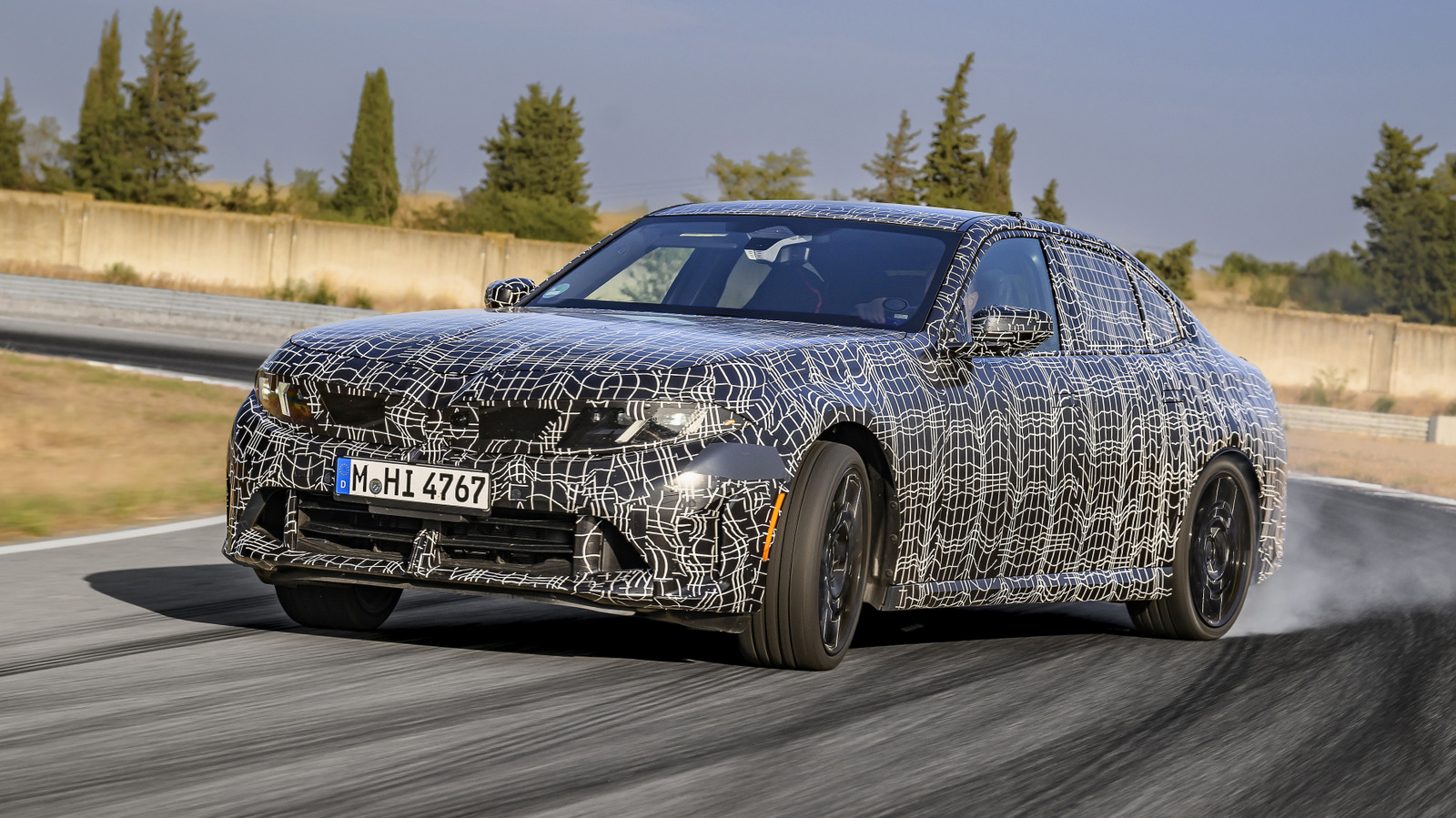
BMW confirms the new M350, the direct successor to the M340i, packing 437 horsepower from a turbocharged straight-six engine. The jump represents a meaningful power increase over its predecessor, pushing the performance-focused 3 Series variant into sharper territory.
Standard all-wheel drive comes as expected on the M350, but BMW engineers built in flexibility. A button press engages what the company calls "Drift Moment" functionality, shifting the sedan to rear-wheel-drive operation for drivers who want classic M-car dynamics. This dual-mode capability appeals to both daily drivers who prefer traction and enthusiasts chasing cornering theater.
The straight-six remains BMW's signature powertrain choice for M-branded performance cars. This configuration delivers linear power delivery and a characterful engine note, differentiating the M350 from competitors leaning on turbo fours or V8s. The 437-hp figure sits BMW in a competitive bracket against rivals like the Mercedes-AMG C43 and Audi S4, both offering comparable output and twin-turbo hardware.
The transition from M340i to M350 reflects BMW's naming convention shift across its lineup. The M340i used the M440i badge structure before the rebranding, making this new nomenclature cleaner and more direct. Power gains of roughly 50 horsepower over the M340i's 382-hp output justify the model designation change and appeal to buyers wanting incremental performance without jumping to the full M340 competition sedan tier.
All-wheel-drive systems dominate the luxury sedan market, particularly in performance variants where winter capability and launch traction matter. However, the Drift Moment feature addresses a core complaint among M-car purists. RWD enthusiasts often sacrifice AWD practicality to chase the responsive, pointable handling that rear-wheel drive delivers. BMW's button-activated RWD mode bridges this gap, giving drivers both worlds without mechanical compromise.
This engineering flexibility hints at BMW's broader strategy. As electrification advances and performance electric variants multiply, maintaining traditional combustion-engine appeal requires features that justify gasoline engines against EV alternatives. The M350's customizable driving character, backed by strong 437-hp output and available RWD mode, positions it as the last true straight-six M-sedan for enthusiasts before full electrification accelerates.
The M350 targets buyers aged 35-55 with performance expectations, technical knowledge, and appreciation for chassis refinement. These customers value engine character and active involvement in vehicle dynamics, traits the M350 emphasizes through its straight-six and RWD capability. The M340i attracted similar buyers but at a lower intensity; the M350 sharpens that proposition.
Pricing, transmission options, and availability details remain unconfirmed. BMW typically pairs M variants with eight-speed automatics, though no announcement confirms this yet. European markets will likely see the M350 first, with North American availability following within 12 months of official launch.
The M350 arrives as BMW reinforces its gas-engine portfolio ahead of full EV transition. Straight-six M-cars retain passionate followings, and this upgraded variant leans into that loyalty by offering raw power, engine prestige, and selective RWD dynamics for drivers unwilling to abandon traditional performance sedans just yet.