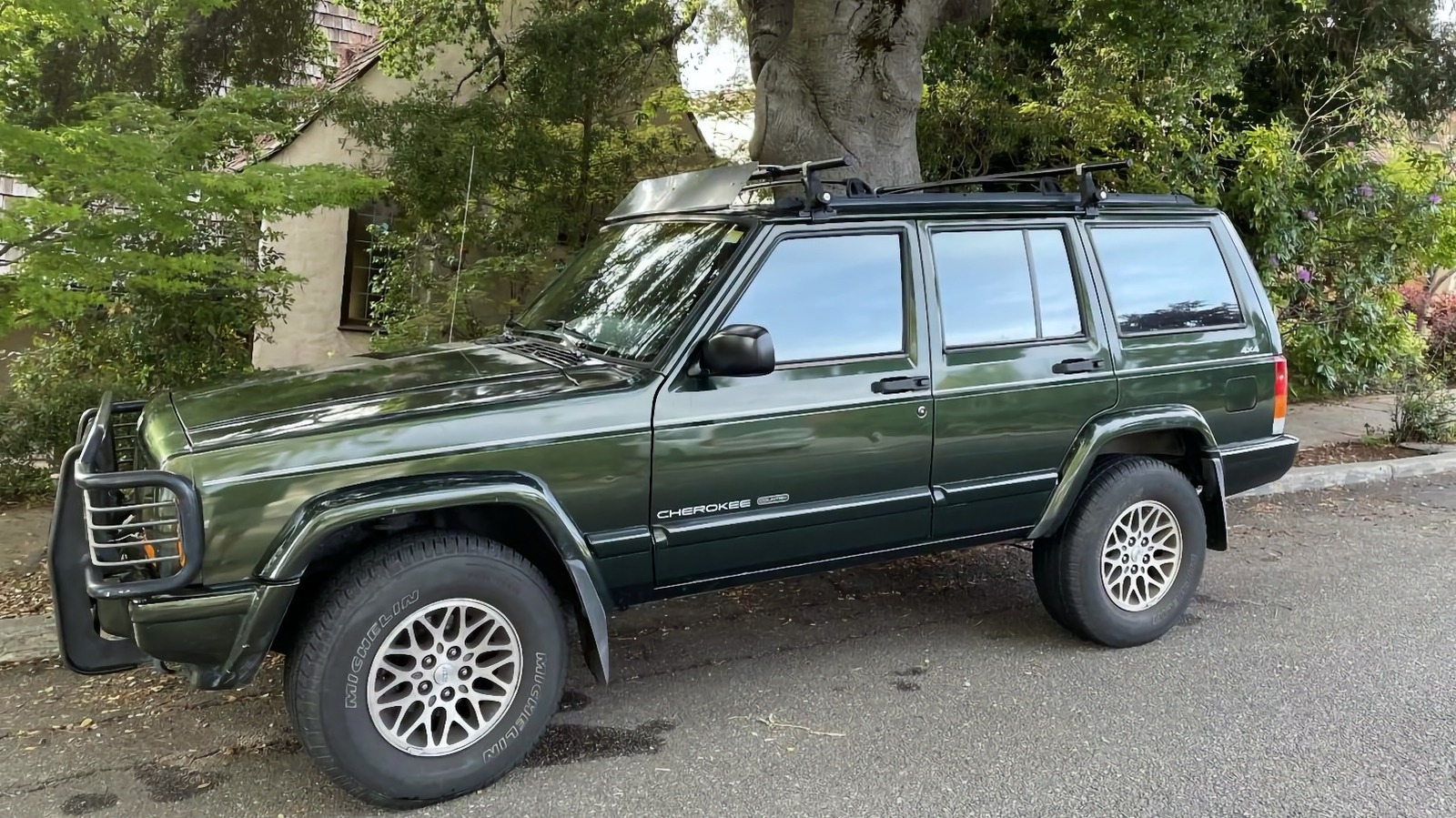
# $12K 1997 Jeep Cherokee Up-Country: Collector's Bait or Overpriced Relic?
A 1997 Jeep Cherokee Up-Country listed at $12,000 exemplifies the heated market for first-generation XJ Cherokees, where nostalgia and functional off-road capability command premium prices relative to actual condition and mileage. The green-on-tan color combination marks this as a period-correct aesthete's choice, but questions about value persistence loom large for vintage compact SUVs in an era where modern alternatives offer dramatically superior reliability and features.
The Cherokee XJ generation, produced from 1984 to 2001, has experienced a renaissance among enthusiasts who prize its lightweight platform, bolt-on upgrade potential, and proven 2.5-liter or 4.0-liter engine options. The 1997 model year lands in the XJ's mature phase when Jeep had refined the formula after a decade of production. The Up-Country trim level pitched itself as a lifestyle variant combining light off-road appointments with on-road comfort, making it neither a hardcore Laredo build nor a spartan base model.
At $12,000, this Cherokee sits in genuinely contested territory. A stock example in excellent condition occupies the price floor where buyers transition from project vehicles into driver-quality machines. That asking price assumes exceptional mechanical health, low mileage, comprehensive service records, and cosmetic presentation that photographs well. The green-on-tan palette, while visually distinctive, represents either a selling strength for purists or a niche appeal limitation for general market resale.
The XJ Cherokee's appreciation over the past five years reflects broader collector sentiment around pre-2000 compact sport utilities. These vehicles represent the last generation of carbureted or early-fuel-injection four-cylinder durability married to mechanical simplicity. Owners can tackle maintenance and repairs without proprietary diagnostic software. The 4.0-liter straight-six, when properly maintained, routinely exceeds 200,000 miles. Parts availability remains robust through both OEM channels and the robust aftermarket scene.
However, valuation risk exists. The 1997 Cherokee carries a 27-year service history, meaning any original interior trim, rubber gaskets, seals, and wiring harnesses have endured nearly three decades of thermal cycling and potential corrosion. Rust penetration in door frames, rocker panels, and floor pans represents a hidden liability that photographs cannot reveal. The asking price leaves minimal financial buffer for discovery of structural compromise or necessary engine-out repairs.
Competitively, the $12,000 window attracts alternatives. An equivalent-year Toyota 4Runner 4WD commands similar money and offers superior rust resistance, stronger resale trajectory, and less contentious market positioning. Modern used compact SUVs, particularly Toyota's RAV4 or Subaru's Crosstrek in similar price ranges, deliver legal emissions compliance, infotainment systems, and parts warranty security that 1997 hardware cannot match.
The decision hinges on buyer intent. Enthusiasts targeting authentic restoration, light off-road capability, or weekend-warrior duty find legitimate value. The Cherokee's aftermarket ecosystem enables customization paths that modern vehicles restrict through electronics integration. Casual buyers seeking reliable transportation face better alternatives.
The green-on-tan aesthetic works as a selling argument in regional enthusiast networks, particularly in markets where vintage Jeep culture maintains strong community support. Nationally, that visual appeal narrows the addressable buyer pool. At $12,000, the Cherokee requires either mechanically transparent provenance or price negotiation room.