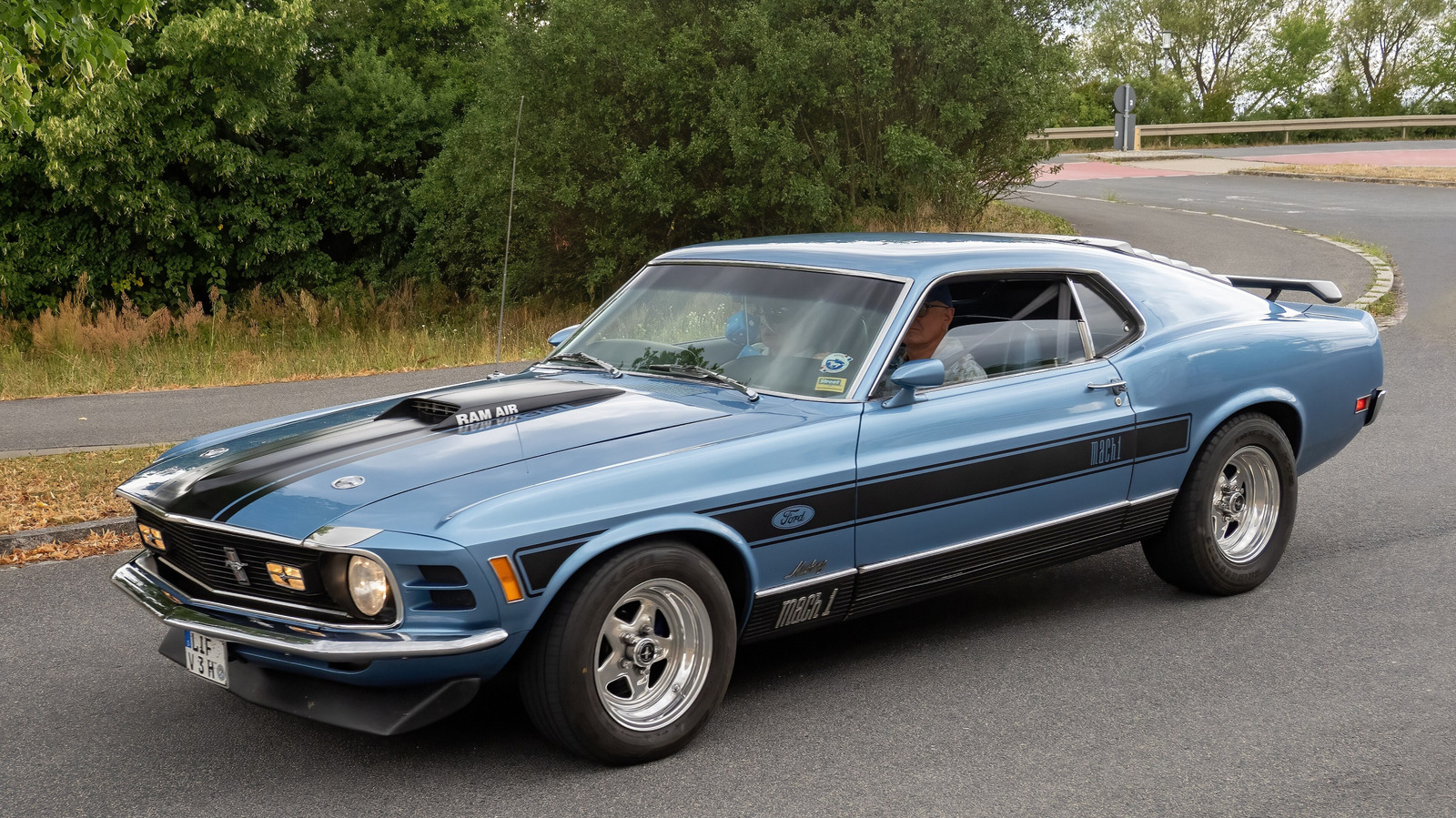
# The Ford Mustang Mach 1's Engine Evolution: From Muscle Car Icon to Modern Performance Machine
The Mustang Mach 1 nameplate ranks among Ford's most storied performance badges, spanning more than 50 years of American muscle car history. Yet the story of maximum power in each generation tells a dramatic tale of engineering ambition, fuel regulation, emissions standards, and market shifts that reshaped the automotive landscape.
The original 1969 Mustang Mach 1 arrived with the legendary 428 Cobra Jet V8, producing 335 horsepower and 440 pound-feet of torque. This engine defined the muscle car era at its zenith, when displacement and raw output dominated buyer priorities. The Mach 1 nameplate became synonymous with street performance, combining aggressive styling with undeniable acceleration.
The 1970s marked a dramatic reversal. The 1970 Mustang Mach 1 offered a 429 Cobra Jet rated at 370 horsepower, but horsepower ratings themselves became unreliable metrics after that point. Manufacturers shifted to gross horsepower figures, inflating claims while actual output declined. Oil embargoes, tightening emissions regulations, and catalytic converters gutted real performance. By the late 1970s, the most powerful Mach 1 variants struggled to produce 200 horsepower, a stunning 40-percent decline in less than a decade.
The 1980s and 1990s saw modest recovery. Fuel injection replaced carburetors. Computerized engine management improved efficiency. The Mach 1 nameplate disappeared for years, resurfacing sporadically as Ford struggled to build compelling performance variants during the era of downsizing and the focus on fuel economy mandates.
The fourth-generation Mustang (1994-2004) brought the Mach 1 back in 2003 as a special edition. Ford paired it with the 4.6-liter naturally aspirated V8, generating 305 horsepower and 320 pound-feet of torque. Not impressive by modern standards, but respectable within the context of early 2000s regulations and engineering constraints.
The fifth-generation Mustang (2005-2014) accelerated the formula. The 2012-2014 Mach 1 received the 5.0-liter Coyote V8, producing 420 horsepower and 390 pound-feet of torque. Direct injection, variable valve timing, and advanced ignition systems proved that displacement still mattered, but smart engineering mattered more.
The sixth-generation Mustang (2015-present) marks the modern era. The 2021 Mach 1 carries the 5.0-liter Coyote with 480 horsepower and 405 pound-feet of torque. This represents the most powerful naturally aspirated Mach 1 ever offered. The Shelby GT500, while not technically a Mach 1, demonstrates Ford's commitment to performance with its 5.2-liter supercharged V8 producing 760 horsepower.
The trajectory reflects broader industry forces. The muscle car boom of the late 1960s collided with the 1970s energy crisis and emissions mandates, nearly extinguishing performance entirely. Recovery proved slow. Only in recent years, with advanced computer controls and direct injection, have manufacturers restored genuine performance without sacrificing efficiency or emissions compliance.
The Mach 1's power story also shows generational preferences shifting. Modern buyers demand reliability, creature comforts, and practicality alongside performance. Raw horsepower alone no longer sells cars. The 480-horsepower modern Mach 1 accelerates faster and handles better than the 428 Cobra Jet despite nearly matching its horsepower, thanks to modern suspension geometry, braking systems, and traction control.
Ford's decision to retire the sixth-generation Mustang suggests the Mach 1 nameplate faces an uncertain future. Whether a turbocharged four-cylinder variant or an all-electric successor emerges remains unclear. What's certain: future performance icons will measure power differently than their muscle car ancestors did.