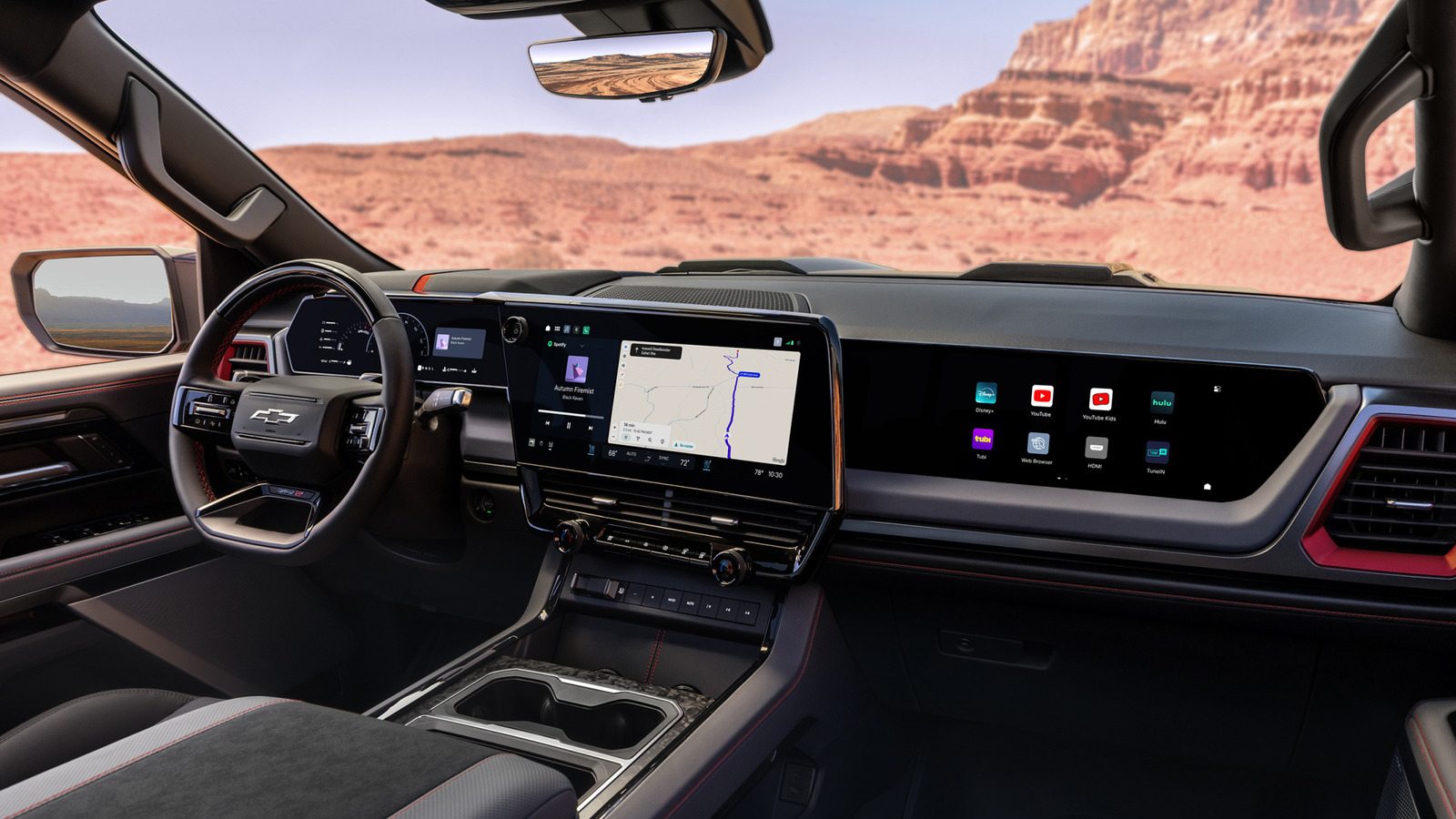
General Motors reversed course on smartphone integration. After months of insisting it would abandon Apple CarPlay and Android Auto entirely, the automaker now confirms both platforms will return as standard features starting with the 2027 Chevrolet Silverado and GMC Sierra.
GM's initial strategy centered on forcing owners into its proprietary infotainment ecosystem. The company touted advantages around data collection, seamless integration with OnStar services, and control over the user experience. But that approach collided with customer expectations. Truck buyers, particularly the Silverado and Sierra's core demographic, resisted the idea of losing smartphone connectivity that competitors like Ford, Ram, and Toyota continued to offer.
The 2027 Silverado and Sierra trucks debut GM's new infotainment platform alongside restored CarPlay and Android Auto support. The timing matters. GM's full-size pickup segment represents enormous revenue. The Silverado leads GM's North American profit engine. Losing buyers to competitors over missing smartphone integration posed real business risk. Ford's SuperCrew models and Ram 1500s already offered both systems seamlessly. Ram's integration specifically became a selling point in dealer conversations and customer reviews.
This reversal reflects broader industry reality. Smartphone integration ranks among the top three reasons buyers choose one truck over another. Edmunds research consistently shows younger truck buyers especially demand seamless CarPlay and Android Auto connectivity. Losing that feature creates friction at purchase decision time.
GM plans wider rollout of this capability across its vehicle portfolio soon after the Silverado and Sierra launch. The company hasn't specified exact timing or which models follow, but expect mid-size crossovers and luxury Cadillac products to receive the systems relatively quickly. This matters because competitors have already shipped these features across their lineups.
The strategic reversal also signals GM's recognition that proprietary ecosystems alone cannot compete with the ubiquity of iPhone and Android platforms. Drivers want their existing smartphone apps, navigation preferences, and connectivity standards. They don't want learning curves or workarounds. GM's original vision assumed it could deliver superior functionality through complete platform control. Market response proved otherwise.
OnStar integration remains a competitive advantage for GM vehicles. The company can offer both proprietary services and smartphone integration simultaneously. Other manufacturers do this routinely. That balance appears to be GM's new approach.
The 2027 Silverado arrives during intense pickup competition. Ford F-150 sales remain strong partly because Ford offers comprehensive smartphone connectivity without compromise. Ram continues gaining market share with its highly customizable infotainment options. GM couldn't afford to cede that advantage any longer.
This move validates customer preferences over corporate control strategies. GM invested heavily in its infotainment platform development. But investment doesn't override market demand. Truck buyers vote with their wallets, and integration capabilities matter enormously for vehicle satisfaction scores.
Expect this pattern to define automotive infotainment going forward. Proprietary platforms supplement rather than replace smartphone integration. Buyers want choice, and manufacturers who restrict it lose sales.