# California Codifies Car Culture with Lowrider License Plate and Leno's Law
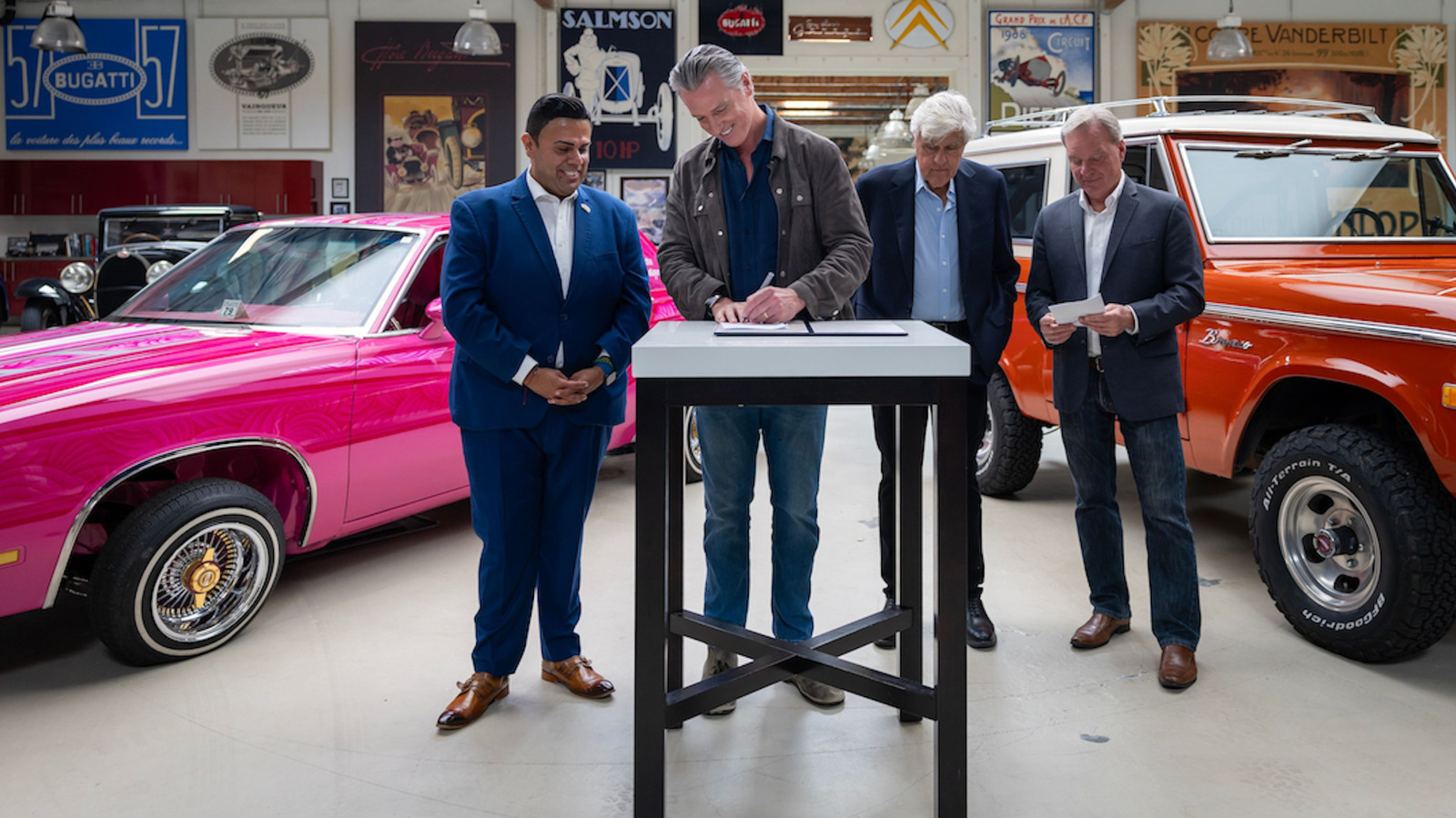
California has formalized its deep relationship with car culture through two new legislative victories. Governor Gavin Newsom signed off on measures that reflect the state's outsized influence on automotive passion and custom vehicle communities.
The centerpiece is a new lowrider-specific license plate design. This plates recognizes lowriders as a distinct cultural expression rooted in California's Chicano and Latino communities. The design celebrates the art form while giving enthusiasts an official way to display their commitment to the hobby. Lowriders, with their hydraulic systems, custom paint work, and meticulous engineering, represent decades of DIY innovation and community identity. This plate move follows years of activism by lowrider clubs demanding formal recognition within the state's transportation system.
The second component involves Leno's Law, named after late-night host and legendary car guy Jay Leno. This legislation removes bureaucratic barriers for vehicle enthusiasts working on custom and classic cars. The law creates clearer pathways for registration and operation of modified vehicles, addressing a persistent pain point for hobbyists who often struggled with conflicting regulations or unclear guidelines from the California Department of Motor Vehicles.
These measures matter because California sets the tone for American car culture. The state accounts for roughly 12 percent of all U.S. vehicle sales and holds outsized regulatory power. What California mandates or encourages ripples across the industry. These laws signal that the state values not just new electric vehicles and emissions compliance, but the preservation and celebration of automotive passion in all its forms.
The lowrider plate specifically acknowledges a cultural practice that extends back to the 1940s and 1950s, when Chicano communities in California modified their cars with hydraulic suspension systems. The aesthetic evolved into an art form. Lowriders appear at car shows, community events, and parade circuits throughout California and the Southwest. They represent ingenuity, pride, and cultural continuity.
Leno's Law addresses a practical frustration. Custom and classic car builders often face registration delays, uncertainty about which emissions standards apply to their vehicles, or conflicting guidance from different county DMV offices. The legislation standardizes these processes and reduces red tape. For someone investing thousands of dollars and countless hours into a restoration or custom build, clarity matters enormously.
The combination of these two laws reflects California's pragmatism. The state pursues aggressive environmental goals through EV mandates and emissions regulations, yet simultaneously recognizes that car culture itself merits protection and celebration. These laws are not contradictory. They acknowledge that people can care deeply about sustainable transportation while also valuing the machines and communities built around them.
Both measures passed with bipartisan support, a rare achievement in California politics. This consensus underscores how deeply car enthusiasm spans political boundaries and demographic groups.
These laws create a template for other states. They establish that modern automotive policy can coexist with traditional car culture. They formalize recognition for communities whose contributions to American car culture often went unacknowledged in official channels. For California's millions of car enthusiasts, these wins represent validation that their passion has earned a permanent place in the state's legal and cultural framework.