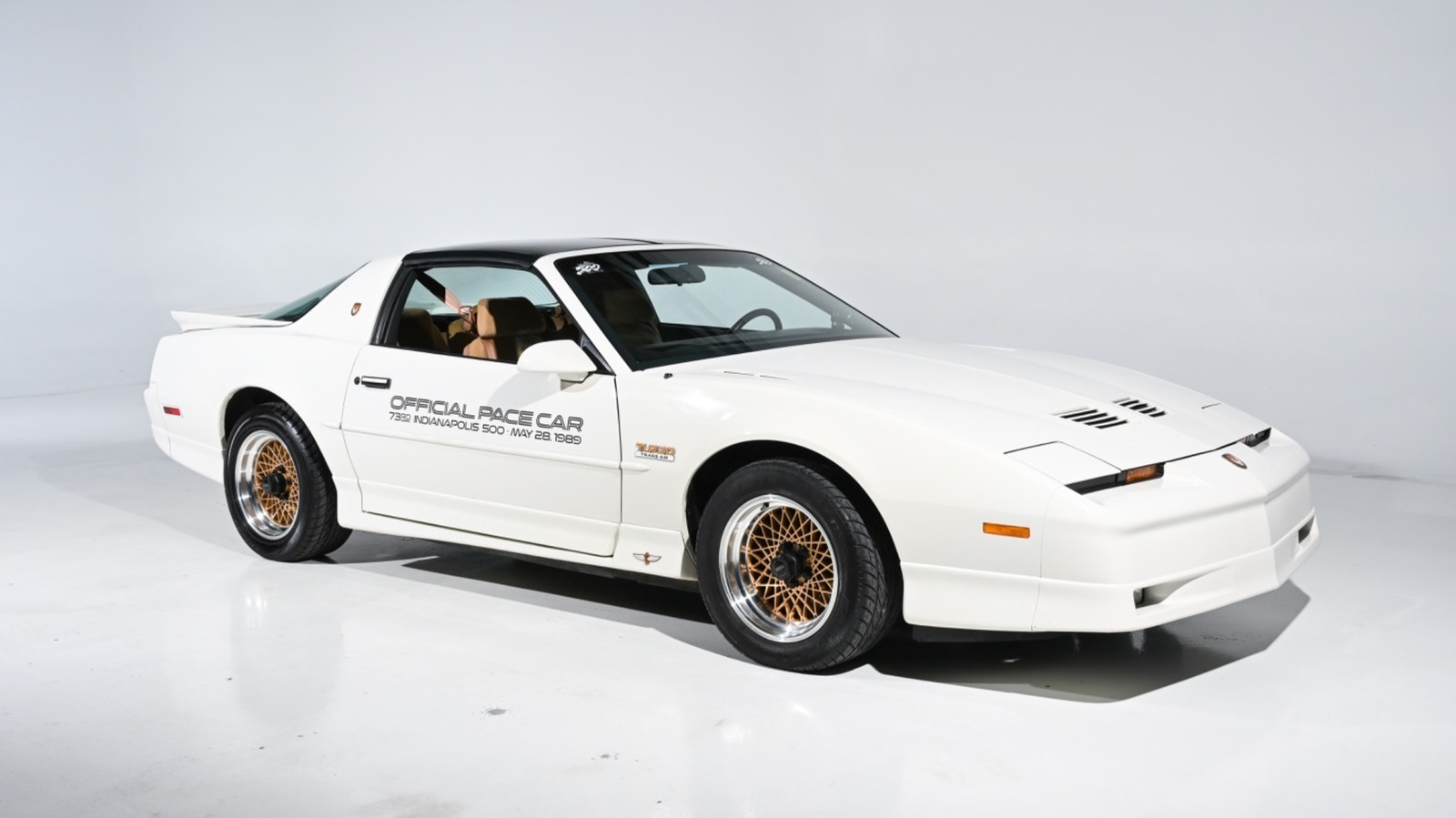
The 1989 Pontiac 20th Anniversary Trans Am represents a forgotten chapter in American performance history. This particular example, fresh from a single owner with just 30,000 miles on the odometer, captures a moment when General Motors briefly held the title for the quickest production car in the nation.
The Anniversary Trans Am packed a turbocharged 3.8-liter V6 engine. New, it accelerated from 0 to 60 mph faster than any other American-built car on sale, a claim that sounds improbable today but reflected the reality of late 1980s performance benchmarks. Detroit's muscle car tradition had shifted dramatically following the oil crises of the 1970s and early 1980s. V8 engines surrendered displacement and horsepower. Turbocharging emerged as the compensatory technology of choice.
That turbo V6 delivered genuine punch. The engine developed 250 horsepower and 340 pound-feet of torque, numbers that sound modest now but represented serious firepower when the Corvette's V8 was still carbureted and the Mustang GT offered only a naturally aspirated 5.0-liter. The Trans Am's advantage came from forced induction and modern fuel injection. The combination was enough to humiliate naturally aspirated competitors off the line.
The timing matters. By 1989, the Trans Am nameplate had survived multiple generations since its 1969 debut as the hot sibling of the Pontiac Tempest. The 20th Anniversary edition commemorated two decades of the model line. Pontiac loaded it with cosmetic tributes to earlier Trans Ams. Fender badging, specific interior appointments, and unique exterior trim separated it from standard models. This was when a special edition actually meant something beyond a slightly different paint color.
Finding a low-mileage example from this era presents rarity. The Trans Am was never produced in vast quantities, and surviving examples with fewer than 50,000 miles are increasingly uncommon. Thirty thousand miles suggests careful ownership and probable garage storage. The original owner likely preserved the car as an investment rather than a daily driver.
The 1989 Trans Am occupies an awkward middle ground in collector consciousness. It arrives too late for restoration budgets aimed at original 1970s Trans Ams and too early for the nostalgia wave that now elevates 1990s muscle cars. The turbo engine, while historically significant, lacks the romantic appeal of big-block V8s. Yet this exact positioning creates opportunity for buyers willing to look beyond conventional collecting wisdom.
The performance credentials remain authentic. That 0-to-60-mph advantage over the Corvette and Mustang reflected real engineering, not marketing fiction. The turbo system responded instantly. The car delivered acceleration that shocked owners accustomed to the sluggish performance outputs of the early 1980s.
For collectors chasing American performance history, the 1989 20th Anniversary Trans Am tells a story about transition and ingenuity. It shows how Detroit adapted when displacement disappeared. The turbocharged V6 became the bridge between the muscle car era and the four-cylinder turbo dominance that defines modern performance vehicles. This low-mileage example preserves a specific moment when American engineers proved they could beat the Japanese and domestics on acceleration, even with smaller engines. That narrative alone justifies serious consideration for enthusiasts seeking something genuinely different.