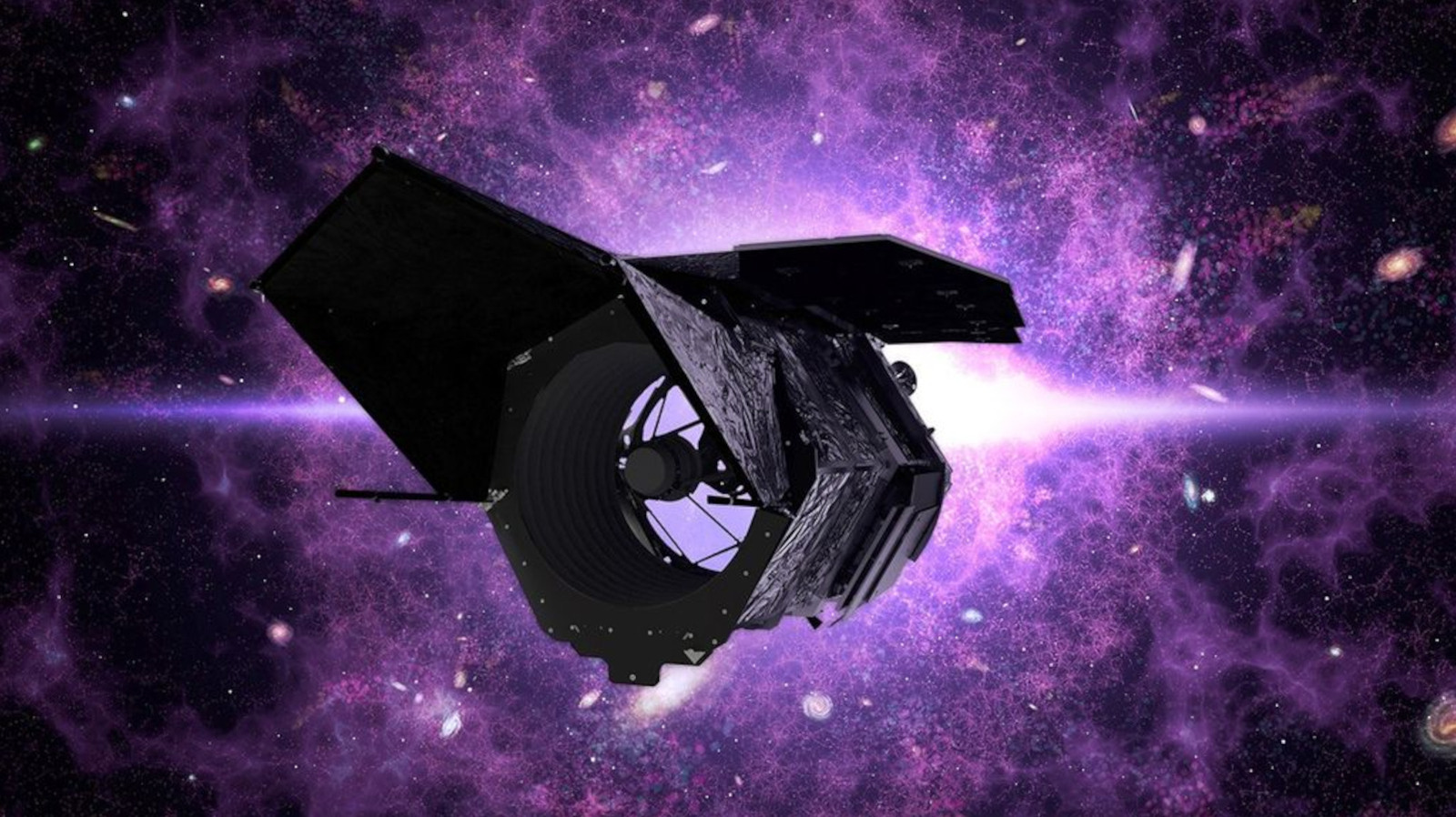
NASA's Nancy Grace Roman Space Telescope has already exceeded expectations before reaching its operational orbit, with engineers confirming the observatory will function for twice as long as originally planned. The telescope launched significantly under its weight budget and has consumed far less fuel than projected during its journey to the Sun-Earth L2 Lagrange point, roughly one million miles from Earth.
The weight savings stem from efficient manufacturing and material selection across the spacecraft's components. Rather than the anticipated fuel burn rate, Roman consumed only a fraction of its propellant reserves during the transit phase. This surplus propellant directly translates to extended mission duration. Space telescopes operate on finite consumables, primarily fuel for station-keeping maneuvers that counteract gravitational drift and maintain orbital stability. More fuel means more years of science operations.
Roman launched in May 2023 as the successor to the Hubble Space Telescope. Its mission was originally planned for five years of primary science operations. That timeline now extends to approximately ten years, assuming normal operations continue. This doubles the return on the roughly $2.4 billion initial investment and expands the research window for astrophysical observations across infrared and visible wavelengths.
The telescope's primary mission focuses on exoplanet detection, dark energy studies, and infrared imaging of distant galaxies. Extended operational life increases the volume of data astronomers can collect on these phenomena. For exoplanet research specifically, longer mission duration allows scientists to observe multiple transits of candidate planets, improving confirmation rates and atmospheric analysis. The additional years also permit follow-up observations on objects discovered early in the mission.
This performance pattern reflects broader trends in NASA's space infrastructure. The James Webb Space Telescope, which launched in December 2021, similarly exceeded its fuel efficiency targets and received a mission extension from ten to twenty years of planned operations. These successes demonstrate that improved engineering practices, materials science, and propulsion efficiency deliver tangible benefits for long-term space science.
The weight savings also reveal lessons NASA learned from previous observatory projects. Designers incorporated those learnings into Roman's architecture from conception. Lightweight composite structures, optimized fuel distribution systems, and streamlined component integration all contributed. Each kilogram saved reduces fuel requirements for orbital adjustments and station-keeping burns.
For NASA's astrophysics division, extended mission life improves budget efficiency. Rather than replacing Roman sooner with a successor telescope, the agency gains an additional five years of continuous observations. This buys time for development and validation of next-generation instruments while maintaining continuous data flow from a proven platform.
Roman's extended lifespan also impacts the broader space telescope ecosystem. The Hubble Space Telescope, now in its thirty-plus year operational life, requires regular servicing and component replacement. Roman's longer projected run reduces pressure to accelerate its successor's timeline. This allows engineers more development time and reduces rushing risks that have plagued some space telescope programs historically.
The telescope remains en route to L2, where it will establish a stable orbit and begin science operations. Once there, it will join Webb in occupying this gravitationally advantageous position for infrared and deep-space observation. With fuel reserves well above minimum requirements, Roman enters its operational phase with significant flexibility for course corrections, extended observations of unexpected phenomena, or extended calibration periods.