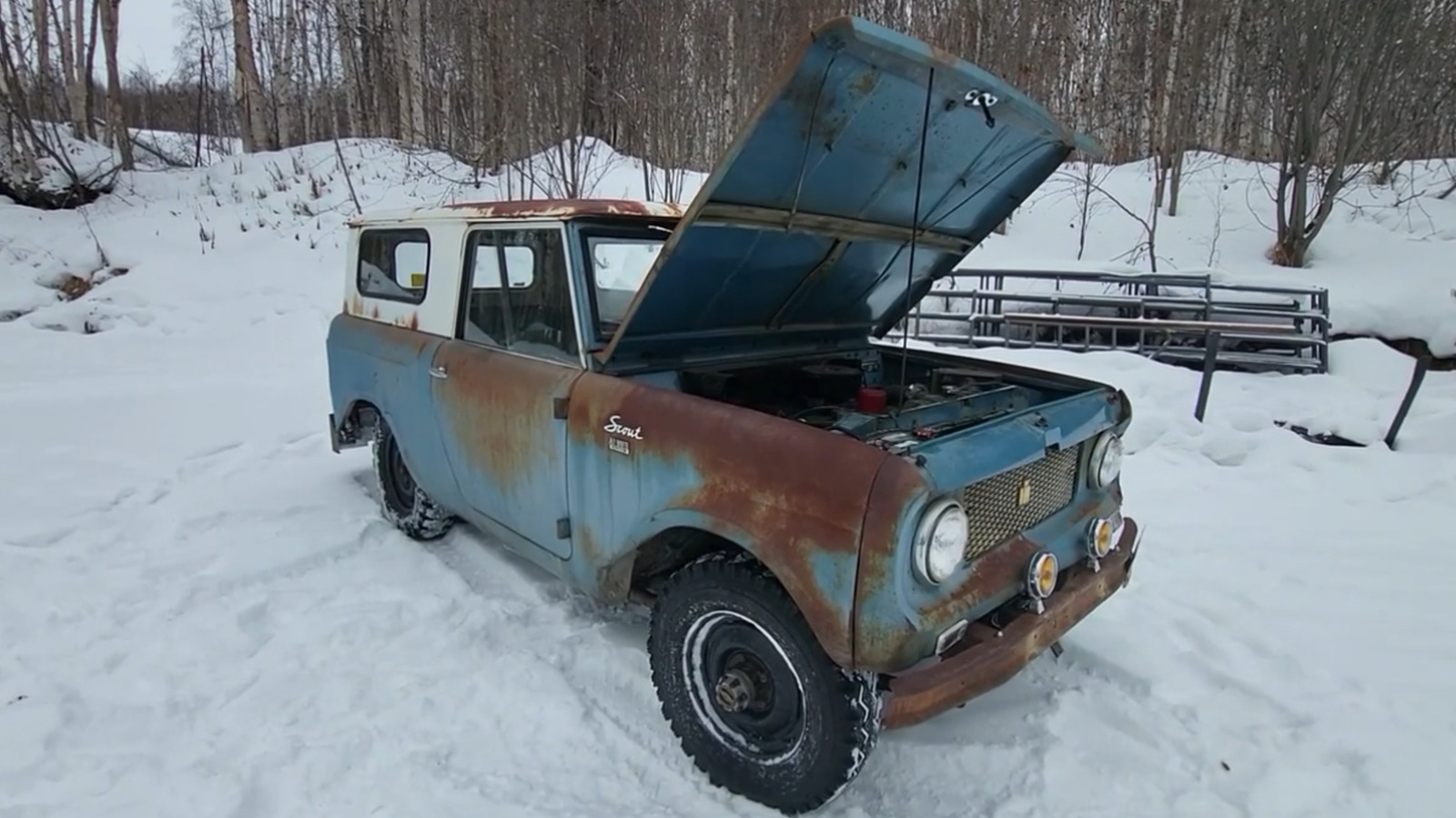
# The International Scout Built the Template for Today's Off-Road SUVs
The International Scout stands as one of the pivotal vehicles in automotive history, arriving in 1961 at a moment when the SUV category barely existed. International Harvester created not just a truck, but a blueprint that manufacturers still follow six decades later.
Before the Scout, civilians did not have many options for serious off-road capability. Jeep had the CJ series, which descended from military hardware and remained rugged but cramped. Full-size trucks existed but lacked creature comforts. International Harvester identified a gap and filled it with a compact, purpose-built vehicle that balanced genuine four-wheel-drive prowess with livable interior space for families and small work crews.
The original Scout arrived with a 100-inch wheelbase and a 152-cubic-inch four-cylinder engine producing just 80 horsepower. That modest output barely registers by modern standards. Yet the Scout proved that off-road credentials mattered more than raw power. Buyers responded immediately. The vehicle offered removable hardtop panels, fold-flat windshield, and simple mechanical systems that owners could repair themselves in the field or driveway.
International Harvester expanded the line methodically. The Scout 800, introduced in 1966, stretched the wheelbase and added engine options including a V-8. By the time production ended in 1980, multiple generations had established the Scout as an icon. Toyota, Nissan, Chevrolet, and Ford all studied what International had built. The Ford Bronco, which debuted in 1966, essentially copied the Scout formula. The Chevy K5 Blazer and Toyota 4Runner followed similar logic.
What made the Scout revolutionary was accessibility. Jeep had cornered the off-road market with heritage and style, but the Scout democratized trail capability. Middle-class families could buy one, use it for weekend adventures, then sell it at reasonable cost. That formula created a market that manufacturers recognized and capitalized on for generations.
The Scout also proved that compact size worked for off-roading. The vehicle did not need a massive footprint or excessive weight to traverse rough terrain. This insight shapes compact crossovers and entry-level SUVs today. Subaru's current strategy owes something to the Scout's original mission: deliver practical, capable all-terrain capability in a manageable package.
Restoration culture has revived Scout interest dramatically over the past decade. Companies now offer complete frame-off restoration kits, modern engine swaps, and updated interiors while preserving original styling. Scout Motors, backed by investors including Jeff Bezos, recently announced production of a new Scout revival model, validating the nameplate's enduring appeal and proving that the template International Harvester created remains viable in the electric age.
The Scout's legacy extends beyond nostalgia. Its core principles persist in every compact SUV pitched at adventure-seekers today. Capability, simplicity, and affordability created a category that transformed how people engage with the outdoors.