# The Soviet Bloc's Most Infamous Automotive Disasters
Cars built behind the Iron Curtain occupied a unique place in automotive history. They were not bad by accident. They were bad by design constraint, ideology, and the simple reality that centrally planned economies produced transportation that prioritized political goals over engineering sense.
Waiting lists stretched for years. A Soviet citizen might order a Lada in 1975 and take delivery in 1982. When the car finally arrived, it was often a disappointment. Rust appeared within months. Engines leaked oil from day one. Transmissions ground and clunked. Drivers accepted these failures not out of choice but necessity. Private car ownership in the USSR operated under scarcity, not free market selection.
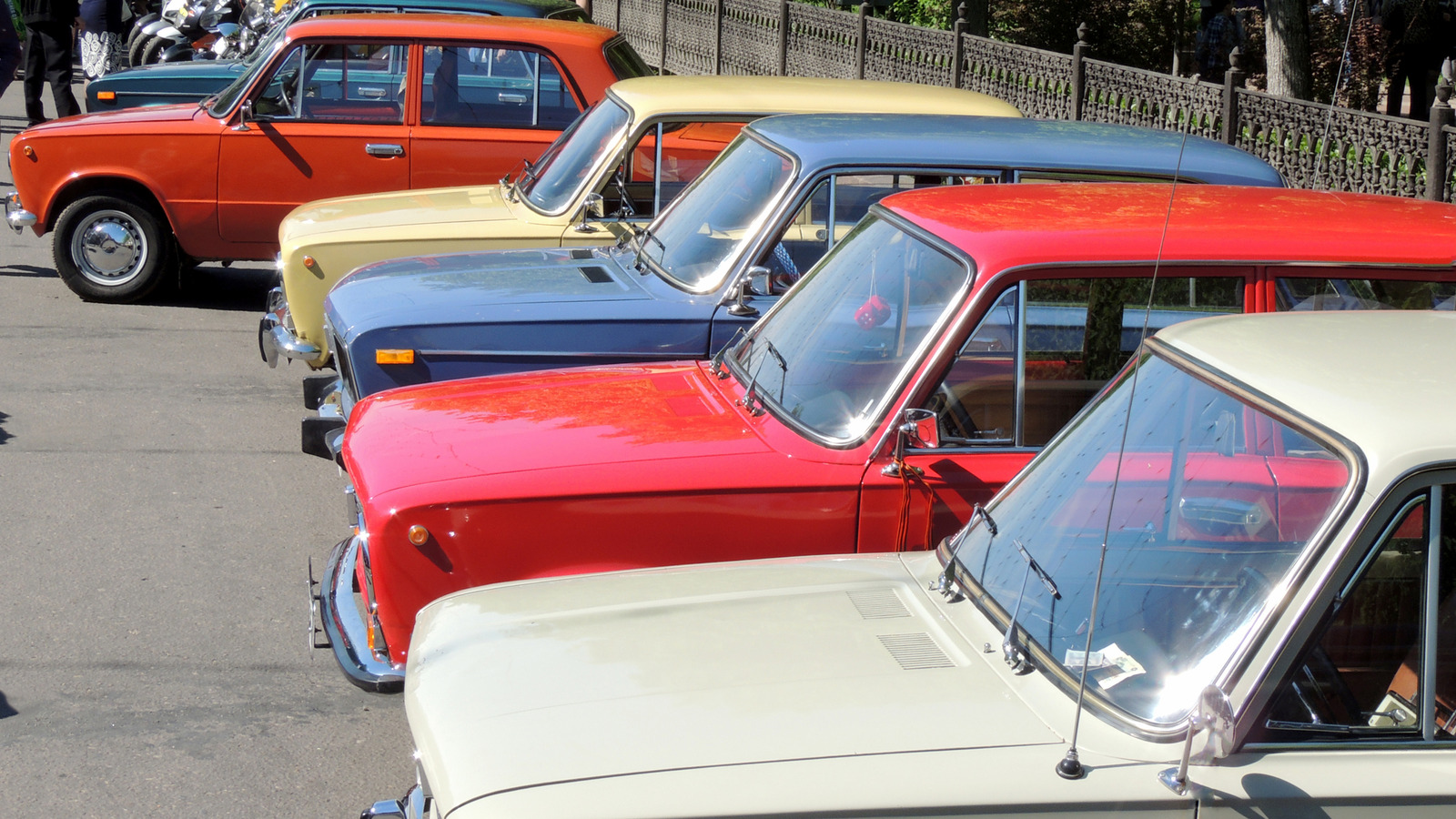
The Lada itself, despite its cult status among collectors today, exemplified these problems. Built on an outdated Fiat platform licensed in the 1960s, the Lada soldiered on for decades with minimal updates. The 1200cc engine produced 64 horsepower in early versions. Suspension geometry came straight from 1960s Italy. Yet the Lada remained in production until 2012, a zombie of automotive mediocrity kept alive by state mandate and lack of alternatives.
East Germany's Trabant earned equal infamy. Its two-stroke, 600cc engine belched blue smoke and delivered a pathetic 26 horsepower. The body used Duroplast, a plastic composite material that rotted in sunlight, cracked in cold weather, and burned alarmingly fast. Yet East Germans waited up to 14 years for a Trabant. The waiting list operated like a lottery. Those lucky enough to order young might eventually drive home in a car that felt like a motorized shed.
The Soviet Moskvich competed with the Lada for the title of worst car in the Eastern Bloc. Its cramped interior, unreliable electrics, and rust-prone chassis made ownership an exercise in patience. The Moskvich 2141, a 1980s update, tried to modernize the aging design with a new body. It still leaked, still rusted, still disappointed.
Romania's Dacia Aro and the Yugos of Yugoslavia rounded out the greatest hits of Eastern Bloc automotive failure. The Yugo, which made its way to Western markets in the 1980s, became a punchline in America. Its basic engineering and shoddy assembly earned it the title of worst car ever sold in the United States.
These vehicles tell a deeper story. Communist economies prioritized volume over quality, ideology over innovation, and state control over consumer choice. Import restrictions meant no competition from Western manufacturers. There was nowhere else to buy a car. The waiting list was the market. This absence of competition bred complacency. Why improve when customers had no alternative?
The fall of the Berlin Wall changed everything. Eastern European manufacturers suddenly faced real competition. Most collapsed. Lada and Dacia survived, transformed themselves, and now produce vehicles that compete globally. The Dacia Sandero, a modern Romanian budget car, sells worldwide and earns genuine respect from journalists and buyers.
The Iron Curtain cars live on mostly in nostalgia and collector hands. They represent a historical moment when isolation, central planning, and scarcity converged to create some of the worst automobiles ever built. That they remained in production for decades testifies not to their quality but to the absence of choice and the power of state monopoly.