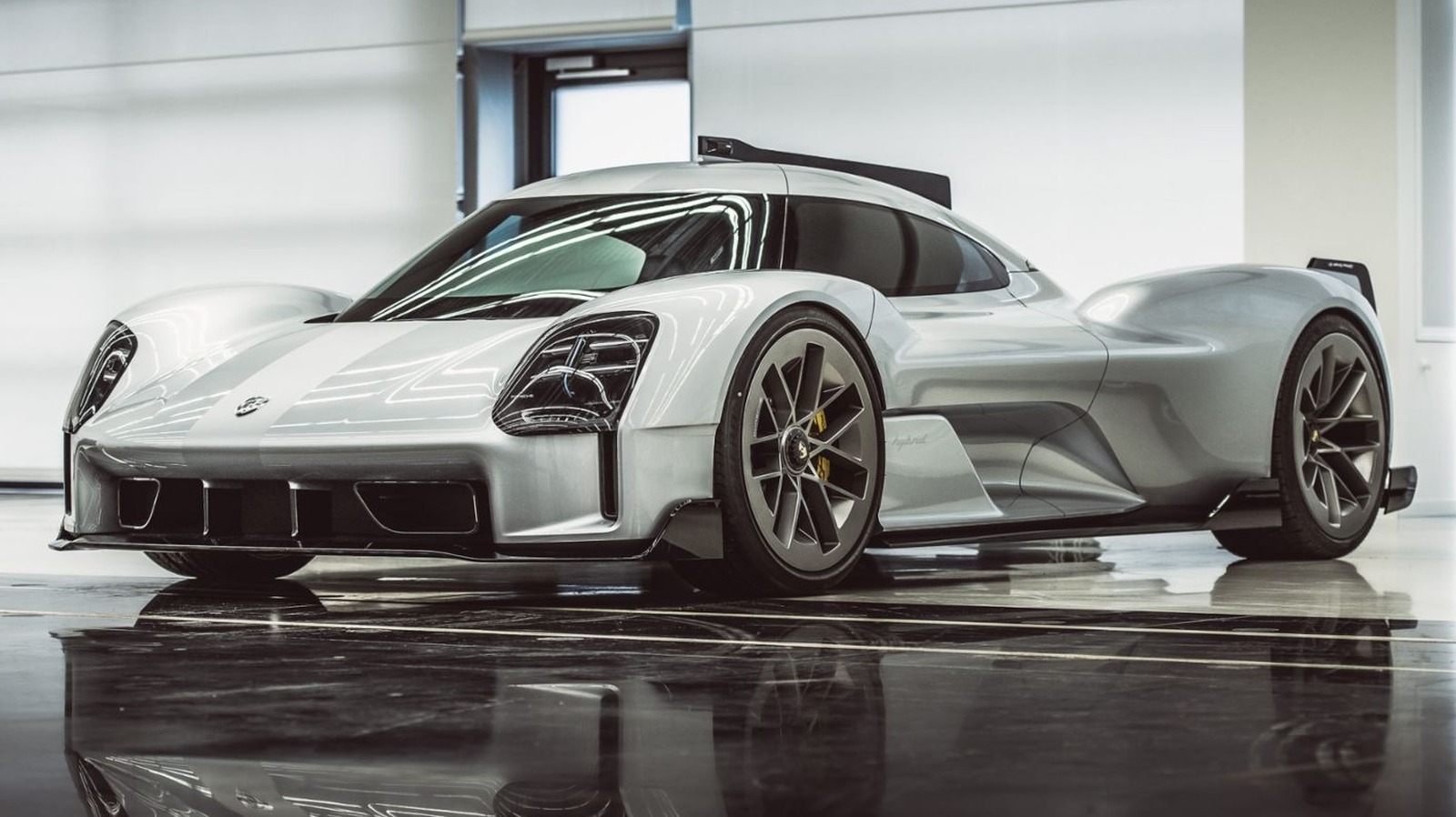
Porsche is developing a halo supercar powered by a flat-8 engine, departing from earlier rumors about reviving the Nuvolari nameplate with a simpler rebadge strategy. The move reflects the Stuttgart manufacturer's commitment to unconventional powertrain engineering as the automotive industry pivots toward electrification.
The flat-8 configuration represents a bold engineering choice. Porsche has deep historical ties to flat engines, most notably the flat-6 that powers the 911 and the flat-12 that appeared in legendary competition cars. A flat-8 sits somewhere between tradition and technological provocation. The layout offers theoretical advantages in packaging, center of gravity, and mechanical balance compared to inline or V-8 alternatives. However, it remains extraordinarily rare in production vehicles, making this a significant statement about Porsche's willingness to pursue unconventional solutions for its ultimate expression car.
The halo supercar concept serves multiple purposes within Porsche's strategy. Flagship performance cars generate brand prestige, showcase manufacturing capability, and justify premium positioning across an entire lineup. They validate the house brand in ways that volume models cannot. This flat-8 machine will compete in conceptual territory occupied by vehicles like the Ferrari SF90 Stradale, Lamborghini Revuelto, and McLaren 720S. Each represents its maker's technological ceiling and philosophical vision.
Context matters here. Porsche recently abandoned plans for a retro-styled Nuvolari model that would have capitalized on the brand's racing heritage through simpler means. That decision suggests leadership wants this car to push forward rather than backward. The flat-8 engine confirms that direction. It's a technology play dressed in supercar clothes.
The flat-8's rarity in modern automotive makes sense for a halo machine. Most manufacturers chase V-8 simplicity or pursue full electrification for their ultimate offerings. Porsche instead commits resources to a configuration that few competitors will touch. This differentiates the car before customers even experience it.
Production volume will remain extremely limited. Halo supercars typically see fewer than 100 units annually, sometimes far fewer. The flat-8 supercar will likely operate in that space, serving as a rolling advertisement for Porsche engineering rather than a profit center. Price positioning will sit well above the 911 Turbo S (starting around $220,000) and likely exceed $300,000 when it arrives.
Powertrain electrification timing remains unclear. Modern supercars increasingly adopt hybrid systems to satisfy emissions regulations while maintaining internal combustion drama. The flat-8 could pair with electric motors, or Porsche might pursue a fully combustion-powered expression before transitioning future generations entirely. The Revuelto proved buyers will accept hybrid supercars if the experience feels authentic.
Porsche's engineering culture supports this decision. The brand employs world-class powertrain specialists with experience across exotic configurations. A flat-8 represents achievable complexity within that capability set. It challenges norms without approaching physical impossibility.
The flat-8 halo supercar arrives during a critical industry moment. Traditional performance manufacturers face pressure to justify combustion engines in premium segments. Porsche responds by making the engine itself a reason to buy the car. That philosophy defines halo vehicle strategy.