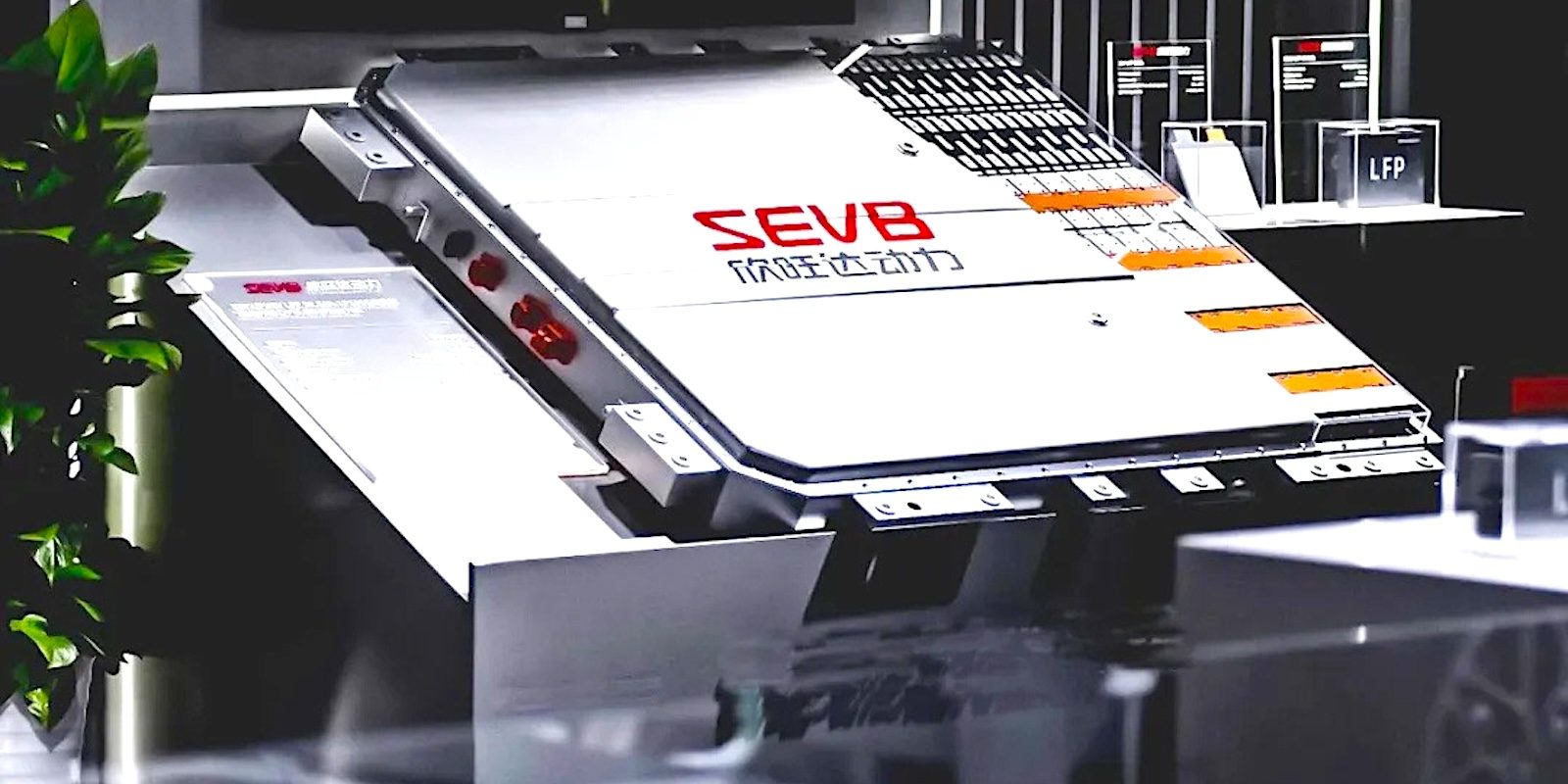
Sunwoda, the Chinese battery manufacturer, has entered the ultra-fast charging arena with a system that delivers 100 kilometers of range per minute and charges from 10% to 97% state of charge in under nine minutes at room temperature.
The feat represents a meaningful step forward in flash charging technology. Industry players have chased sub-10-minute charging for years as a way to eliminate the last major objection to EV ownership: the time required to refuel. Sunwoda's claim puts them alongside competitors like CATL, BYD, and Nio, all of whom have announced aggressive charging targets in recent years.
What matters here is the room temperature specification. Many flash charging systems require thermal management or heated battery packs to achieve advertised speeds. Sunwoda's approach works at ambient conditions, which simplifies vehicle integration and reduces the parasitic load on the battery pack. That's not trivial from an engineering standpoint.
The specs break down to roughly 10 kilometers of range per second of charging time. For a 60 kWh pack with 500 kilometer total range, this translates to roughly 600 kW of charging power sustained over the charge curve. Most current production EVs max out at 150-250 kW peak charging. Porsche Taycan reaches 270 kW. Even the newly announced Nio ET9 peaks at 500 kW. Sunwoda's claim suggests a departure from conventional power delivery architecture.
The battery chemistry and cell architecture remain undisclosed, but the performance hints at innovations in anode material, electrolyte formulation, or thermal management at the pack level. Sunwoda manufactures LFP and NCA/NCM chemistries. LFP cells tolerate higher charge rates without degradation compared to conventional lithium-ion, though Sunwoda doesn't specify which chemistry this system uses.
The competitive landscape has shifted dramatically since 2023. CATL announced a 10-minute charge for 80% SOC in 2024. BYD's Qin platform supports 400 kW charging. Nio's 500 kW charging was positioned as a breakthrough when announced. Sunwoda's nine-minute specification from 10% to 97% sits between CATL's spec and the marketing hype typical of the sector.
Integration remains the unknown. A charger capable of delivering 600 kW continuously requires infrastructure investment. Most public DC fast charging networks in China run 120-350 kW today. The ultra-high-power charging corridors being built will need to accommodate these power levels, and that infrastructure rollout lags the battery technology itself.
The timeline also matters. The announcement comes in September 2026, suggesting Sunwoda likely has a path to vehicle integration within one to two years. Chinese EV makers move faster on adoption than their Western counterparts. Expect to see this system in low-volume premium vehicles first, then cascade to mass-market platforms as production capacity scales.
This development reinforces that flash charging is no longer experimental. It's becoming table stakes for premium EV positioning. Automakers who don't offer sub-10-minute charging from a capable charger will lose credibility with early adopters. The real competition now shifts from achieving the speed to deploying the infrastructure and optimizing charging protocols to minimize battery stress over the vehicle's lifetime.