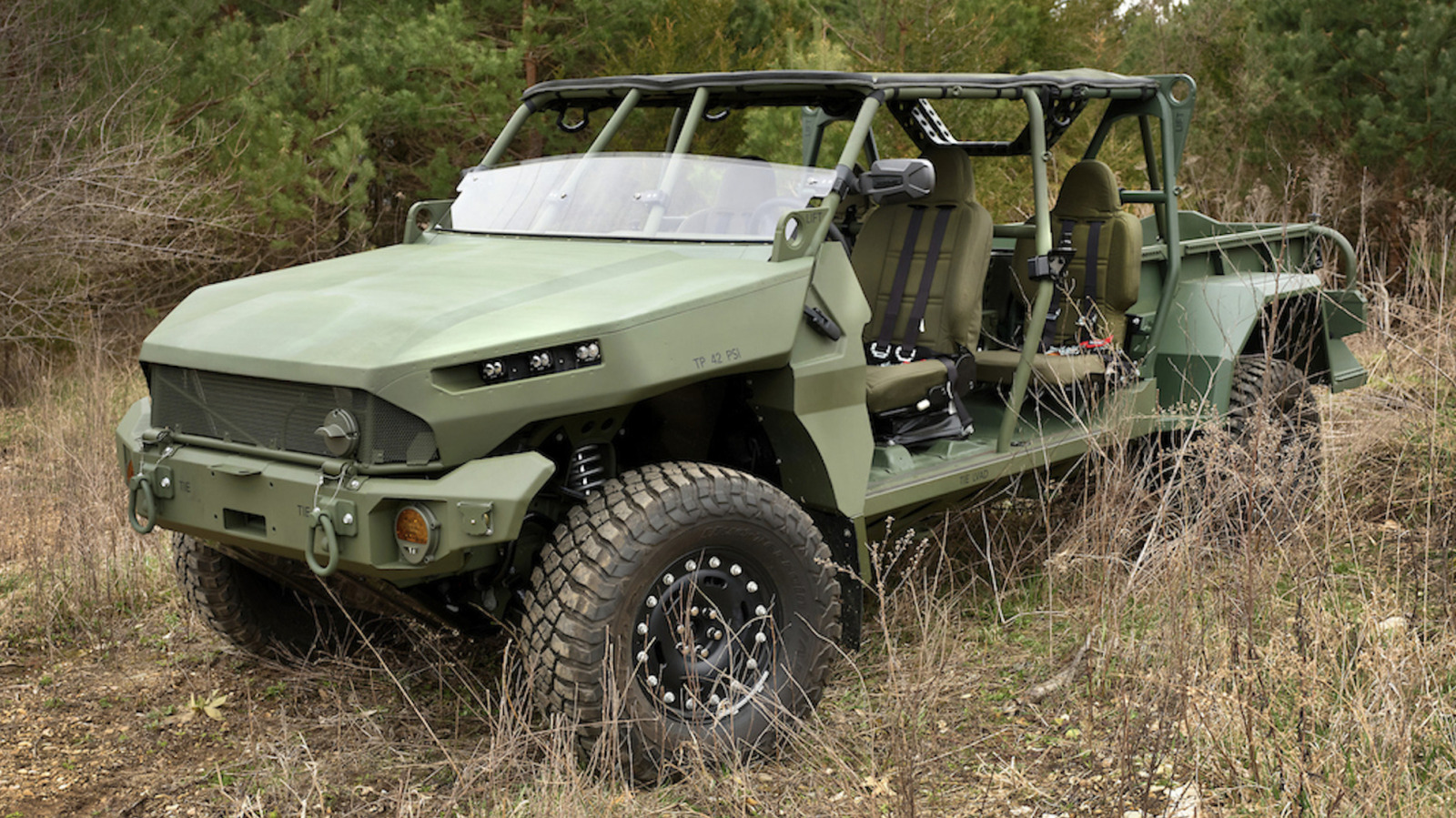
General Motors will receive nearly $1 billion in taxpayer funding to modify the Infantry Squad Vehicle, a light tactical transport that serves as the military's replacement for the aging Humvee. The contract covers relatively modest engineering upgrades that include a new windshield design, improved heating and defrosting systems, and optional full crew enclosure kits.
The Infantry Squad Vehicle, based on the Chevrolet Colorado platform, entered production in 2020 following a competitive contract award to GM over rival Oshkosh Defense. The vehicle provides the Army with a lighter, more fuel-efficient alternative to the Humvee while maintaining off-road capability and payload capacity. Since its introduction, the ISV has seen steady adoption across Army units, with the service committing to fleet-wide replacement over the coming decade.
This latest contract modification represents the ongoing evolution of the platform as soldiers provide feedback on real-world deployment conditions. A better windshield addresses visibility concerns in harsh environments. Enhanced climate control matters significantly for crew comfort during extended missions in desert and mountainous terrain. The crew enclosure option opens new operational possibilities, protecting soldiers from weather, debris, and hostile fire during transit. These changes, while seemingly incremental, address practical pain points identified during field operations.
The $1 billion price tag reflects the combined cost of engineering development, tooling updates, production rate increases, and the vehicles themselves across the multi-year contract. Military vehicle contracts operate on different economic scales than consumer production. Full crew enclosure kits, in particular, require significant structural modifications to maintain vehicle balance, suspension geometry, and payload limits. The windshield design must meet ballistic specifications and integrate with mounting hardware that functions across temperature extremes.
Oshkosh, which lost the original ISV competition, manufactures the Joint Light Tactical Vehicle, a different platform serving the Army, Navy, and Marines. The JLTV competes for similar tactical transport missions but emphasizes greater armor protection and crew accommodation from its inception. GM's ISV focuses on lighter weight and simpler maintenance. The two platforms serve different niches within military transportation, but this latest contract expansion underscores the Army's commitment to the ISV as a primary light-vehicle solution.
The timing reflects broader Pentagon priorities around maintaining manufacturing relationships with established contractors and sustaining domestic production capacity. Vehicle manufacturing, particularly for military specifications, requires permanent supply chains and skilled workforces. Contract modifications preserve employment and production continuity while meeting evolving operational requirements.
For GM, the deal strengthens its position as a military vehicle manufacturer beyond its consumer and commercial business. Defense contracts provide stable revenue streams and demonstrate advanced engineering capabilities. The company simultaneously produces civilian Colorados for the commercial market, leveraging shared platforms and manufacturing footprints to optimize costs across segments.
Soldiers operating the ISV will notice practical improvements immediately. Better defroster capability prevents windshield icing in cold climates. The crew enclosure option becomes crucial for operations where exposure creates tactical disadvantage. These upgrades translate directly to mission effectiveness and personnel safety, justifying the investment despite modest engineering scope.