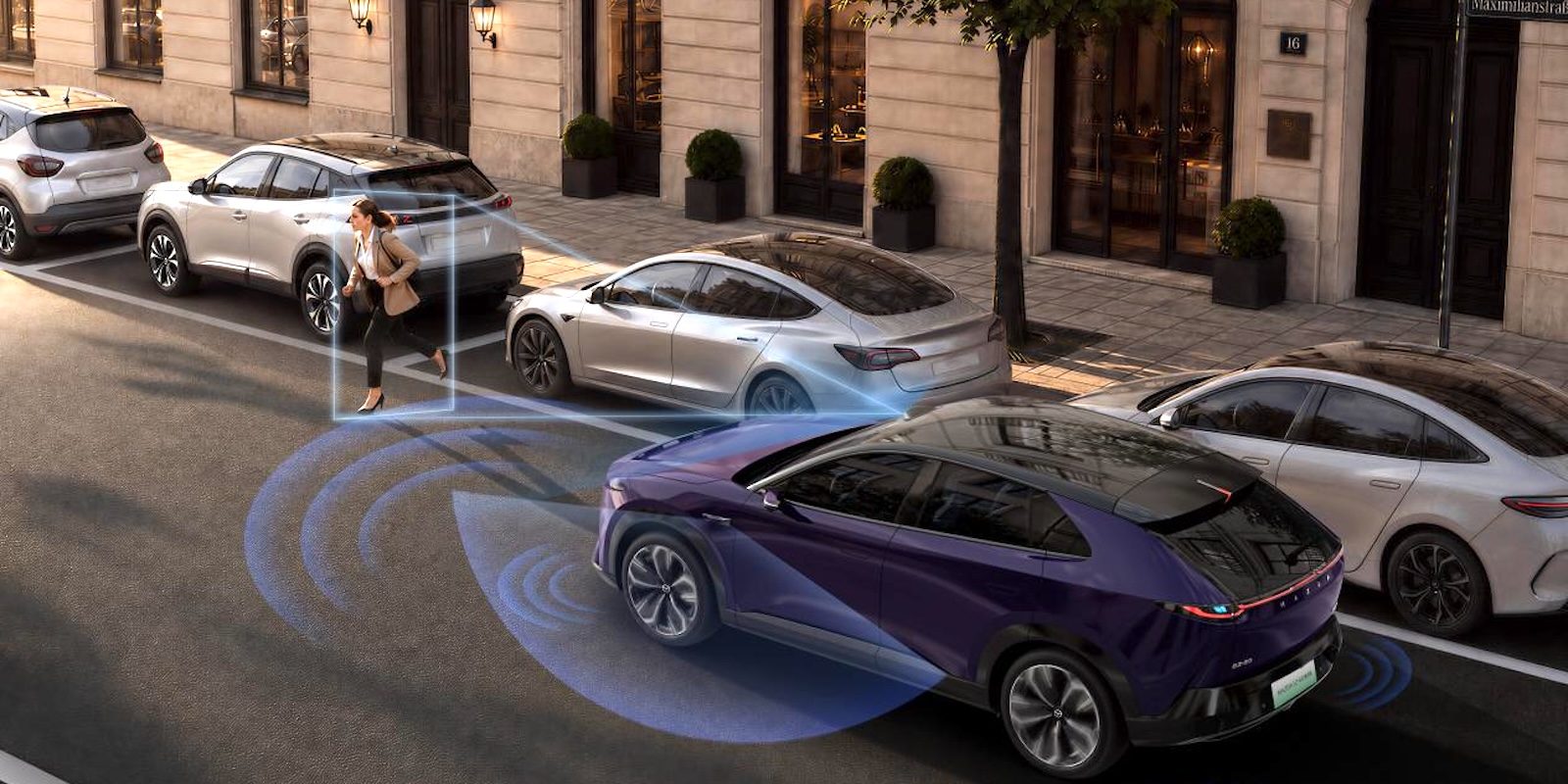
Mazda has equipped its CX-6e electric SUV with LiDAR technology, enabling advanced driver assistance capabilities in the Chinese market. The addition marks the Japanese automaker's push into autonomous driving features that compete directly with Tesla's Full Self-Driving and Chinese EV makers' proprietary systems.
The CX-6e, Mazda's sporty electric crossover, now offers what Mazda calls "advanced L2" autonomy. This includes navigation on autopilot functionality that handles highway driving and urban navigation, plus automated parking. Level 2 autonomy allows the vehicle to control both steering and acceleration simultaneously, though the driver retains responsibility and must remain attentive. The LiDAR sensor suite provides 360-degree environmental awareness, giving the system superior object detection compared to camera-only approaches.
Mazda's timing reflects industry momentum. Tesla dominates autonomous features globally with FSD, which relies on pure vision systems. Meanwhile, Chinese EV manufacturers including NIO, XPeng, and Li Auto have aggressively deployed LiDAR-based systems across their lineups. Gaining competitive parity in China, the world's largest EV market, carries strategic weight. Mazda's market share in China has faced pressure from both legacy automakers and EV startups, making advanced autonomy a differentiator.
The CX-6e itself launched in 2024 as Mazda's answer to electric performance enthusiasts. The vehicle combines a 101-kWh battery with a 366-horsepower dual-motor powertrain, delivering 0-60 mph acceleration in under 6 seconds. It competes against Tesla Model Y, BYD Song Plus DM-i, and NIO ES6. By adding LiDAR, Mazda transforms the CX-6e into a more complete autonomous package. The sensor hardware likely cost between $2,000 and $5,000 to integrate, a premium Mazda can pass to buyers seeking self-driving capability.
China represents the critical battleground for autonomous vehicle deployment. The country's massive road infrastructure, high population density, and government encouragement of EV adoption create ideal testing grounds. XPeng's NGP (Navigation Guided Pilot) and NIO's NOP (Navigate on Pilot) have logged millions of autonomous miles. Tesla FSD operates in limited capacities in China but faces regulatory hurdles. Mazda's entry, while later than competitors, positions the brand as serious about autonomous features.
The implementation matters beyond raw capability. LiDAR provides redundancy. If cameras fail in rain or fog, LiDAR continues mapping the environment. Chinese consumers increasingly expect this robustness. NIO owners report high satisfaction with multi-sensor fusion approaches. Mazda's engineering discipline in vehicle dynamics, a brand hallmark, could translate into smoother, more predictable autonomous behaviors.
Regulatory approval in China required coordination with government agencies. The rollout suggests Mazda cleared technical and safety reviews. This pathway may accelerate similar launches in other markets, though LiDAR adoption in North America and Europe moves slower due to cost sensitivity and different regulatory frameworks.
Mazda faces execution risks. Software quality determines real-world performance. Poor real-world behavior or safety incidents undermine adoption, regardless of hardware. Competitors have logged years of autonomous data refinement. Mazda starts later. However, the company's reputation for reliability and design integrity provides consumer trust. Early CX-6e LiDAR owners will become data sources, helping Mazda refine its algorithms faster.
The move also signals Mazda's long-term EV commitment. Some analysts questioned whether Mazda would compete seriously in EVs given its smaller scale versus Tesla and BYD. Adding autonomous features to the CX-6e demonstrates Mazda intends to compete across the full capability spectrum. The CX-6e with LiDAR enters a crowded segment. Success depends on execution, pricing, and Mazda's ability to communicate the technology's value to Chinese buyers accustomed to aggressive autonomous feature marketing from homegrown competitors.