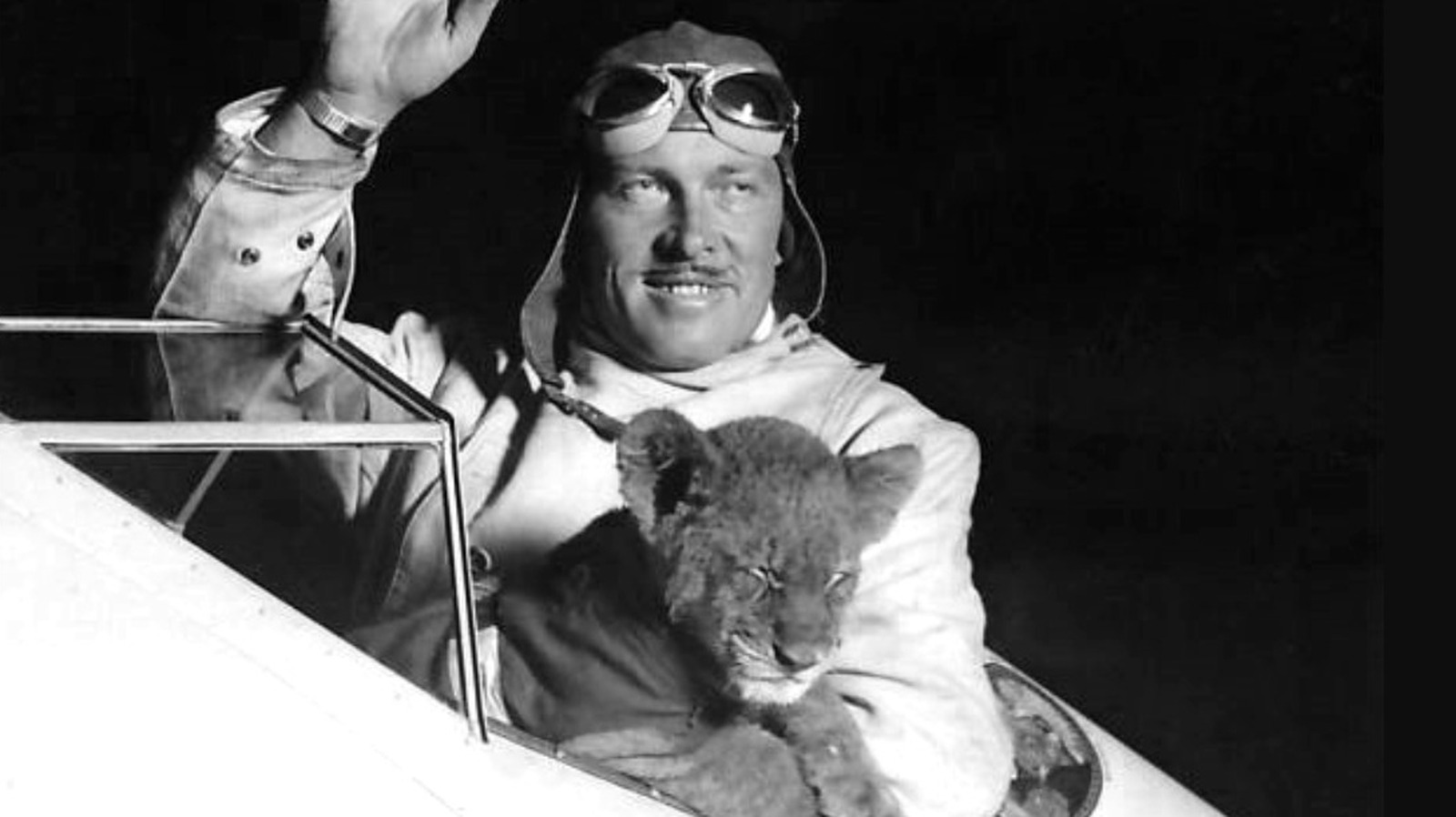
# Red Lion Gasoline's Audacious 1930s Marketing Stunt: A Live Lion Co-Pilot
In the 1930s, automotive and aviation marketing operated by a different rulebook. Red Lion Gasoline executives greenlit one of the era's most brazenly unconventional promotional campaigns. They hired a pilot, stuffed a live lion cub into the cockpit, and launched what amounts to the Depression-era equivalent of a viral stunt.
The logic was simple, if reckless by modern standards. Red Lion Gasoline needed brand visibility. Their mascot was a lion. Flying a plane with an actual lion aboard would generate press, photographs, and word-of-mouth advertising. Spectacle sold products in the 1930s, and few stunts offered more spectacle than a caged feline at cruising altitude.
This wasn't marketing theater in today's sense. There were no focus groups, no brand consultants, no compliance reviews. A fuel company with a lion logo decided a real lion belonged in an airplane. A pilot agreed to this arrangement. The stunt happened.
What strikes modern observers is the casualness of the risk. Flying in the 1930s was dangerous enough without a panicked animal in the cabin. Cloth-covered fuselages. Limited instrument navigation. Mechanical failures that forced landings in wheat fields. Now add a frightened predator clawing at canvas and seat cushions. The hazard wasn't theoretical. It was immediate and obvious.
Yet the stunt worked as intended. Photographs survive. Newspapers covered it. Red Lion Gasoline earned free advertising worth thousands in today's dollars. The pilot became a minor celebrity. The lion cub became a sidebar in automotive history.
This episode reveals how differently companies approached risk and brand building during the Depression. Budget constraints forced creativity. Regulatory oversight was minimal. Safety concerns ranked below publicity value. A lion in an airplane cabin represented genius marketing, not an animal welfare or aviation safety violation.
The incident also illustrates broader trends in 1930s American capitalism. Gasoline companies competed fiercely for brand loyalty. Texaco, Sinclair, Shell, and Standard Oil deployed mascots and promotions constantly. Red Lion Gasoline needed differentiation. Their mascot gave them a hook. Taking that mascot to the literal sky was the logical extreme of promotional thinking.
Today's automotive and aviation industries operate under vastly different constraints. Animal welfare regulations prohibit such stunts. Aviation authorities maintain strict rules about cockpit contents. Insurance companies would reject the liability before the plane left the ground. Brand management follows playbooks refined by decades of market research.
But there's something in the Red Lion Gasoline story that speaks to an era when business felt more improvised, more willing to embrace absurdity for profit. A pilot and a lion cub in a 1930s aircraft represented peak Depression-era marketing audacity. No committee approved it. No consultant suggested it. Someone in Red Lion Gasoline's leadership simply recognized that their mascot could become a literal co-pilot, and the publicity would justify the risk.
The stunt succeeded. The gasoline is long forgotten. The lion and pilot have passed into history. But the image remains. A real lion in an airplane cockpit. Marketing that dared to ask not "should we do this" but simply "can we do this."