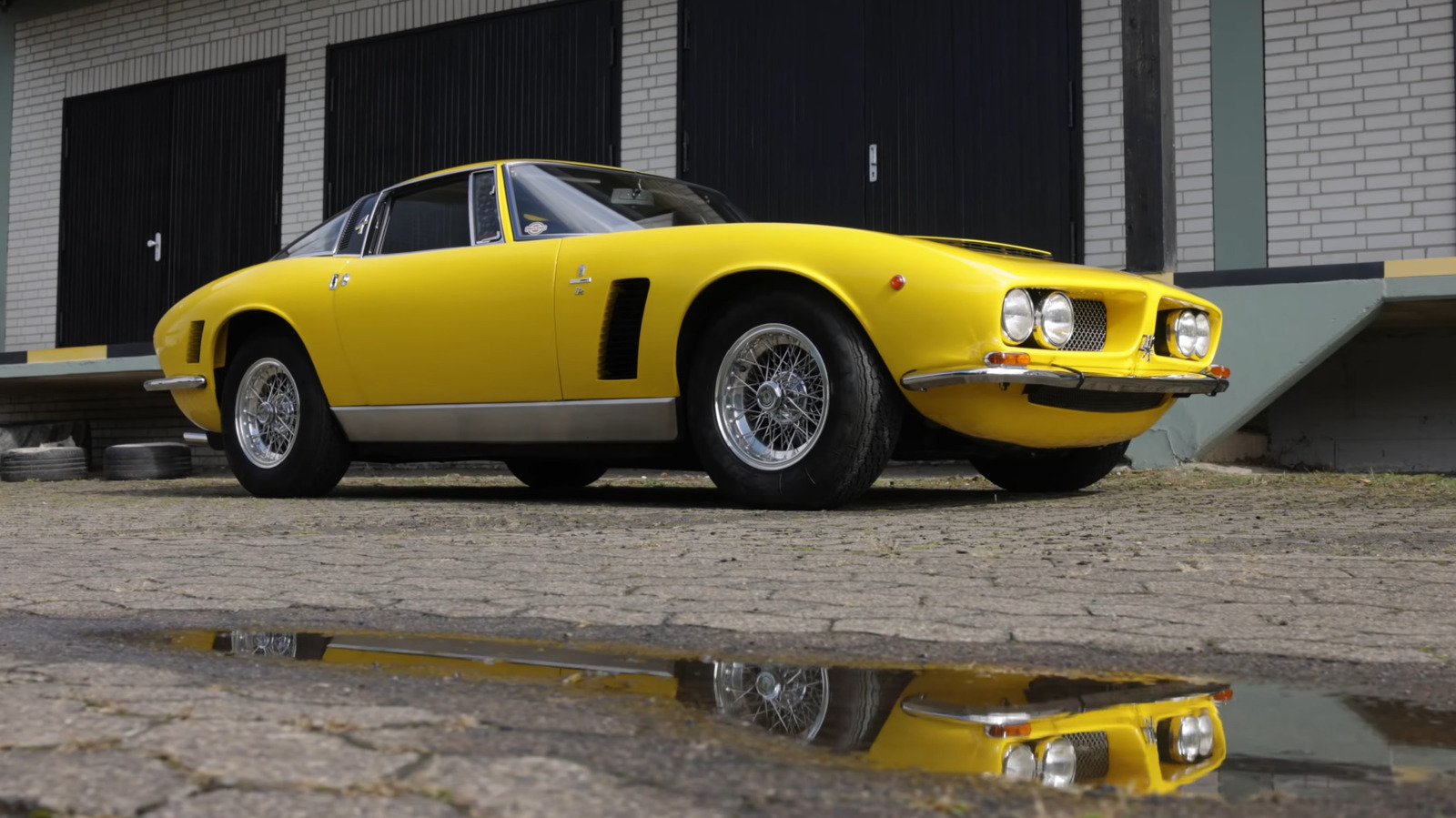
# Seven Facts About The Iso Grifo, The Other Other American-V8-Powered Italian Exotic
The Iso Grifo represents one of the most audacious automotive marriages of the 1960s. A raw Italian design wrapped around a thundering American engine, the Grifo stands as a lesser-known peer to the more celebrated De Tomaso Pantera and Lamborghini machines of its era.
Iso, the Italian manufacturer best known for building the bubble-top Isetta microcar, shifted into high-performance territory with the Grifo in 1966. Giotto Bizzarrini, the legendary engineer and designer who previously worked on Ferrari's GTO, penned the Grifo's aluminum body and chassis. Bizzarrini's design language emphasized wide, aggressive flanks and a functional air intake that dominated the hood, creating a car that looked faster than nearly every competitor of that moment.
The Grifo's powertrain defined its character. Rather than source an Italian V12 like Lamborghini or Ferrari, Iso executives chose Chevrolet's big-block 427 cubic-inch V8, a motor producing between 435 and 450 horsepower depending on specification and tune. This engine pairing gave the Grifo brutal acceleration and a distinctly different exhaust note than its Italian rivals. Some examples also used the 400-horsepower 390 cubic-inch Ford V8, offering buyers genuine variety. The marriage worked because Bizzarrini engineered a chassis sophisticated enough to handle the American muscle without compromising the car's European sensibilities.
Production numbers stayed minuscule. Iso built approximately 412 Grifos between 1966 and 1974, with only about 220 imported to the United States. This rarity explains why the Grifo never achieved the collector status of the Pantera, even though its performance credentials matched or exceeded De Tomaso's offering. Today, surviving examples command prices between $500,000 and well over $1 million at auction.
The Grifo competed successfully in racing. The car claimed victories at endurance events and demonstrated genuine capability on track. Drivers appreciated its balance and power delivery in a way that separated it from crude American muscle cars. The Grifo wasn't simply an Italian body with a Chevy engine. Bizzarrini's engineering meant the whole package functioned as an integrated whole.
Styling choices set the Grifo apart visually. The Pop-up headlights, clamshell hood, and aggressive rear fenders gave the car unmistakable presence. The interior combined Italian craftsmanship with American abundance, offering leather trim and instruments arranged with purpose. No two Grifos came identically equipped, reflecting the bespoke nature of early exotic car building.
The Grifo eventually faded as Iso faced financial troubles and market shifts toward emission regulations. By the mid-1970s, American muscle cars themselves were declining, and the exotic car market looked increasingly toward turbocharged and smaller-displacement engines. The Grifo's window of relevance closed quickly, but not before establishing itself as a legitimate performance machine that proved Italian engineering could harness American power and create something genuinely special.
The Grifo deserves recognition alongside more famous names. Its obscurity in modern automotive discourse reflects market timing and production constraints rather than any shortage of capability or design merit.