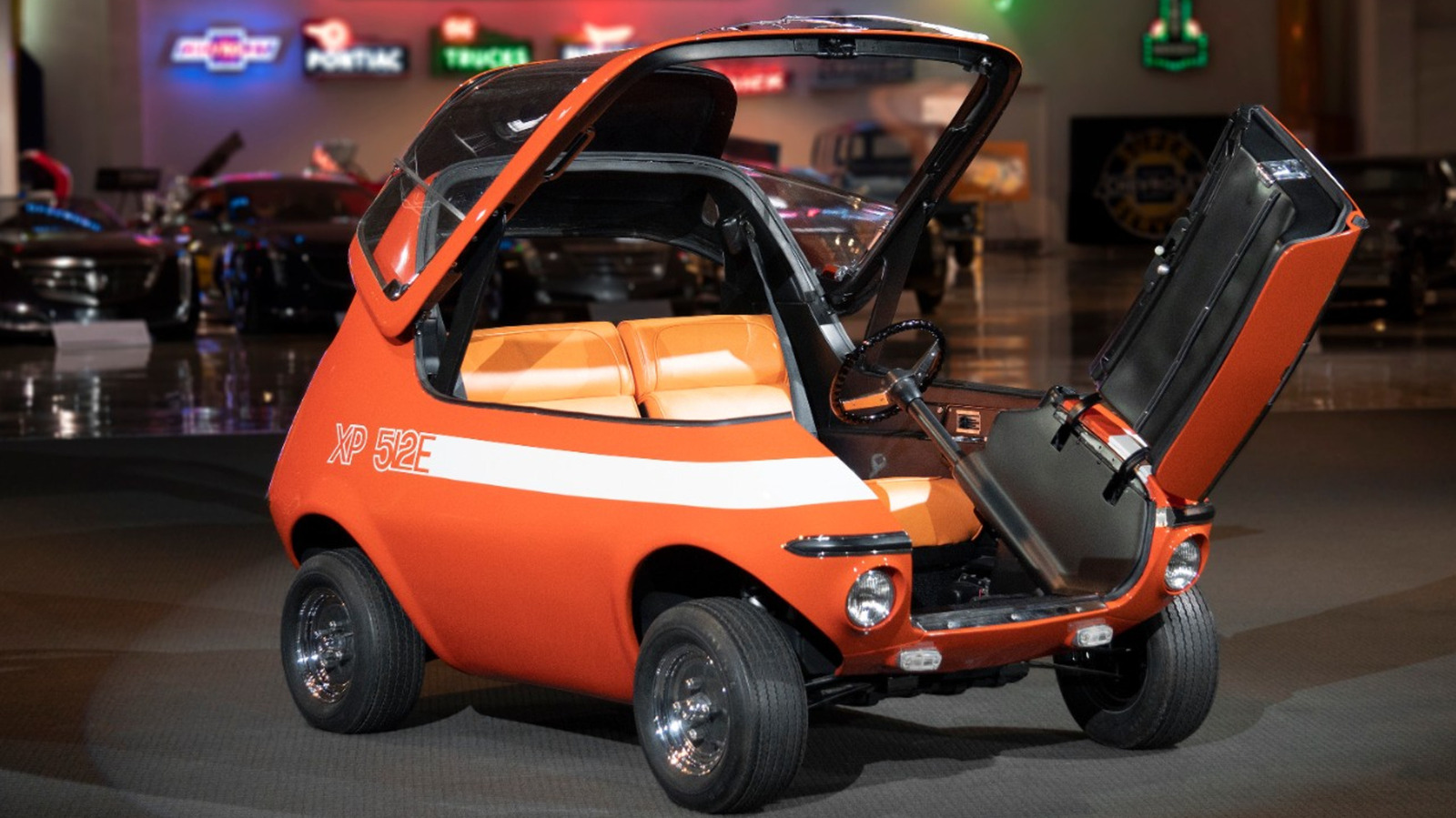
General Motors unveiled the XP 512E concept car during its 1969 Progress of Power exhibition, marking the automaker's entry into electric vehicle concepts during an era dominated by combustion engines.
The compact EV featured a 58-mile driving range and represented one of four concept vehicles GM displayed to showcase technological innovations of the period. The XP 512E arrived at a time when electric vehicles remained largely experimental, with the automotive industry focused primarily on gasoline and diesel powertrains.
The concept emerged from GM's research divisions as the company explored alternative propulsion methods. Though the XP 512E never reached production, it demonstrated early thinking about battery-powered transportation decades before electric vehicles became mainstream in the automotive industry.
The 1969 Progress of Power exhibition served as a platform for GM to present forward-looking automotive concepts to the public. The four vehicles on display illustrated the company's research into future technologies and design directions. The XP 512E stood out as a tangible example of GM's experimentation with electric propulsion during a period when such projects received minimal consumer or manufacturer attention.
The concept car's modest 58-mile range reflected the battery and motor technology limitations of the late 1960s. Despite these constraints, the vehicle's existence showed that major automakers were already considering electrification as a potential automotive future.
This early EV concept would remain largely forgotten for decades until renewed interest in electric vehicles transformed the industry in the 2010s and 2020s. GM's later EV development, including the Chevrolet Volt and Chevrolet Bolt EV programs, built on fundamental research conducted during the postwar era and beyond.