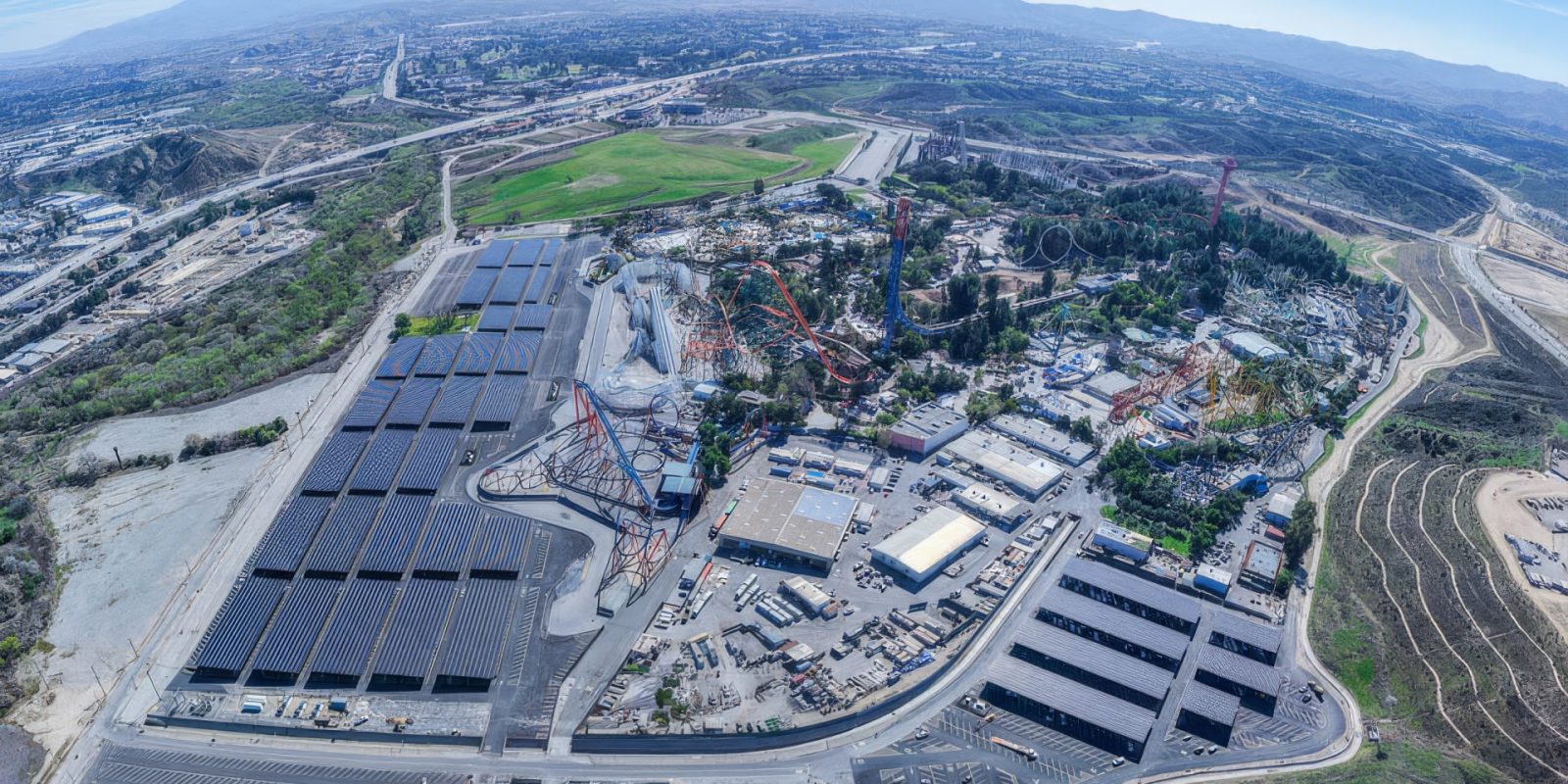
Six Flags Magic Mountain has completed installation of a 12.37-megawatt solar carport in California, making it the state's largest solar carport installation. The system spans the amusement park's parking lots and is designed to generate sufficient electricity annually to offset the total power consumption of both Six Flags Magic Mountain and the adjacent Hurricane Harbor Los Angeles water park.
The project converts underutilized parking infrastructure into a dual-purpose asset. Visitors park beneath solar panels while the installation produces renewable energy for the facilities' operations. This approach addresses two operational needs simultaneously: providing shaded parking and reducing grid dependency through on-site generation.
The 12.37 MW capacity places this installation among the largest solar carport systems in the United States. The scale of the project reflects growing adoption of rooftop and covered parking solar solutions across commercial venues. Unlike traditional ground-mounted solar farms, carport installations maximize land use efficiency by utilizing existing paved surfaces designed for vehicles.
Six Flags Magic Mountain operates one of California's major amusement destinations. The addition of this solar infrastructure supports the facility's energy requirements while contributing to California's renewable energy targets. Hurricane Harbor Los Angeles, located adjacent to the theme park, benefits from the same generation system.
The installation's annual output targets the combined electrical consumption of both facilities, suggesting substantial power generation capacity relative to operational demand. This sizing indicates detailed engineering to match generation with actual usage patterns across peak and off-peak seasons.
Solar carports have gained traction in the commercial sector as alternatives to rooftop installations and ground-mounted arrays. They provide weather protection for vehicles, reduce heat absorption in parking areas, and generate clean energy simultaneously. This hybrid functionality appeals to venues managing large parking requirements while facing pressure to decarbonize operations.
The project underscores how entertainment venues are incorporating renewable energy infrastructure as standard operational components rather than supplementary additions.