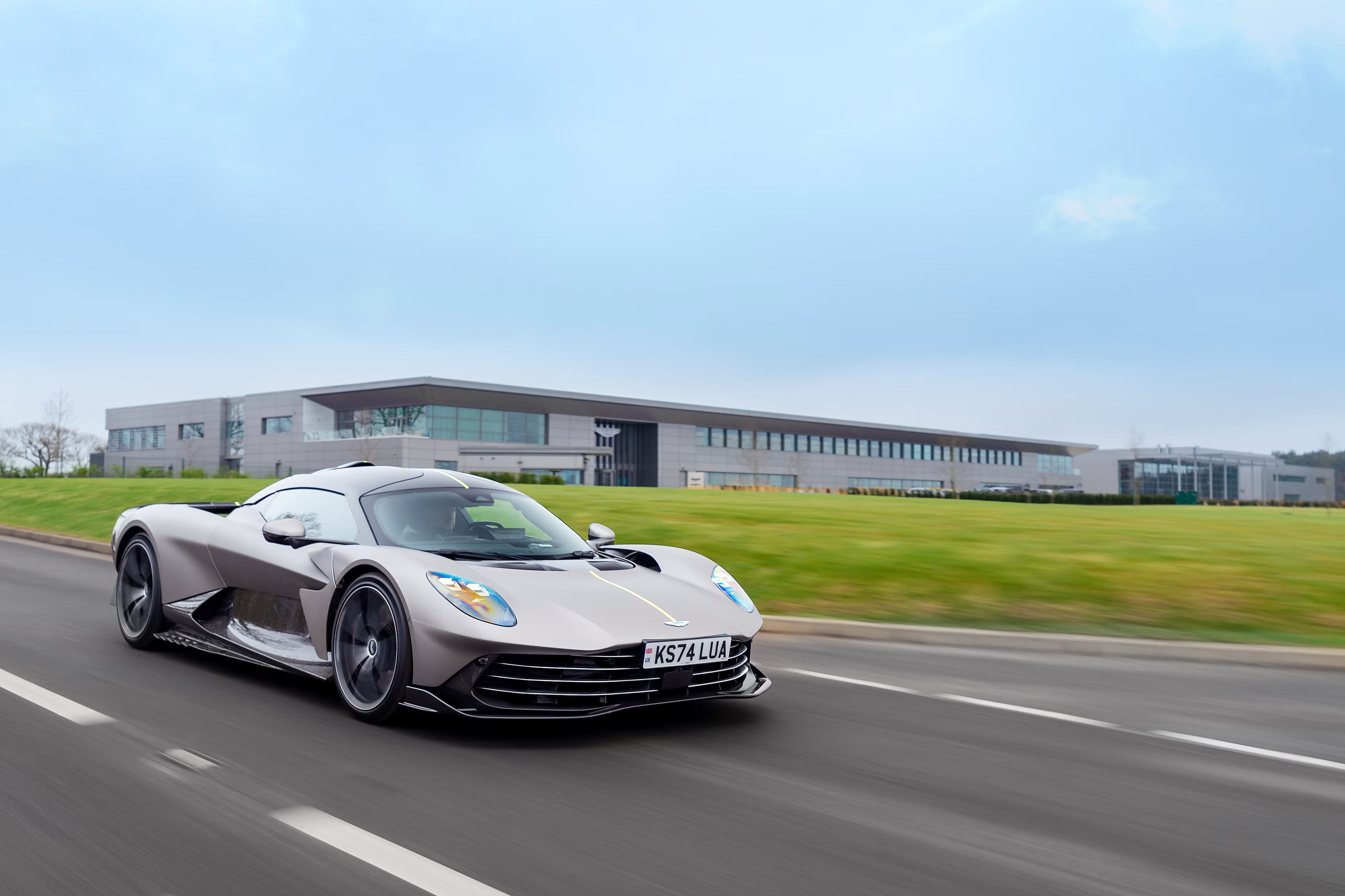
Aston Martin's 2027 Valhalla remains unchanged from the previous model year, with no updates planned until a Spider convertible arrives in 2028.
The Valhalla uses a plug-in hybrid setup producing 1064 horsepower. A Mercedes-AMG-sourced twin-turbo 4.0-liter V-8 with flat-plane crank powers the rear wheels through an eight-speed dual-clutch transmission. Two electric motors drive the front wheels, and a third integrates into the transmission. The battery pack carries a mere 5 miles of electric-only range, designed primarily to boost acceleration rather than provide driving distance.
Carbon fiber forms the car's core structure. The Valhalla rides on F1-style pushrod front suspension and multi-link rear setup, with adaptive dampers and carbon-ceramic brakes standard. Active aerodynamics with movable front and rear wings adjust for downforce, drag, grip, and braking performance.
Car and Driver estimated a 0-60 mph time of 2.1 seconds during testing, placing it alongside the Ferrari 849 Testarossa, McLaren 750S, and Chevy Corvette ZR1. The EPA rates the Valhalla at 13 mpg city, 19 mpg highway, and 15 mpg combined.
Inside, carbon fiber dominates the cabin. An F1-inspired rectangular steering wheel sits before a column-mounted digital display. A 10.3-inch central touchscreen handles infotainment and displays battery charge and energy-deployment data. Wireless Apple CarPlay comes standard. The Valhalla lacks any trunk or luggage space.
Despite its 1064-horsepower output and seven-figure price tag, the Valhalla proves approachable on the road. The main adjustment involves the absent rear window. Aston Martin offers limited and powertrain warranties comparable to other high-end automakers but does not include maintenance visits in coverage.