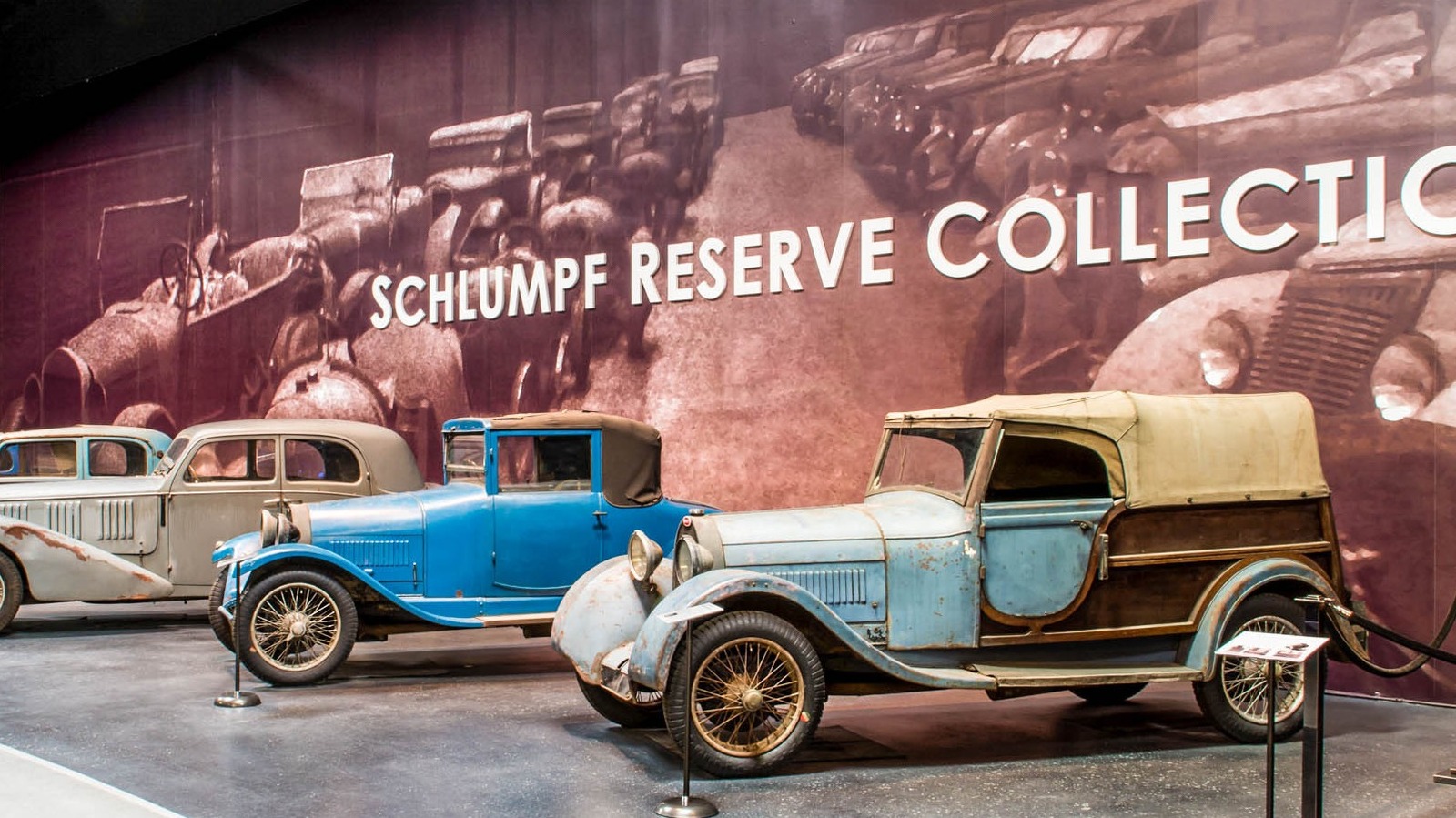
Fritz Schlumpf, a Bugatti enthusiast and textile magnate, amassed over 400 rare cars in an unused factory in Mulhouse, France by the 1970s. He financed the collection partly using government money intended for his factories. When discovered, Schlumpf shut his businesses and fled to Switzerland, leaving roughly 1,800 workers without jobs.
The laid-off workers formed a cooperative to sustain themselves and discovered Schlumpf's hidden collection inside the factory. For two years in the mid-to-late 1970s, the co-op operated the museum, offering public access to the vehicles for a few hours daily. The collection included approximately 105 Bugattis, which may have represented about 20% of all Bugattis in existence at the time, plus vehicles from other marques. Among the holdings were two Bugatti Type 52s, electric race cars built for children.
Schlumpf's personal Bugatti collection grew through purchases negotiated with the British Bugatti Owners Club, who helped locate around 50 cars, plus 30 additional vintage Bugattis owned by John W. Shakespeare of Hoffman, Illinois. He then bought 18 more directly from Ettore Bugatti.
Officials seized the collection in the late 1970s. It reopened in 1982 and is now housed in the Musée National de l'Automobile in Mulhouse.