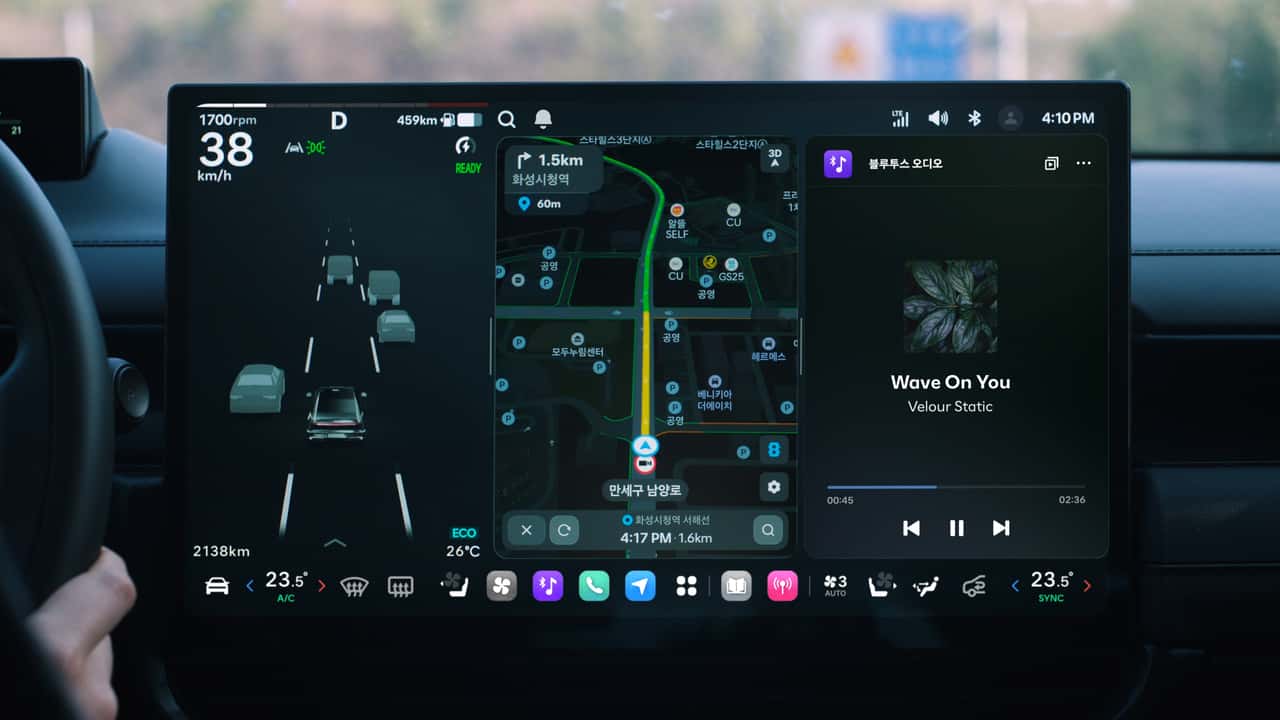
Hyundai launches Pleos Connect next month, a dual-screen infotainment system that rejects touchscreen-only design in favor of physical buttons alongside digital controls. The setup pairs a digital instrument cluster with a central infotainment display, giving drivers tactile feedback for critical functions. An integrated AI companion handles voice commands and vehicle operation.
This approach addresses a real problem in modern cars. Touchscreen-heavy interfaces force drivers to hunt visually for climate controls and audio adjustments while driving. Hyundai engineers recognized that physical buttons reduce distraction and improve usability. The dual-screen architecture balances digital capability with ergonomic practicality.
The Pleos system appears in Hyundai's next-generation models, expanding beyond their current EV lineup. The company positions this as a response to consumer frustration with overly digital cabins. Competitors like Tesla doubled down on minimalism. Hyundai went the opposite direction.
The AI companion differentiates Pleos from competitors' systems. Voice control reduces reliance on menus, though execution quality matters more than the feature's existence. If the AI understands context and responds quickly, it becomes useful. If it struggles with accents or requires exact phrasing, it becomes annoying.
This represents solid engineering thinking. Hyundai isn't chasing Silicon Valley trends. They're solving actual usability problems with a combination of old and new technology.