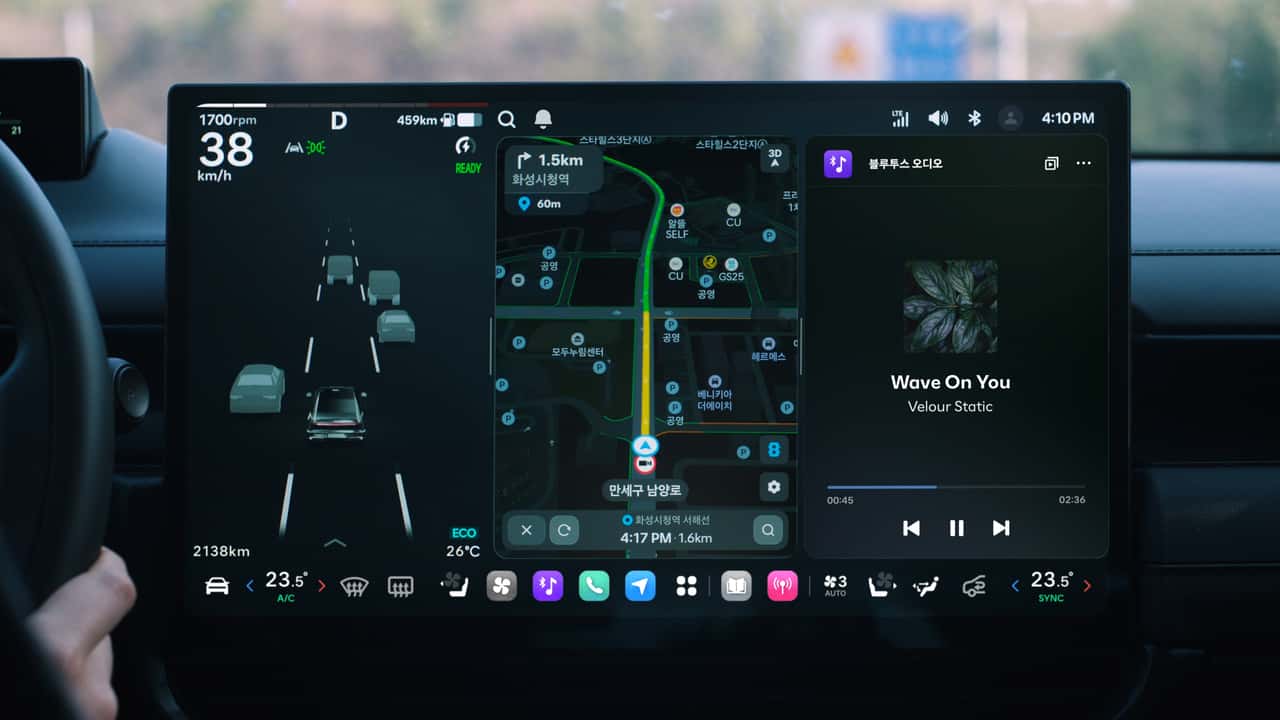
Hyundai debuts Pleos Connect next month, a dual-screen infotainment system that rejects the industry's touchscreen-only trend. The setup pairs a central display with a supplementary screen while retaining physical buttons for critical functions. This approach addresses a real problem. Drivers waste attention hunting menus on sprawling touchscreens during operation. Hyundai's engineers recognized that tactile controls and dedicated buttons reduce cognitive load and improve safety.
The system includes an AI companion, though Hyundai hasn't detailed its capabilities beyond standard voice assistant functions. The dual-screen architecture allows logical separation of tasks. Climate, audio, and navigation controls get physical access points. More complex functions live on the digital displays. This mirrors what some premium automakers already offer, but Hyundai brings the strategy to mainstream vehicles where cost discipline matters.
Pleos Connect arrives as manufacturers reckon with years of consumer complaints about infotainment design. Tesla's minimalist approach sparked backlash. BMW's iDrive evolved to include more physical controls after similar feedback. Hyundai's decision to prioritize usability over minimalism signals the industry's broader shift away from touchscreen maximalism. The system launches next month across Hyundai's lineup, starting with upcoming models.