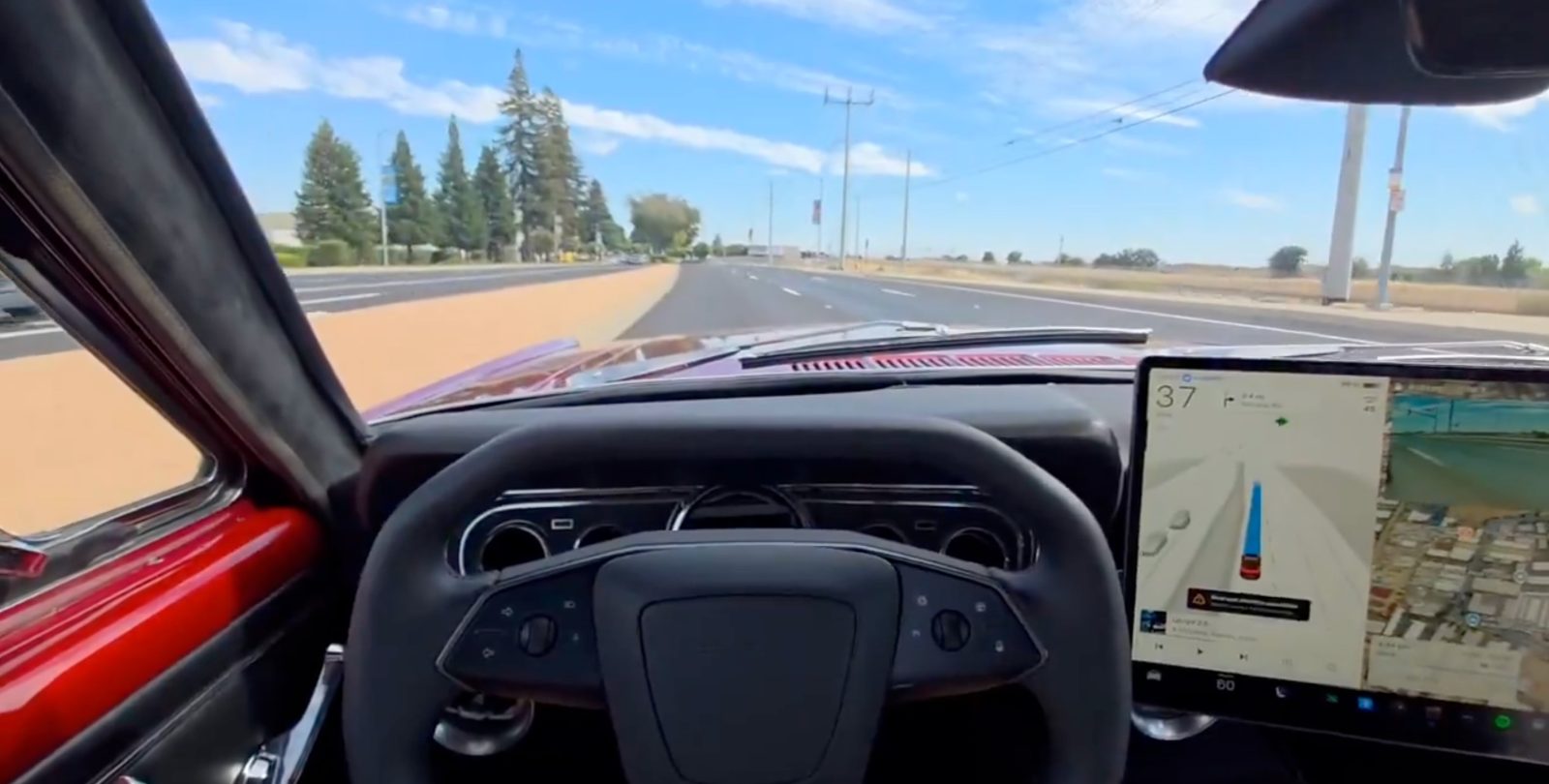
A Sacramento Tesla parts shop owner completed a radical 1966 Mustang conversion, dropping in a Model 3 dual-motor drivetrain, 15-inch touchscreen, and functional Full Self-Driving (Supervised) capability. The two-year project cost $40,000 and produced the first non-Tesla vehicle confirmed to run Tesla's FSD software.
The converted classic achieves 258 Wh/mi efficiency, matching a stock Model 3's real-world consumption. Tesla's autonomous system reads the road through the car's camera array regardless of the body bolted around it, proving the hardware and software work independent of Tesla's own engineering.
This stunt exposes both opportunity and limitation. The retrofit works because FSD depends on compute hardware and camera placement, not vehicle-specific tuning. Yet it also highlights why manufacturers rarely pursue such conversions. Engineering a drivetrain, cooling system, brake integration, and safety systems into a 60-year-old frame demands expertise most shops lack. The $40,000 figure likely excludes countless labor hours.
The project matters less as a consumer option and more as engineering proof. It demonstrates Tesla's autonomous stack achieves hardware-agnostic operation. Whether that matters for the future depends entirely on whether Tesla licenses FSD to other automakers. So far, the company shows no interest.