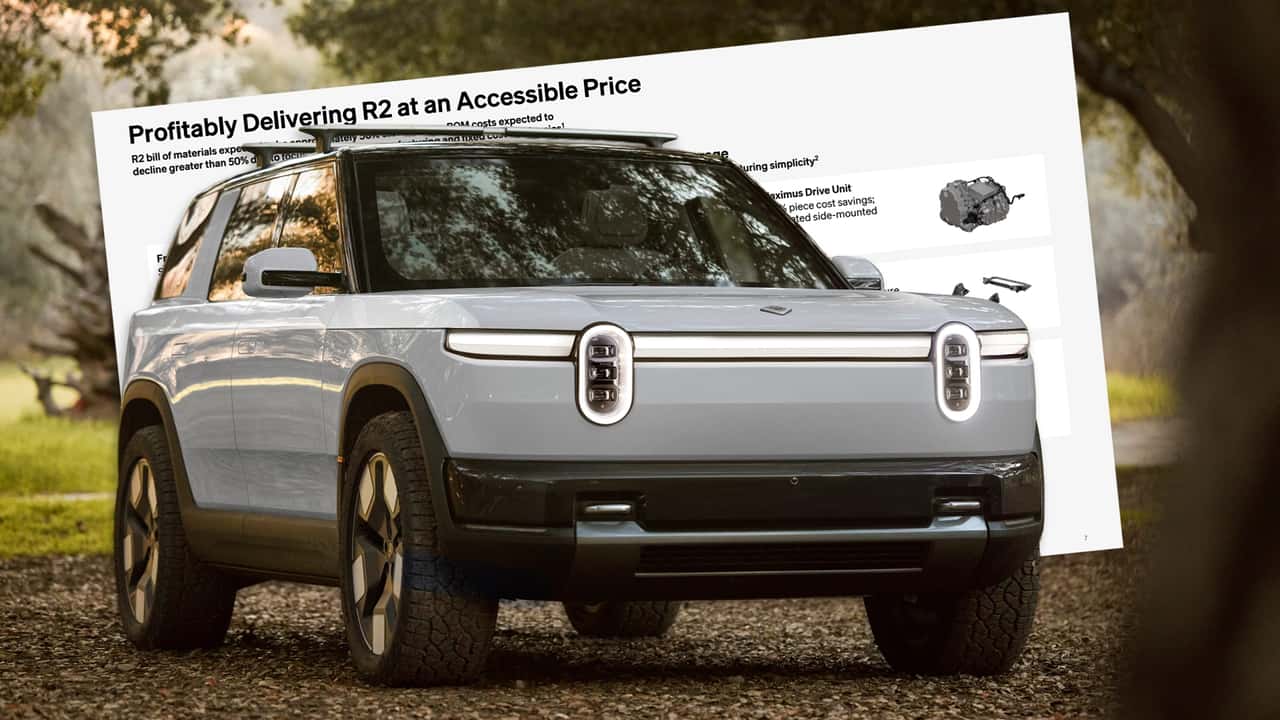
Rivian cut the R2's manufacturing cost roughly in half compared to the R1S through deliberate engineering choices, not corner-cutting. Shorter wiring harnesses reduce material and assembly time. Fewer overall components simplify production workflows. The R2 represents Rivian's path to profitability after years of burning cash on larger vehicles.
This matters because the R2 launches in 2025 as Rivian's volume play. Pricing starts around $35,000, positioning it as a genuine EV alternative to traditional compact SUVs. The company's survival depends on moving units at acceptable margins. Rival manufacturers like Tesla and traditional automakers will watch closely to see whether Rivian's cost discipline translates to actual production ramps and sustained returns.
Smart design beats hype. Rivian studied production economics, identified waste, and engineered the R2 accordingly. That approach delivers real vehicles customers can actually afford. The R1S proved Rivian could build premium electric trucks. The R2 proves they can think like manufacturers, not just dreamers.