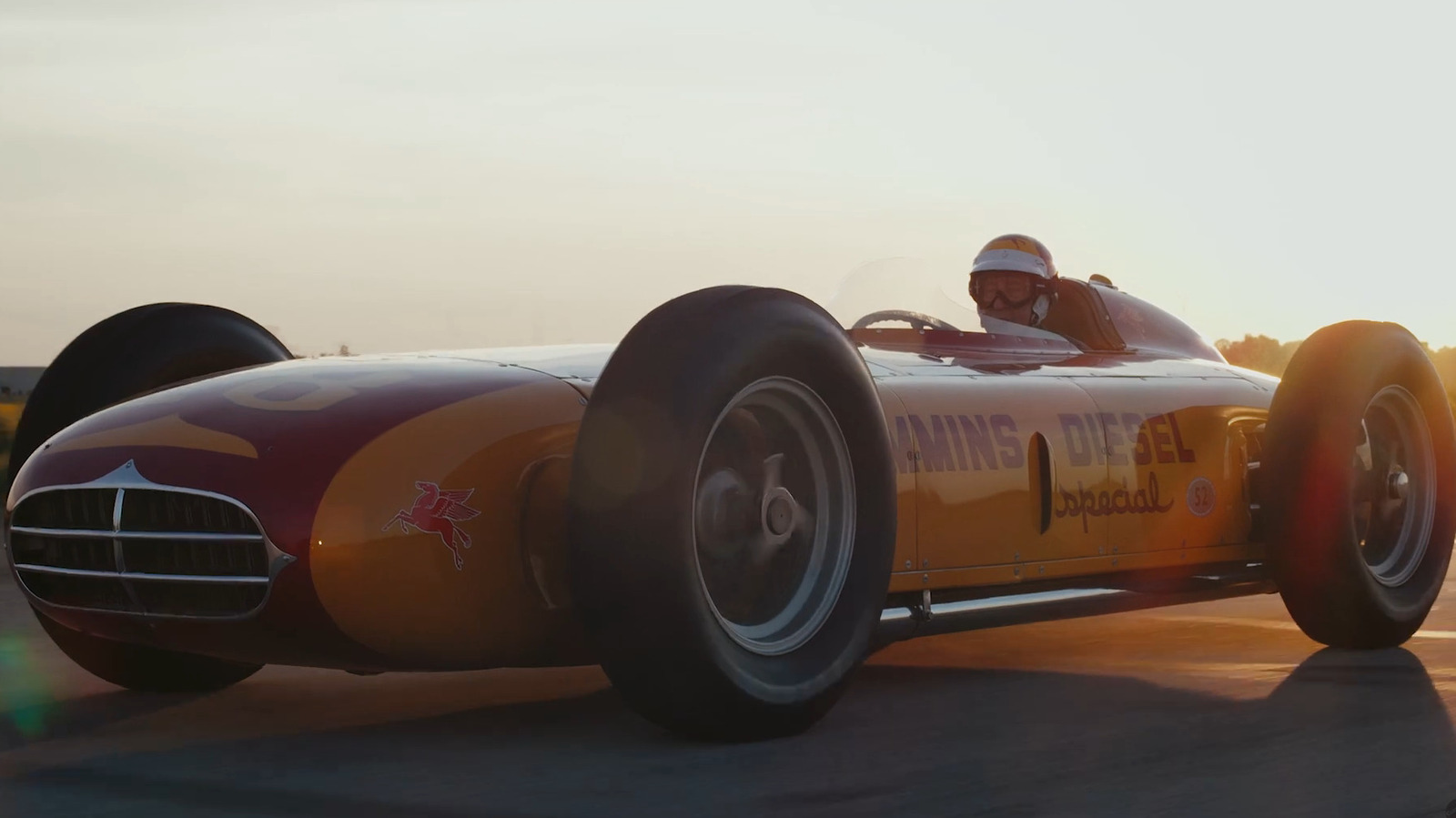
The 1969 Indy 500 witnessed one of motorsport's most unconventional entries when the #28 Cummins Diesel Special qualified for the race. The car featured a turbocharged Cummins diesel engine originally designed for semi-trucks, making it the first turbocharged powerplant ever to compete at Indianapolis Motor Speedway.
Built during an era when diesel engines seemed absurd for high-speed racing, the Cummins diesel represented a radical departure from the lightweight, high-revving gasoline mills that dominated Indy cars. The engine's truck heritage meant it carried considerably more weight and bulk than competitors, yet its unique turbocharger setup delivered unexpected performance on the oval.
The project emerged from a combination of sponsorship opportunism and genuine engineering ambition. Cummins wanted to prove diesel's viability in racing while capturing publicity for their commercial truck engines. The resulting racer challenged every conventional assumption about what belonged at Indy, combining semi-truck engineering with race-car chassis innovation.
The diesel's low-end torque characteristics differed dramatically from the high-RPM horsepower curves teams relied on. Drivers had to adapt their throttle management and braking points to accommodate an engine that behaved nothing like its gasoline counterparts. The turbocharged setup added another layer of complexity, managing boost pressure across the narrow racing surface.
While the Cummins Diesel Special qualified for the race, it never finished competitively. The truck engine couldn't sustain the punishment of 200 laps at racing speeds, and its weight penalty proved too great to overcome. However, the entry earned its place in Indy 500 history as proof that innovation thrives at the Brickyard, even when that innovation seems completely impractical.
The semi-truck engine remains a fascinating footnote in motors