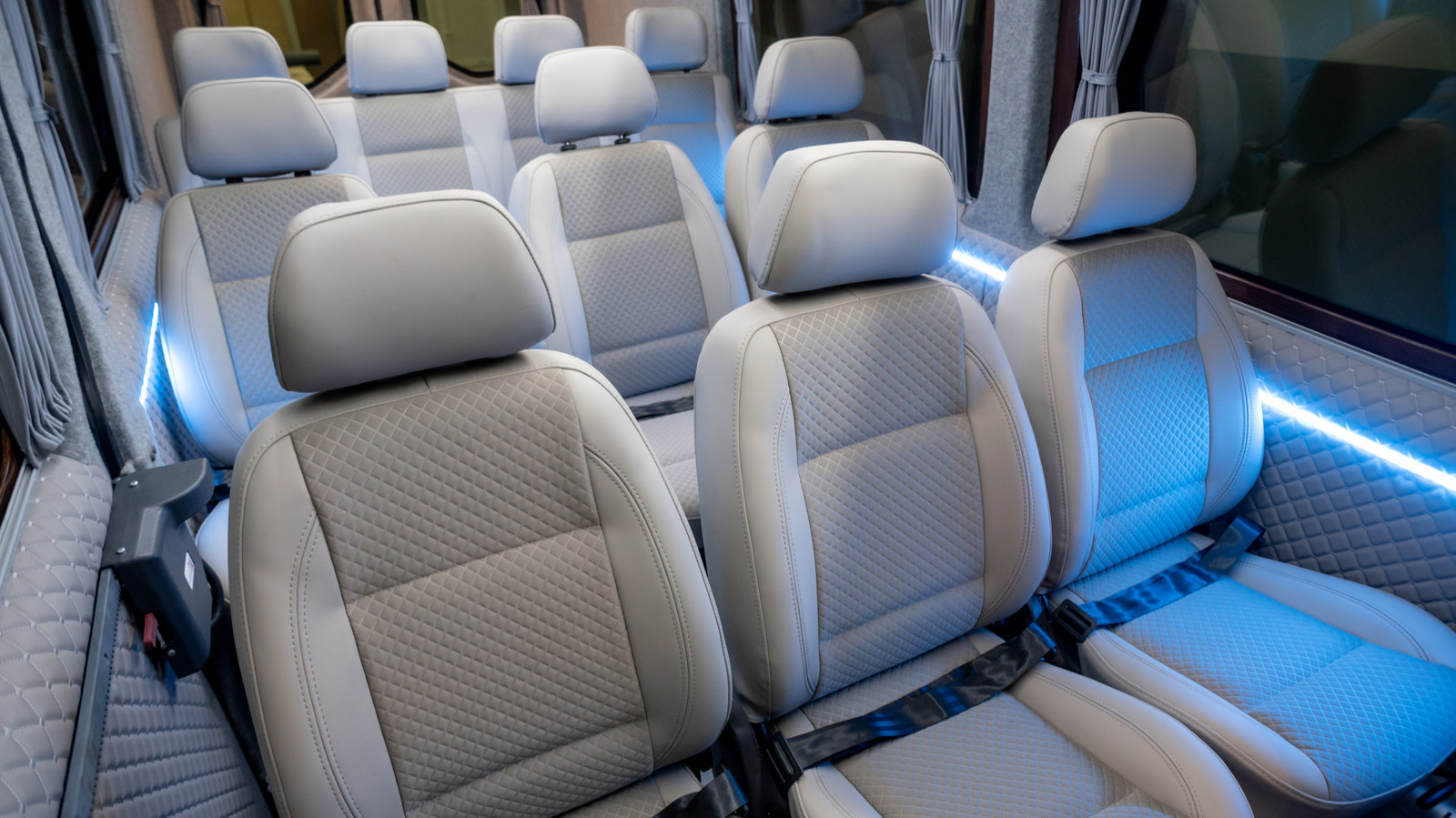
Vehicles with 10 or more seats remain niche products in today's market, but they solve a real problem for large families, sports teams, and commercial operators. The options break into distinct categories, each with different strengths.
Full-size passenger vans dominate this segment. The Ford Transit Passenger Van seats up to 15 people across three rows, making it the practical workhorse for organizations moving groups. The Mercedes-Benz Sprinter Van offers similar capacity with European refinement. Both prioritize utility over luxury, with vinyl seating and commercial-grade durability.
Luxury alternatives exist for buyers who demand comfort alongside capacity. The Range Rover seats nine, falling just short of the 10-seat threshold, but its three rows offer genuine amenities that minivans cannot match. Full-size SUVs like the Chevrolet Suburban and GMC Yukon XL deliver nine seats with more premium interiors than their van cousins, though neither reaches 10.
The Nissan NV Passenger Van provides a middle ground, seating 12 passengers with better ergonomics than utilitarian commercial vehicles. Its higher roofline and wider cabin appeal to tour operators and group transporters.
For truly ambitious capacity, the Dodge Ram ProMaster City packs 12 seats into a more maneuverable footprint than larger vans, useful for urban shuttle services. The Ford E-Series remains available with up to 15-passenger configurations, though it's being phased out for the Transit.
Budget factors heavily into these decisions. A Ford Transit Passenger Van starts under $40,000, while a luxury-trimmed Suburban exceeds $80,000. Fuel economy suffers across the category. Most 10-plus seat vehicles achieve 15-17 MPG highway, making them expensive to operate for daily use.